


The FIFA World Cup has always been a spectacle. Bigger crowds, bigger stars, bigger expectations. But the 2026 edition is pushing the concept of scale into entirely new territory.
From record-breaking ticket prices and geopolitical tensions to unprecedented logistics and financial stakes, this year’s tournament feels less like a traditional World Cup and more like a global event operating on a completely different level.
As the competition prepares to unfold across North America, one thing is becoming increasingly clear: there has never been a World Cup quite like this one.
A Tournament Built On Unprecedented Scale
The 2026 World Cup is breaking new ground before a ball has even been kicked.
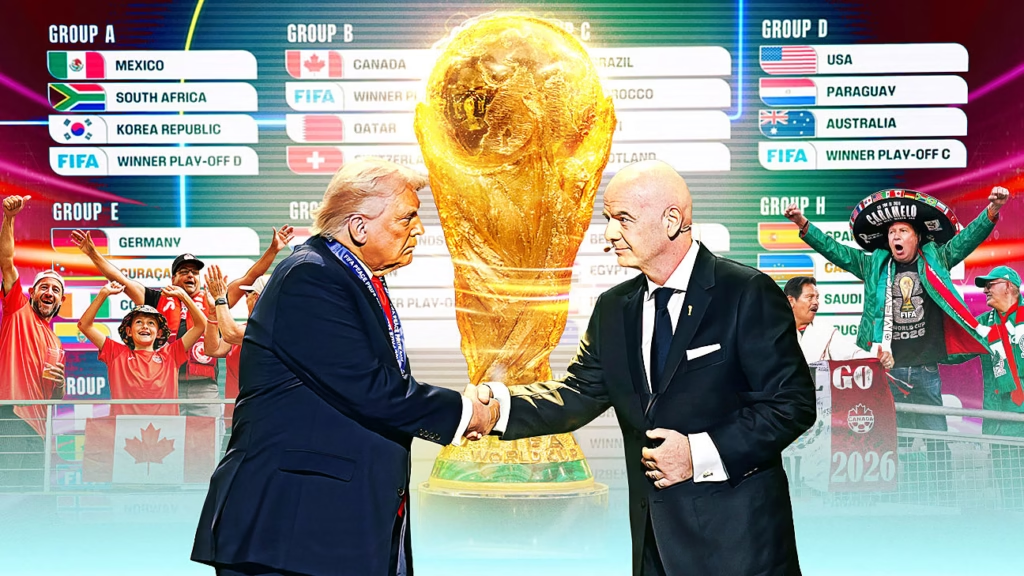
For the first time in history, three nations are serving as hosts. The tournament has also expanded to 48 teams, creating a larger competition than any previous edition.
Yet those milestones are only part of the story.
Observers say the defining characteristic of this World Cup is not simply innovation, but magnitude.
“It’s hard to find a precedent for this one,” said Tim Sisk, whose job as a historian, author and professor at the University of Denver makes him among the best at finding precedents when it comes to global sports. Sisk shook his head. “This one’s got an extra sort of layer of complexity, let’s say.”
That complexity stretches into nearly every aspect of the tournament.
Ticket Prices Reach New Extremes
High ticket prices have long been part of major sporting events. However, the numbers surrounding the 2026 World Cup have sparked widespread attention.
Seats for the final reportedly climbed above $40,000 even before the tournament started. Meanwhile, concerns about FIFA’s ticketing system became serious enough to trigger scrutiny from local authorities investigating whether supporters were being misled.
Even political leaders have weighed in on the issue.
“I wouldn’t pay it either, to be honest with you?”
The question many fans are asking is simple: has a World Cup ever become this expensive before kickoff?
The answer appears to be no.
Immigration And Travel Concerns Add New Challenges
 International tournaments routinely face questions about visas and border controls. Still, the concerns surrounding this World Cup are occurring against a particularly charged backdrop.
Foreign visitors are navigating issues that include heightened immigration scrutiny, restrictions affecting citizens from participating nations, and broader political debates over entry policies.
Travel itself has also become a major topic.
Airfare costs have surged in many markets, while concerns persist about transportation infrastructure and staffing shortages affecting air travel during one of the busiest seasons of the year.
For a tournament spread across an enormous geographic footprint, moving millions of fans efficiently remains a significant challenge.
The Iran Situation Creates A Unique Backdrop
Among the most extraordinary storylines entering the tournament is uncertainty surrounding Iran’s participation.
World Cups have previously faced withdrawals and political complications. Yet the circumstances surrounding Iran stand apart from anything seen in the modern era.
Questions emerged after escalating conflict involving one of the host nations and Iran, creating a situation that many players and officials never imagined confronting during a World Cup cycle.
“It has been very, very difficult for the players,” a former Iran soccer federation official told ESPN recently. “To play a World Cup is their dream. But not like this.”
The quote captures the emotional weight surrounding a team attempting to focus on football amid international tensions.
Scrutiny Of The Host Nation Intensifies
Major sporting events often attract criticism regarding human rights, politics, economics, or cultural issues.
Russia and Qatar both faced intense global examination before their respective tournaments. Yet some observers argue the scrutiny surrounding the United States carries a different dimension because of America’s longstanding democratic identity.
“Previously we’ve seen protests, boycotts, a lot of internal conflict — those are the more common things,” Sisk, the professor, said. “But to see this kind of polarization and, you know, potential human rights abuses from a democracy, and particularly the world’s largest, ostensibly most established democracy, I think is what really raises the biggest difference from what we’ve seen in prior events.”
The debate has become one of the defining narratives surrounding the tournament.
Massive Benefits Come With The Massive Challenges
Despite the controversies, North America offers advantages few previous hosts could match.
Unlike past tournaments that required expensive stadium construction projects, most venues already exist and regularly host major events. NFL stadiums and modern facilities are prepared for crowds of this scale.
Accommodation is abundant, even if prices remain high. Alcohol sales are widely available. Many venues are equipped with modern technology and infrastructure.
Some cities are even showcasing transportation systems designed specifically to improve the fan experience.
Philadelphia, for example, offers supporters free subway rides home after matches.
Elsewhere, transportation costs have generated frustration.
Fans traveling between Manhattan and the Meadowlands have reportedly faced train fares around $100 for a relatively short journey that normally costs about $13.
Once again, the theme remains the same: everything is bigger.
FIFA’s Financial Windfall Reaches Record Levels
While debate continues over costs and logistics, FIFA continues to emphasize the tournament’s economic impact.
The governing body plans to distribute $871 million among participating teams. Every qualified nation will receive at least $12.5 million.
For emerging football nations such as Haiti, Curaçao, and Cape Verde, those funds could support development programs for years.
FIFA is also projecting nearly $14 billion in revenue during its next four-year cycle.
A substantial portion of that money, according to FIFA leadership, will be directed toward football development around the world.
Football Will Eventually Take Center Stage
History suggests that controversies often fade once matches begin.
The focus shifts to the players, the goals, and the drama unfolding on the field.
This tournament promises no shortage of compelling storylines.
Lionel Messi returns as leader of the defending champions. Cristiano Ronaldo continues his pursuit of another iconic World Cup moment. The United States enters with one of its most talented squads ever assembled. England seeks long-awaited glory.
Meanwhile, rising stars such as Lamine Yamal prepare to showcase their talents on football’s biggest stage, while nations like Colombia and Ecuador hope to surprise the world.
There will be unforgettable goals. There will be heartbreak. There will be stunning upsets and moments that live forever in football history.
And when all is said and done, the 2026 World Cup may be remembered for one defining characteristic above all else.
It is the biggest World Cup the sport has ever attempted.