

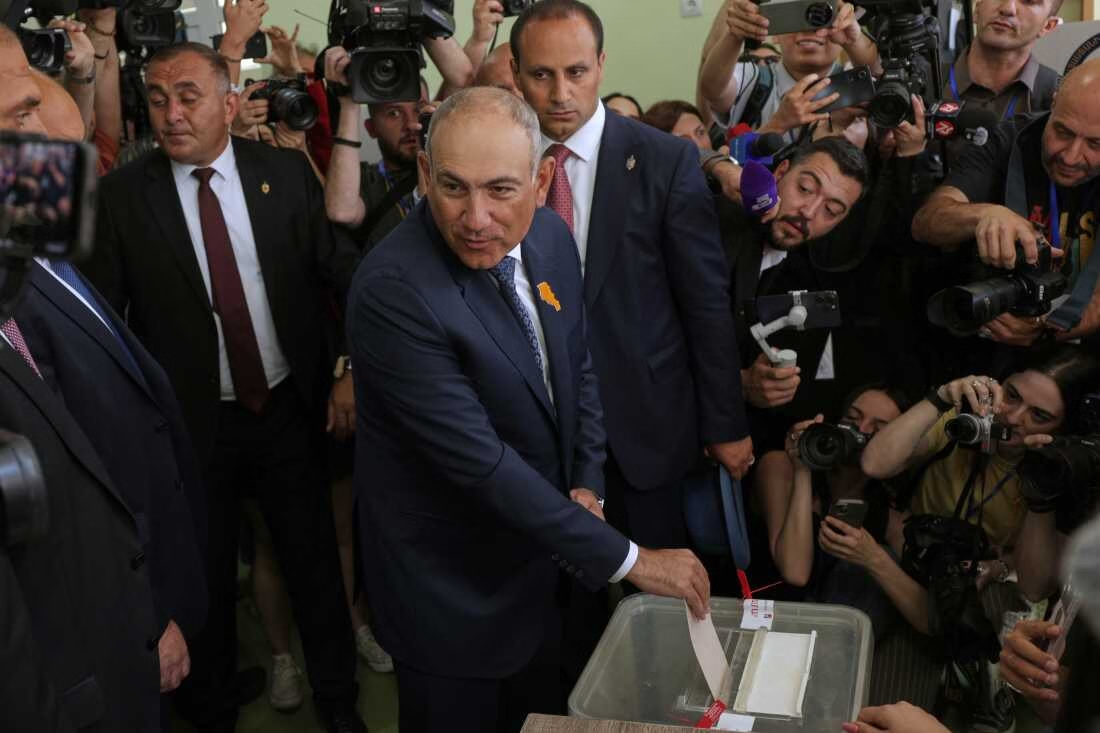
Armenian voters have handed Prime Minister Nikol Pashinyan and his pro-European agenda a decisive victory, giving his Civil Contract party 49.81% of the vote in parliamentary elections despite growing pressure from Moscow and a strong challenge from pro-Russian political rivals.
With all ballots counted, the result signals continued public support for Armenia’s move toward closer ties with Europe and a gradual shift away from Russia’s traditional influence in the South Caucasus.
Civil Contract Secures Clear Victory
Official election results showed Civil Contract finishing well ahead of its competitors, securing nearly half of all votes cast.
The election also brought several other political forces into parliament. The pro-Russian Strong Armenia alliance, led by Russian-Armenian businessman Samvel Karapetyan, captured 23.29% of the vote. The Armenia bloc followed with 9.94%, while Prosperous Armenia also secured parliamentary representation.
The outcome gives Pashinyan a significant mandate as he continues to reshape Armenia’s foreign policy direction.
Karapetyan, founder of the Tashir Group, campaigned on restoring stronger relations with Moscow and reversing Armenia’s recent geopolitical shift.
Armenia’s Shift Away From Moscow
Since gaining independence from the Soviet Union in 1991, Armenia has maintained close political, economic, and security ties with Russia.
The country remains a member of the Russian-led Collective Security Treaty Organization and the Eurasian Economic Union, although those relationships have become increasingly strained in recent years.
Tensions escalated after the 2023 military operation by Azerbaijan that ended Armenian control over Nagorno-Karabakh. Armenian officials accused Moscow and the CSTO of failing to provide the security guarantees that Yerevan believed had been promised.
As a result, Pashinyan’s government has suspended participation in CSTO meetings, strengthened ties with the United States, and accelerated efforts to deepen cooperation with the European Union.
Just days before the election, the European Union announced a €50 million support package for Armenia, reinforcing the growing partnership between Brussels and Yerevan.
Putin’s Warning Before The Vote
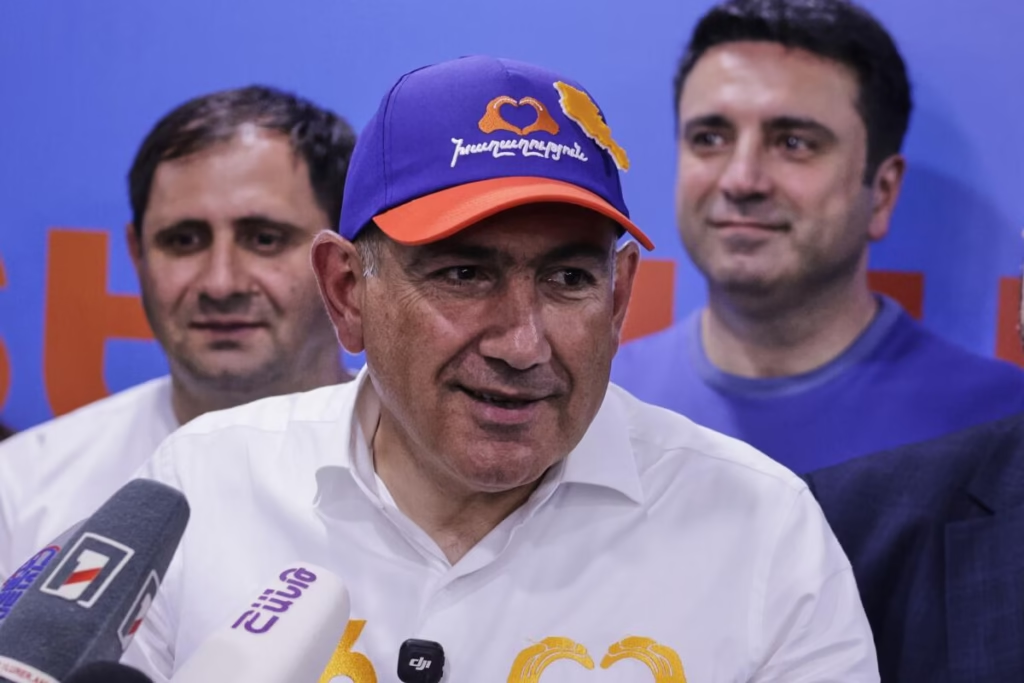 Ahead of the election, Russian President Vladimir Putin warned Armenia about pursuing deeper integration with the European Union, invoking what he described as a “Ukrainian scenario.”
The warning came during a recent EAEU summit and highlighted Moscow’s concerns about another former Soviet republic moving closer to European institutions.
The remarks were widely interpreted as a signal that Russia could respond to Armenia’s European ambitions with political, economic, or other forms of pressure similar to those used against Ukraine during its westward shift.
Voters Endorse European Direction
Despite the warning and a well-funded pro-Russian opposition campaign, Armenian voters delivered a clear endorsement of Pashinyan’s political course.
The election result suggests that a large portion of the electorate supports continued engagement with Europe and closer cooperation with Western partners, even as the country navigates a complicated relationship with Russia.
For many observers, the vote represents another example of a former Soviet state seeking greater integration with European institutions while balancing the realities of geography, security concerns, and longstanding ties to Moscow.