

The war involving Iran, the United States, and Israel has now stretched into its third week, and the scale of destruction is becoming clearer with each passing day. From Tehran to the Gulf, and from Lebanon to Iraq, the conflict is no longer confined to a single front. It is spreading, intensifying, and reshaping the region in real time.
As fresh strikes hit key cities and strategic sites, the numbers tell a stark story. Hundreds of locations have been targeted, thousands of lives have been affected, and the ripple effects are now reaching far beyond Iran’s borders.
Widespread Strikes Across Iran
The campaign inside Iran remains relentless. US and Israeli forces have focused heavily on strategic and political centers, with Tehran emerging as the primary target.
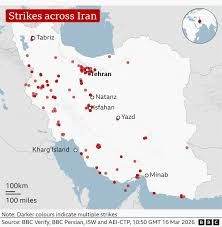
According to verified data, at least 166 attacks have been confirmed across Iran since the war began, including 69 strikes in the capital alone. Meanwhile, US officials say they have hit approximately 6,000 targets nationwide.
The opening phase of the war set the tone. Initial strikes on 28 February targeted Iran’s leadership and military infrastructure, including the killing of Supreme Leader Ayatollah Ali Khamenei in Tehran.
Since then, satellite imagery has revealed extensive damage. A nuclear facility at Natanz has been hit, missile sites have been destroyed, and aircraft at Mehrabad airport have been damaged. These are not symbolic strikes. They are aimed at weakening Iran’s ability to respond and regroup.
Kharg Island And Oil Infrastructure Targeted
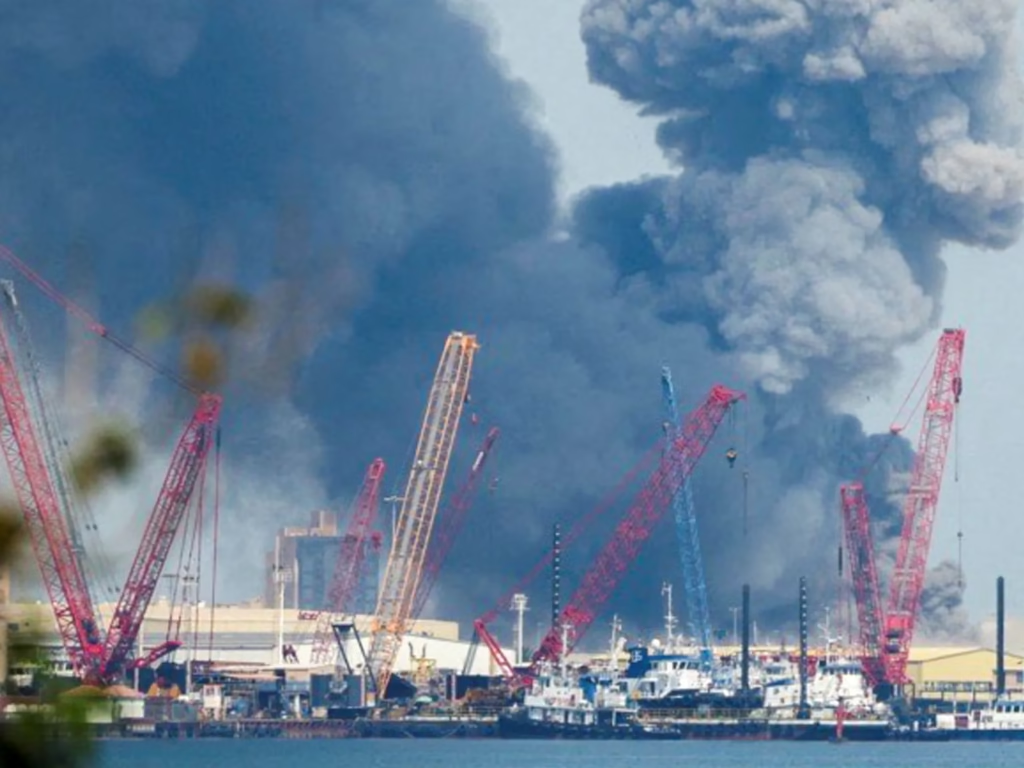
Energy infrastructure has become a central focus. Kharg Island, which handles around 90% of Iran’s oil exports, has been hit hard.
US Central Command confirmed that 90 military targets were struck on the island alone. Analysts reviewing available footage have identified multiple locations impacted, suggesting a coordinated effort to disrupt Iran’s economic lifeline.
At the same time, naval power has taken a hit. The US says it has destroyed 60 Iranian ships, including 16 mine-laying vessels near the Strait of Hormuz. Independent verification shows at least 11 naval vessels damaged or destroyed at key bases.
This is not just a military strategy. It is economic warfare, aimed at limiting Iran’s ability to fund and sustain the conflict.
Civilian Toll Continues To Rise
However, the human cost is becoming impossible to ignore.
The Human Rights Activists News Agency reports that 1,330 civilians have been killed since the war began, including at least 206 children. These are not distant statistics. They represent families, communities, and entire neighborhoods caught in the crossfire.
One of the most devastating incidents occurred in Minab, where at least 168 people, including children, were killed when a primary school was struck. Experts analyzing footage of the attack identified the missile as a US Tomahawk, adding a new layer of controversy to the strike.
Meanwhile, US losses are also mounting. Thirteen American service personnel have been killed since the start of the conflict, according to the Department of Defense.
Gulf States Under Fire
Beyond Iran, the war is hitting neighboring countries with increasing frequency.
Qatar has reported intercepting two waves of Iranian strikes, while the United Arab Emirates says it has faced an overwhelming number of attacks. According to officials, 268 missiles and 1,514 drones have been launched toward the UAE since the war began.
The toll is rising there as well. Seven people have been killed and 145 injured in the UAE, while Saudi Arabia says it has intercepted multiple drones over its territory.
In Oman, two people were killed after a drone crashed, an incident now under investigation.
The pattern is clear. Iran is extending its reach, and Gulf states are absorbing the impact.
Conflict Expands Across The Region
The geographic scope of the war continues to widen.
Iranian strikes have been reported in multiple countries, including Israel, Lebanon, Iraq, Kuwait, Jordan, Bahrain, Qatar, the UAE, Oman, Saudi Arabia, Azerbaijan, Syria, and even Cyprus.
Meanwhile, Israel has intensified operations in Lebanon, targeting Hezbollah positions along the border. The group began firing rockets into Israel following the killing of Iran’s Supreme Leader, adding another volatile layer to the conflict.
The Israeli military says it has begun “limited and targeted” ground operations in southern Lebanon, focusing on what it calls key Hezbollah strongholds.
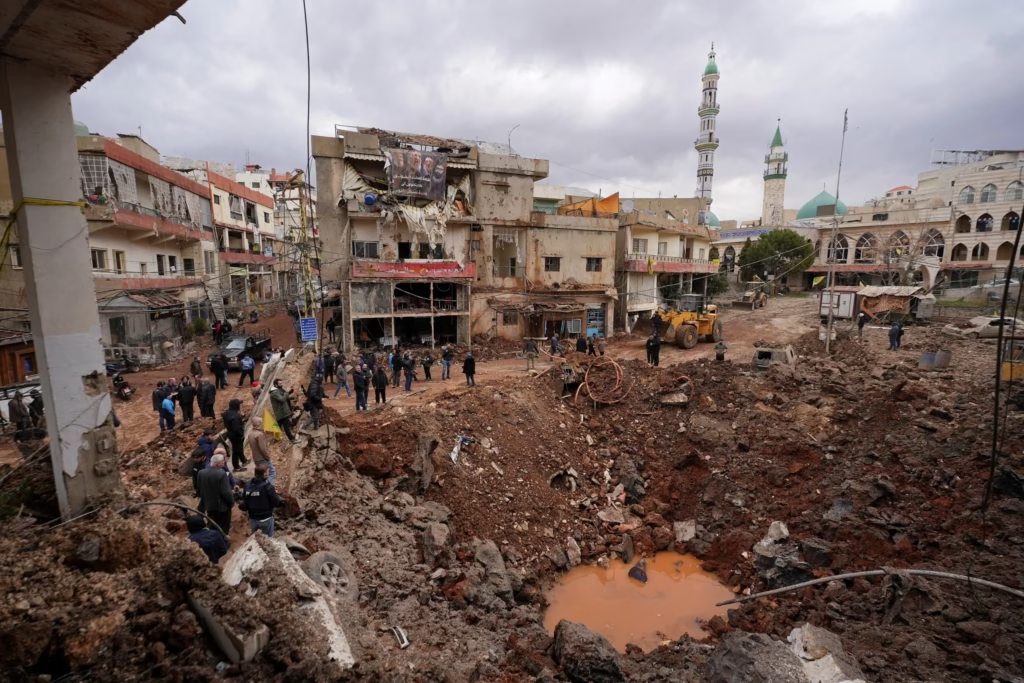
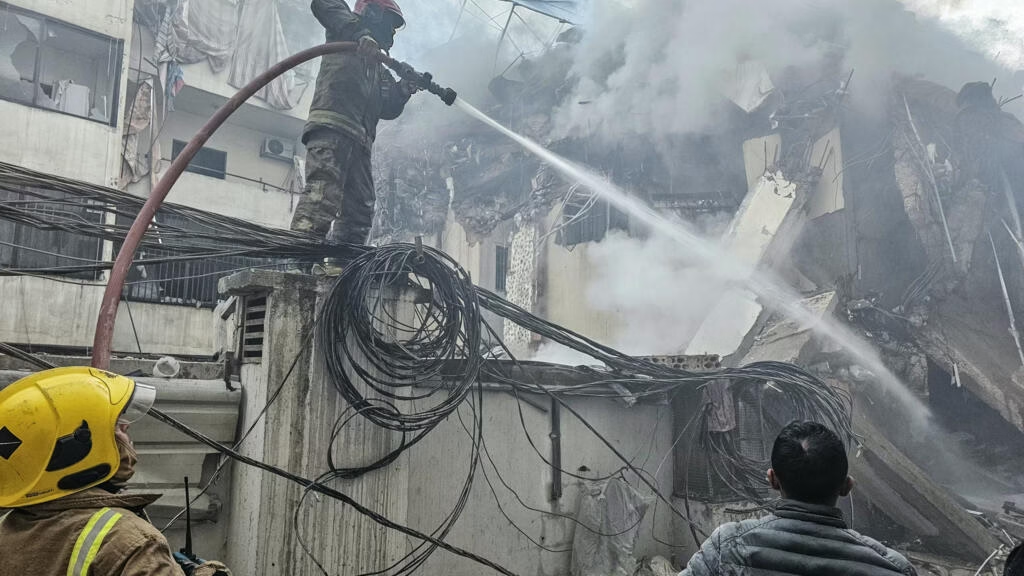
At the same time, Beirut has been hit repeatedly. Israeli forces carried out around 70 strikes in the city last week alone, targeting what they describe as militant infrastructure.
Lebanon Faces Growing Humanitarian Crisis
The situation in Lebanon is quickly becoming a crisis within a crisis.
According to the Lebanese health ministry, 850 people have been killed since Israel’s offensive began. Even more concerning, over one million people have been displaced internally.
That scale of displacement is staggering. It signals not just a military confrontation, but a deepening humanitarian emergency.
Western governments are watching closely, with growing concern that Lebanon could become the next major front in an already sprawling war.
A Region On Edge
Three weeks into the conflict, the maps tell a story that words alone struggle to capture. Red dots marking strike locations stretch across Iran. Arrows of retaliation extend into the Gulf. Flashpoints are multiplying.
This is no longer a contained war. It is a regional conflict with global implications.
The longer it continues, the harder it becomes to draw clear lines between targets, allies, and consequences.
And with each passing day, those lines blur even further.