

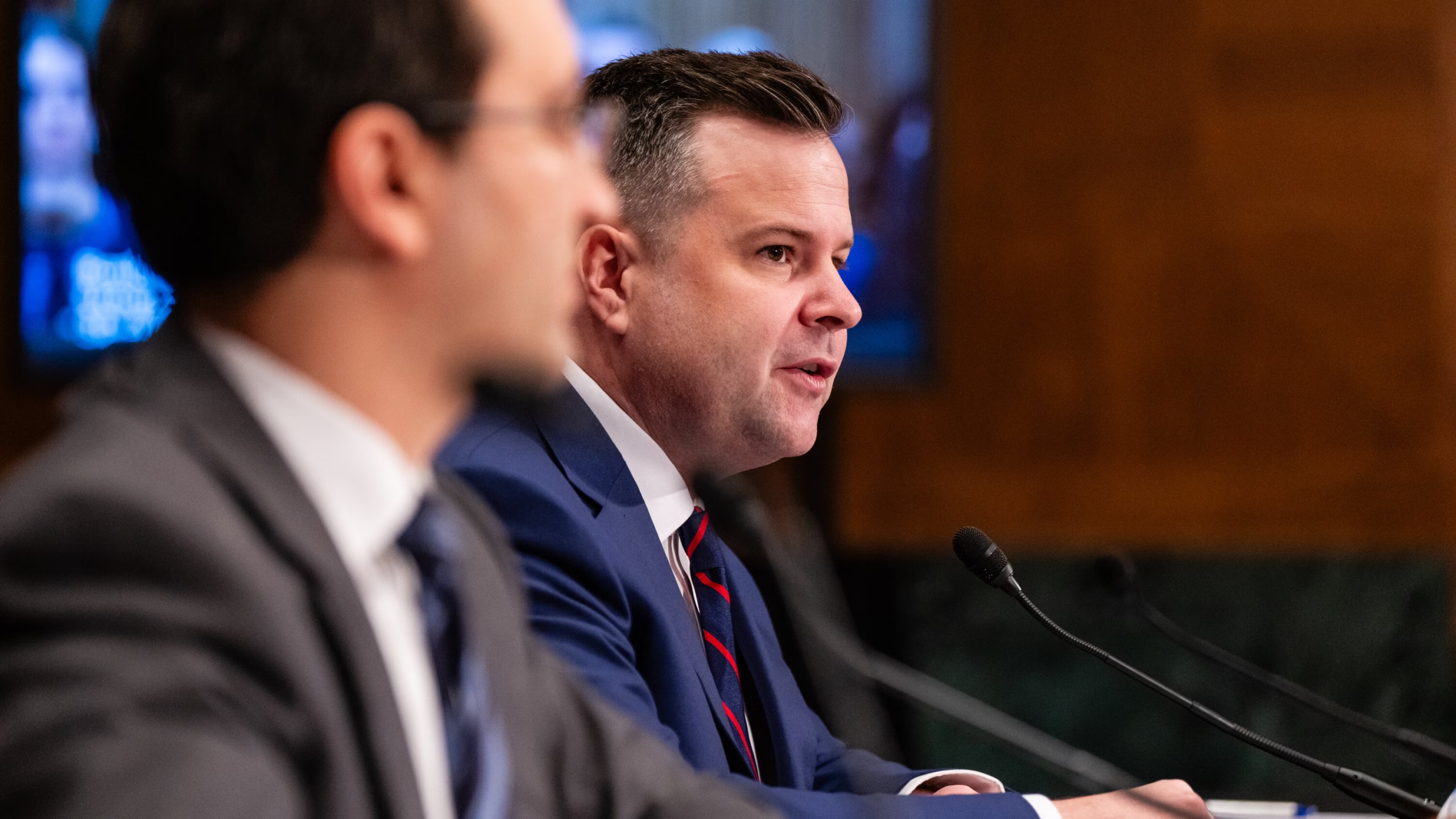
President Donald Trump has tapped Federal Housing Finance Agency Director Bill Pulte to serve as acting director of national intelligence, a move that is already drawing sharp reactions from both critics and some within Trump’s political orbit.
The appointment places a housing regulator with no traditional intelligence background at the helm of the nation’s intelligence apparatus, overseeing a community made up of 17 agencies responsible for gathering and analyzing national security information.
Trump announced the decision Tuesday, praising Pulte’s management experience and financial oversight credentials. However, the choice has quickly become one of the most talked-about personnel decisions of the administration’s second term.
Unconventional Choice For Intelligence Role
Pulte, a businessman-turned-government official, currently leads the Federal Housing Finance Agency, where he oversees federal housing giants Fannie Mae and Freddie Mac.
While he lacks a background in intelligence operations, national security, or foreign affairs, he is eligible to serve in the acting role because he has already received Senate confirmation for his current position.
The move surprised many observers, including some Trump allies.
“Building homes is very similar to managing a 17-agency US intelligence community,” one former Trump official sarcastically responded when asked about Pulte’s qualifications for the role.
In announcing the appointment on Truth Social, Trump defended the decision and highlighted Pulte’s experience managing major financial institutions.
Trump pointed to Pulte’s “deep experience managing the most sensitive matters in America, the safety and soundness of the Markets, and over 10 Trillion Dollars at Fannie Mae/Freddie Mac, a substantial increase from where it was just 12 months ago.”
Pulte’s Role In High-Profile Political Referrals
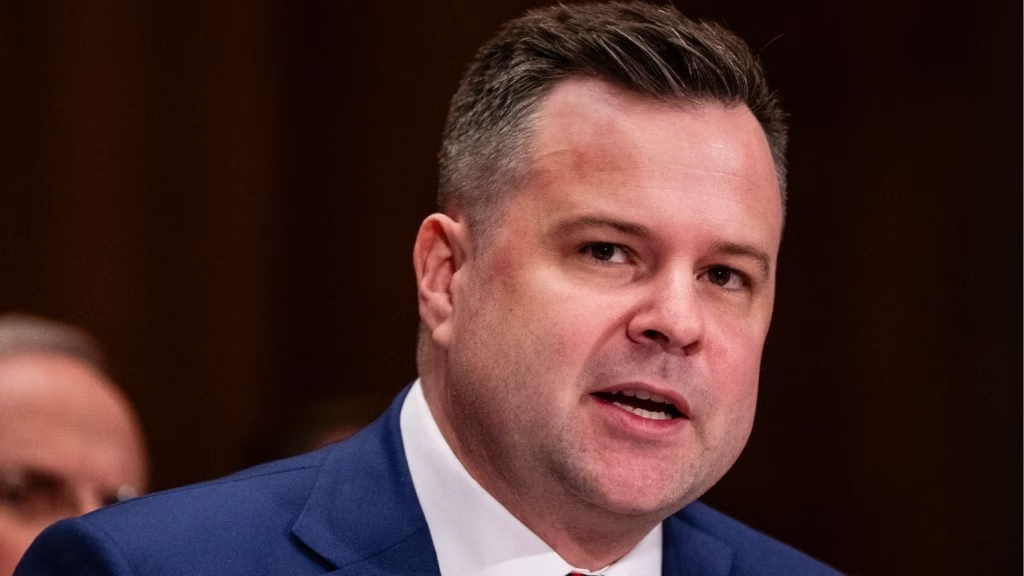 During his tenure at the Federal Housing Finance Agency, Pulte became known for taking an aggressive stance toward several of Trump’s political opponents.
He referred New York Attorney General Letitia James, Representative Eric Swalwell, Senator Adam Schiff, and Fulton County District Attorney Fani Willis to the Justice Department for investigations related to alleged mortgage fraud.
Pulte also referred Federal Reserve Governor Lisa Cook over similar allegations.
Each of the five individuals rejected the accusations. Although the inquiry involving James ultimately led to charges, those charges were later dismissed by a federal judge.
The referrals fueled criticism from opponents who argued that federal authority was being used to target political adversaries. The controversy eventually prompted the Government Accountability Office to open an investigation into whether Pulte had misused his authority.
Concerns Over Intelligence Powers
Pulte’s critics argue that his new position could provide access to significantly more sensitive information than he possessed in his housing oversight role.
As acting director of national intelligence, he will oversee intelligence collection and coordination across the federal government and could potentially make referrals to the Justice Department based on information uncovered through intelligence channels.
The concern stems in part from actions taken under outgoing DNI Tulsi Gabbard, who made at least one criminal referral involving a whistleblower complaint and the handling of that complaint by a government watchdog. The matter later evolved into a broader criminal investigation overseen by federal prosecutors in Miami.
Senate Democrat Blasts Appointment
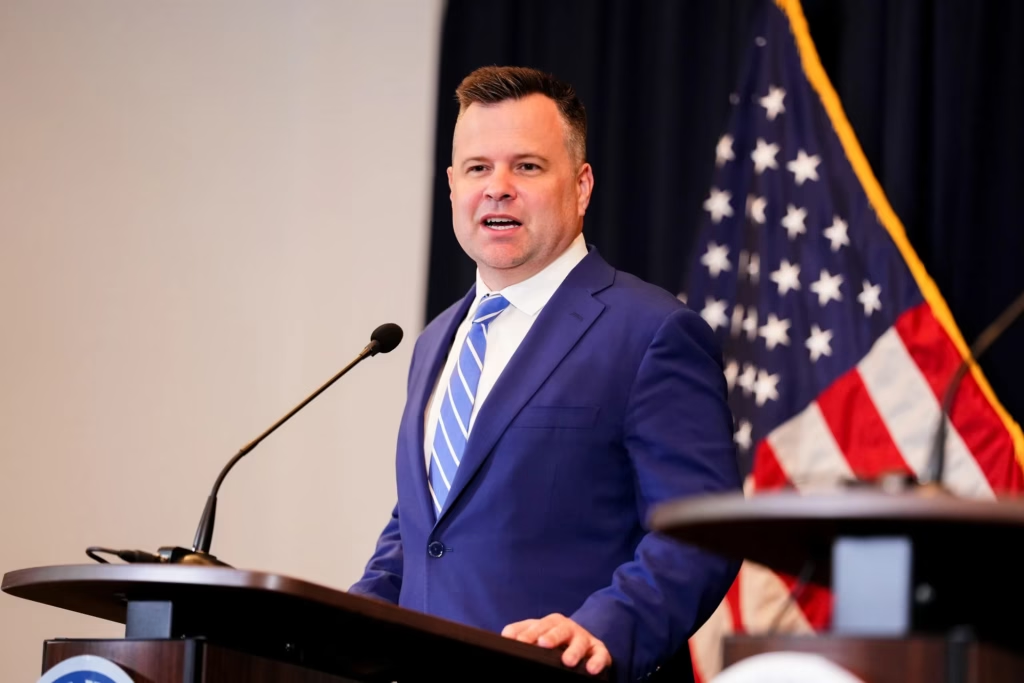 The announcement drew an immediate response from Virginia Senator Mark Warner, the ranking Democrat on the Senate Intelligence Committee.
“This appointment speaks volumes about what this president expects from the nation’s top intelligence official,” Warner said in a statement. “Rather than selecting a respected national security professional capable of delivering independent judgments, the president has chosen an official who has demonstrated not just willingness but eagerness to use the authorities of government to pursue political retribution.”
Warner’s criticism reflects broader concerns among Democrats who believe intelligence leadership should remain insulated from political disputes.
Not The First Unconventional DNI Pick
Trump has previously elevated loyal allies to senior intelligence positions despite limited intelligence experience.
During his first term, he selected former ambassador to Germany Ric Grenell to serve as acting director of national intelligence. Grenell’s appointment sparked similar debate at the time.
A former White House official described Trump’s thinking during that period, saying the president was “looking for a ‘political’ who will have his back.”
The latest appointment suggests Trump continues to prioritize loyalty and alignment with his political agenda when filling key administration posts.
Pulte To Hold Multiple Roles
According to Trump’s announcement, Pulte will continue serving in his current housing leadership position while simultaneously acting as director of national intelligence.
The arrangement will remain in place until the administration nominates a permanent intelligence chief who can secure Senate confirmation.
That dual role places Pulte in charge of both housing finance oversight and the nation’s intelligence community, at least temporarily.
Gabbard’s Departure Created Vacancy
The opening emerged after Tulsi Gabbard revealed in late May that she would step down as director of national intelligence.
Gabbard cited her husband’s diagnosis with a rare form of bone cancer as the reason for her departure.
Trump originally selected Gabbard because of her non-interventionist foreign policy views and alignment with his “America First” agenda. Her political evolution from Democratic presidential candidate to prominent MAGA ally made her a unique figure within the administration.
Growing Differences Behind The Scenes
Although Gabbard entered the administration as a trusted ally, reports indicated that her influence diminished over time.
Her skepticism toward foreign military interventions reportedly placed her at odds with some of Trump’s actions involving Iran and Venezuela.
As major foreign policy decisions unfolded during Trump’s second term, Gabbard increasingly found herself outside key decision-making circles.
Instead, much of her attention shifted toward identifying individuals she believed were part of what she described as the “deep state,” referring to intelligence and government officials whom Trump and his allies suspected of working against the administration.
With Gabbard departing and Pulte stepping in, the leadership of the U.S. intelligence community enters a new chapter that is already generating intense political scrutiny.