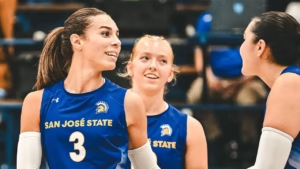


A former college athlete has found herself at the center of a fierce online battle, with emotions running high on both sides. What began as a personal account quickly escalated into a national flashpoint, drawing activists, lawmakers, and public figures into a growing cultural divide over women’s sports and transgender inclusion.
Online Backlash Erupts After Interview
The controversy ignited after 23-year-old former San Jose State University volleyball player Brooke Slusser shared details about her college experience. Her interview triggered a wave of criticism from left-leaning social media users, many of whom dismissed her claims and questioned her perspective.
However, the backlash did not go unanswered. A wide range of women’s rights advocates and public figures stepped in, defending Slusser and amplifying her voice.
In response to the criticism, Slusser addressed her detractors directly, saying, “I would just say people that don’t know my life or my trauma don’t have room to say how good or bad my time at SJSU was. I hope they never have to understand going through something as awful as that.”
Claims About Living Arrangements Stir Debate
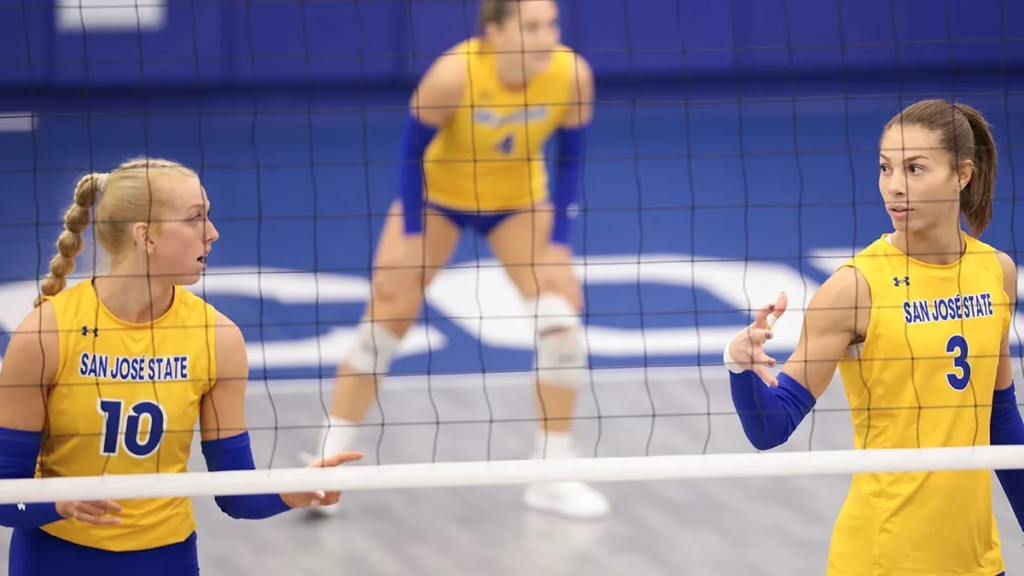
At the heart of the controversy are Slusser’s claims about her living situation during her time at SJSU. She alleged that she shared an apartment, and even a bed at times, with transgender teammate Blaire Fleming without initially knowing the athlete’s birth sex.
Describing the experience, Slusser said, “You find out you’re just chilling in a bed with a man that you have no idea about… I [was] unknowingly sharing a bed at that time with a man.”
She also claimed that head coach Todd Kress encouraged her to move into the shared apartment arrangement, as the team was seeking an additional tenant.
Critics Push Back, Supporters Rally
As the story gained traction, critics argued that no harm had occurred, with some suggesting that Slusser’s reaction was exaggerated. Still, Slusser has maintained that the situation had lasting emotional consequences, including anxiety that contributed to an eating disorder and interrupted her academic progress.
Meanwhile, the tone of the debate intensified. Some critics took personal jabs, including comments from actor Kevin McHale about Slusser’s “upper lip,” though he did not clarify the meaning behind the remark.
In contrast, a coalition of women’s sports advocates quickly came to her defense. High-profile names voiced strong support, framing the issue as one of personal boundaries and fairness.
Jennifer Sey wrote, “Brooke has every right to feel violated. This is a violation of her personal space and boundaries. She was lied to. She would not have agreed to room with or play with a man.”
Martina Navratilova echoed that sentiment, adding, “Brooke has every right to be mad. Try again with the punishment wish…”
Legal Battle Intensifies Around Title IX
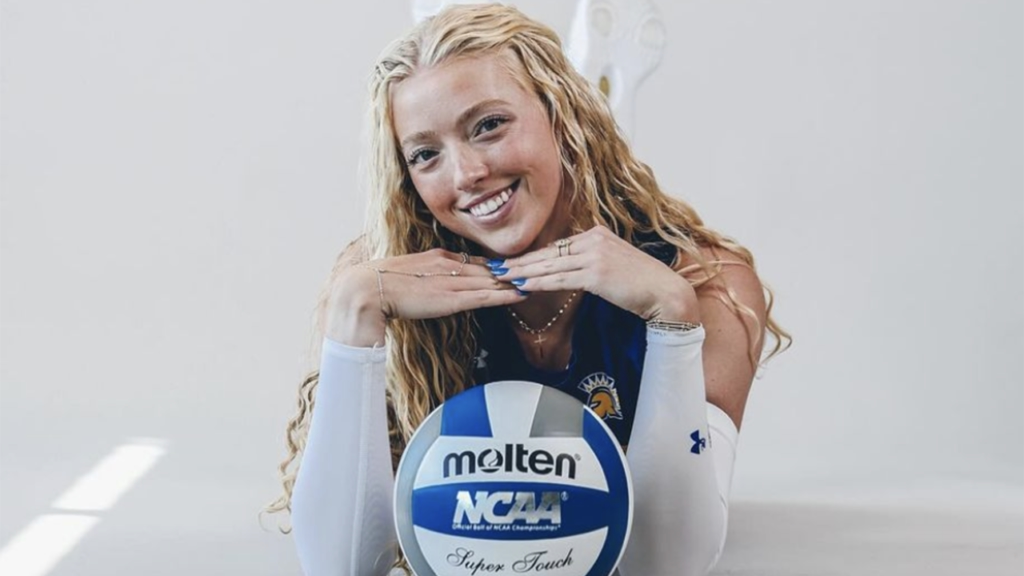
Beyond social media, the situation has spilled into legal and political arenas. The U.S. Department of Education’s Office for Civil Rights concluded earlier this year that San Jose State University violated Title IX in its handling of the situation involving the transgender athlete.
However, the university and the California State University system have rejected those findings. Instead, they have filed a lawsuit against the federal government, challenging both the conclusions and the potential consequences.
University President Cynthia Teniente-Matson addressed the legal move, stating, “Because we believe OCR’s findings aren’t grounded in the facts or the law, SJSU and the CSU filed a lawsuit today against the federal government to challenge those findings and prevent the federal government from taking punitive action against the university, including the potential withholding of critical federal funding.”
She continued, “This is not a step we take lightly. However, we have a responsibility to defend the integrity of our institution and the rule of law, while ensuring that every member of our community is treated fairly and in accordance with the law. Our position is simple: We have followed the law and cannot be punished for doing so.”
At the same time, the university reaffirmed its support for LGBTQ students, stating, “Our support for the LGBTQ members of our community, who have experienced threats and harms over the last several years, remains unwavering. We know the attention the university has received around this issue and the investigative process that followed have been unsettling for many in our community.”
Allegations Add Further Complexity
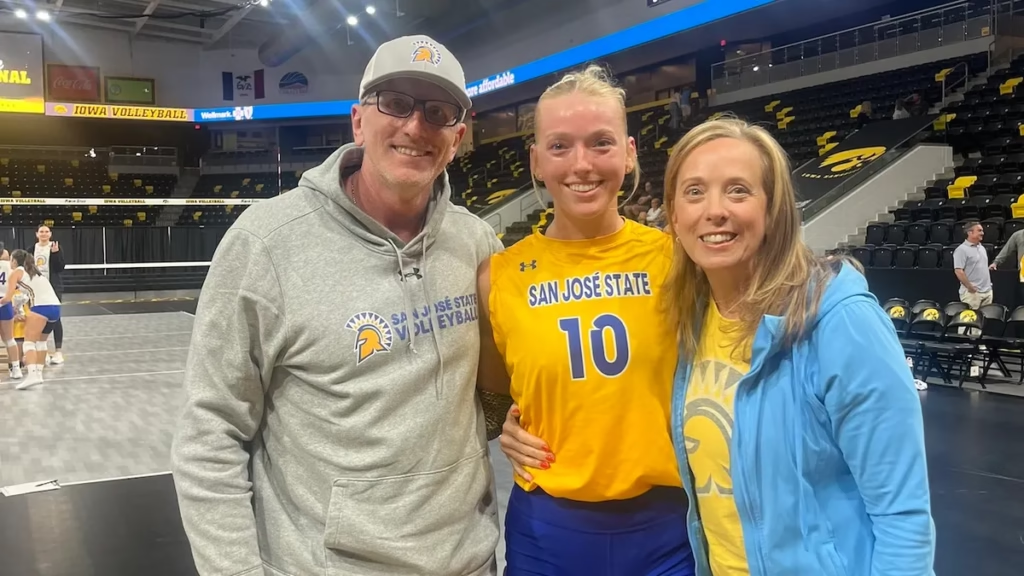
The case has grown even more complex with additional allegations tied to the broader dispute. According to federal findings, a female athlete reported that the transgender player allegedly conspired to have an opponent spike a ball at her face during a match.
The department also claimed, “SJSU did not investigate the conspiracy, but later subjected the female athlete to a Title IX complaint for ‘misgendering’ the male athlete in online videos and interviews.”
Separately, Slusser filed a lawsuit in late 2024, alleging that she and a former assistant coach became aware of a meeting in which such a plan was discussed. While some claims have been dismissed, others, including Title IX-related allegations against the CSU system, remain under consideration.
A recent court response from the CSU stated, “CSU is pleased with the court’s ruling. SJSU has complied with Title IX and all applicable law, and it will continue to do so.”
A Defining Moment For Women’s Sports
As legal battles continue and public debate intensifies, Slusser’s story has become more than a personal account. It now sits at the intersection of sports, law, and cultural identity.
The outcome of the ongoing lawsuits could shape how similar cases are handled in the future. More importantly, it may influence how institutions balance inclusion with fairness in competitive sports.
For now, the conversation shows no signs of slowing down.