
An American airman, injured and alone behind enemy lines, faced a brutal test of survival in the mountains of Iran. For more than a day, he hid, moved carefully, and stayed just ahead of advancing forces determined to capture him.
What followed was a high-stakes rescue effort involving elite commandos, intelligence deception, and a race against time that stretched across mountains, war rooms, and international coordination.
Airman Hides While Enemy Closes In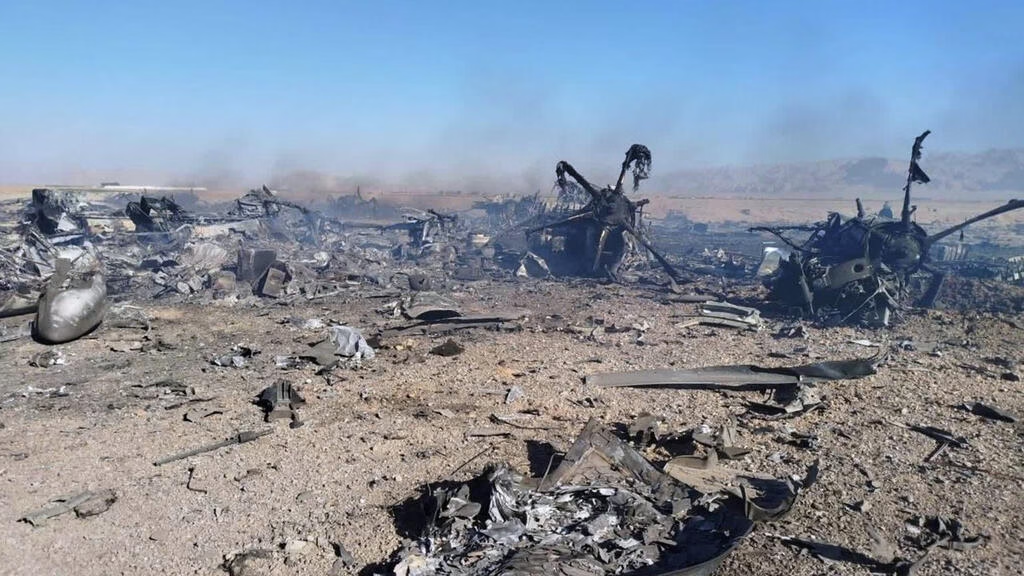
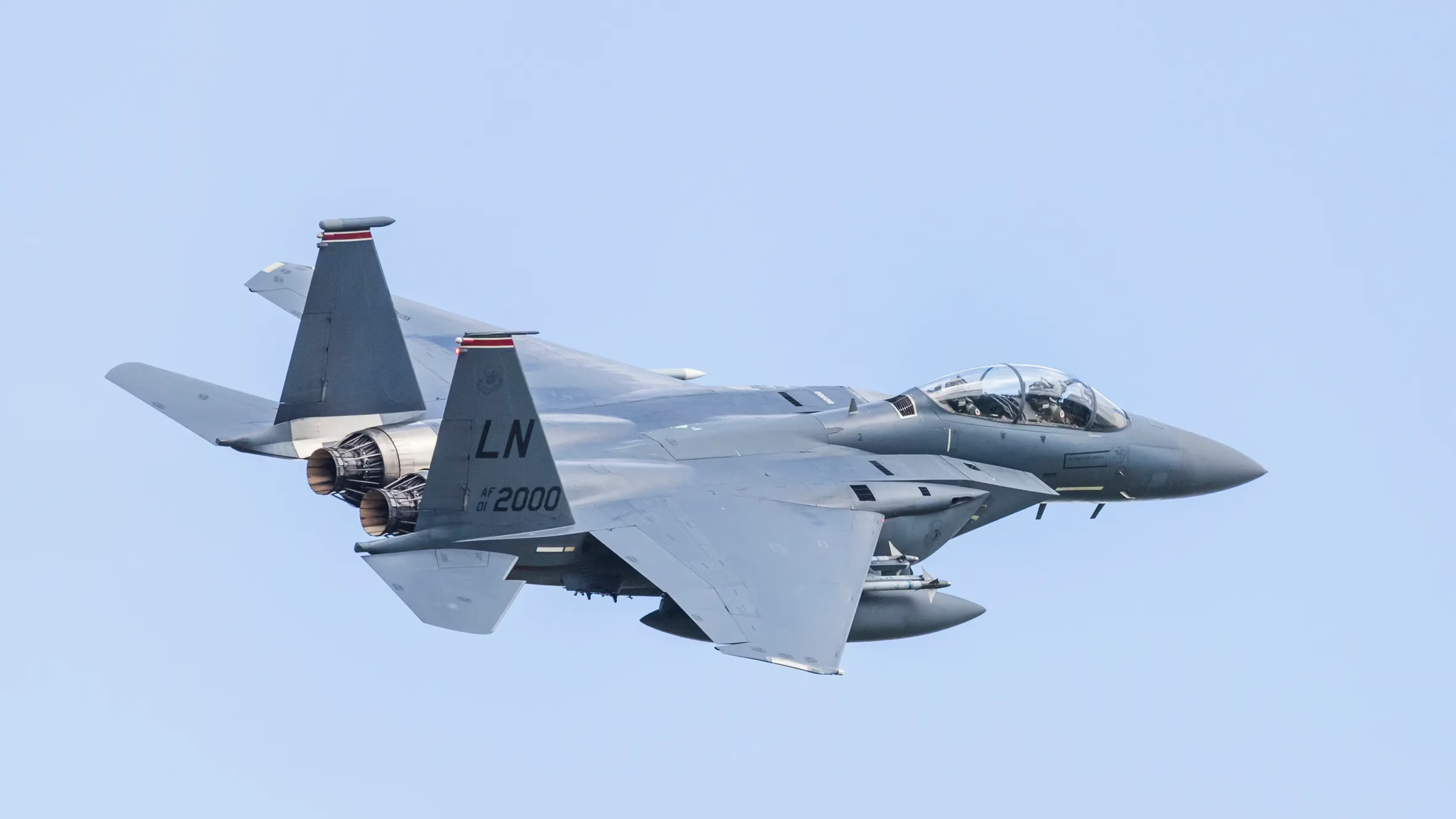
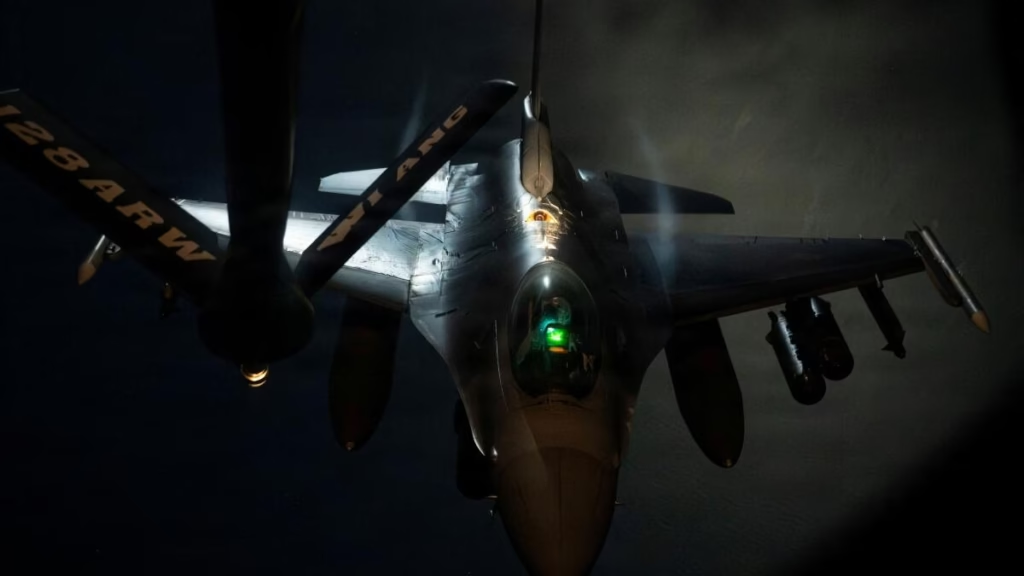
The weapons systems officer had ejected from an F-15E Strike Eagle after it was shot down inside Iran. While the pilot was recovered quickly, his crewmate vanished into rugged terrain.
Injured and isolated, he took shelter in a narrow mountain crevice. Still, he did not remain still for long. At one point, he climbed to a ridgeline 7,000 feet above sea level, carrying only a pistol, a communication device, and a tracking beacon.
Meanwhile, Iranian forces were actively searching for him. Their leaders had even placed a bounty on his capture, intensifying the pressure.
Despite those conditions, he managed to maintain intermittent contact with US forces, carefully balancing communication with concealment.
Washington Watches Every Move
Back in Washington, the unfolding crisis quickly became a top priority. The moment the jet was downed, attention shifted to locating and extracting the missing officer.
President Donald Trump remained in the White House, moving between the Oval Office and nearby rooms as updates poured in. He monitored the situation closely, even canceling his usual weekend plans.
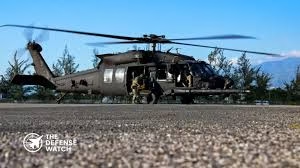
At the same time, the downing of the aircraft raised serious concerns. Iran’s ability to target multiple US assets, including an A-10 Warthog and a rescue helicopter, challenged earlier claims of air superiority.
Intelligence Deception Changes The Game
As military planners worked on a recovery operation, intelligence teams launched a parallel effort.
The CIA began circulating misleading information inside Iran, suggesting that both crew members had already been rescued. The goal was simple but critical, to confuse Iranian forces and slow their search.
Meanwhile, international coordination also played a role. Israel reportedly delayed certain planned strikes to avoid interfering with the rescue and provided intelligence support to the US effort.
Ultimately, it was intelligence work that pinpointed the airman’s exact location, setting the stage for the final phase of the mission.
Elite Forces Move Into The Mountains
Once the location was confirmed, US special operations forces moved quickly. Elite units, including Army Delta Force and Navy SEAL Team Six, were deployed to execute the rescue.
As they advanced, US aircraft carried out strikes in the surrounding area. The objective was to clear potential threats and prevent Iranian forces from reaching the airman first.
President Trump followed the operation from the Situation Room as the mission unfolded in real time.
A Risky Extraction With Unexpected Twists
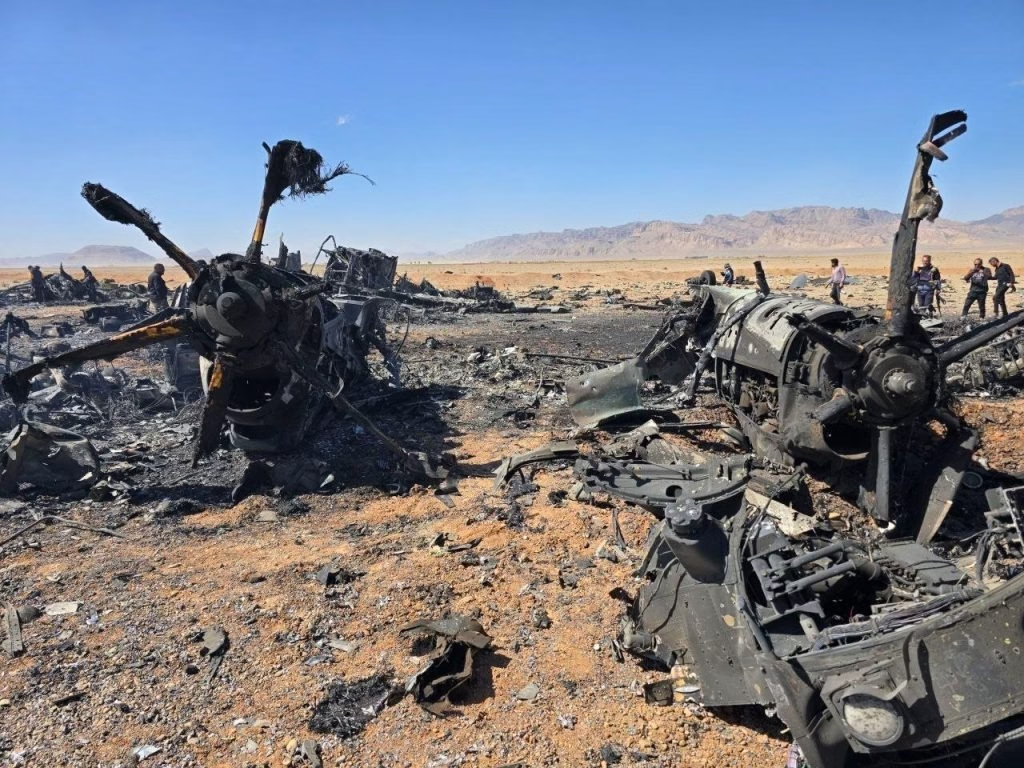
At a remote airstrip inside Iran, two MC-130J transport aircraft were positioned to extract the team and the rescued officer.
However, complications emerged. Both aircraft sustained damage during the operation, creating a new risk.
Faced with the possibility that the aircraft could fall into Iranian hands, US forces made a decisive call. Replacement planes were brought in, and the damaged aircraft were destroyed on the ground.
Dramatic Rescue Ends In Success
Despite the challenges, the mission achieved its goal. The injured officer was located, secured, and brought out safely.
“WE GOT HIM!” President Donald Trump wrote on social media after spending Saturday monitoring the operation from the White House. “Over the past several hours, the United States Military pulled off one of the most daring Search and Rescue Operations in U.S. History.”
Later, he added further detail about the rescued airman’s condition and courage.
“This brave Warrior was behind enemy lines in the treacherous mountains of Iran, being hunted down by our enemies, who were getting closer and closer by the hour, but was never truly alone,” Trump wrote.
He described the officer as “seriously wounded” and “really brave,” emphasizing the depth of the mission.
Trump called the operation “an AMAZING show of bravery and talent by all!”
Wreckage And Questions Remain
Meanwhile, Iranian state media released images showing what it claimed was wreckage from the downed US aircraft. The debris appeared consistent with an F-15.
Video footage showed a field of smoldering wreckage, including what looked like turboprop engines. However, the exact ownership of all the destroyed aircraft remained unclear.
Iran’s military claimed responsibility for shooting down the aircraft. Still, US officials did not confirm specific losses, stating only that no American service members were killed or injured during the rescue.
Satellite imagery analysis confirmed the presence of a small airstrip near the wreckage site, located about 50 kilometers from the city of Esfahan.
A High-Stakes Operation With Global Impact
The rescue mission brought together hundreds of personnel across military and intelligence agencies. It involved deception, coordination with allies, and rapid decision-making under extreme pressure.
While the airman’s survival story stands out, the broader implications remain significant. The operation exposed vulnerabilities, tested alliances, and highlighted the risks of operating deep inside hostile territory.
Still, in the end, the mission achieved what mattered most. One airman, hunted and injured, made it home.