

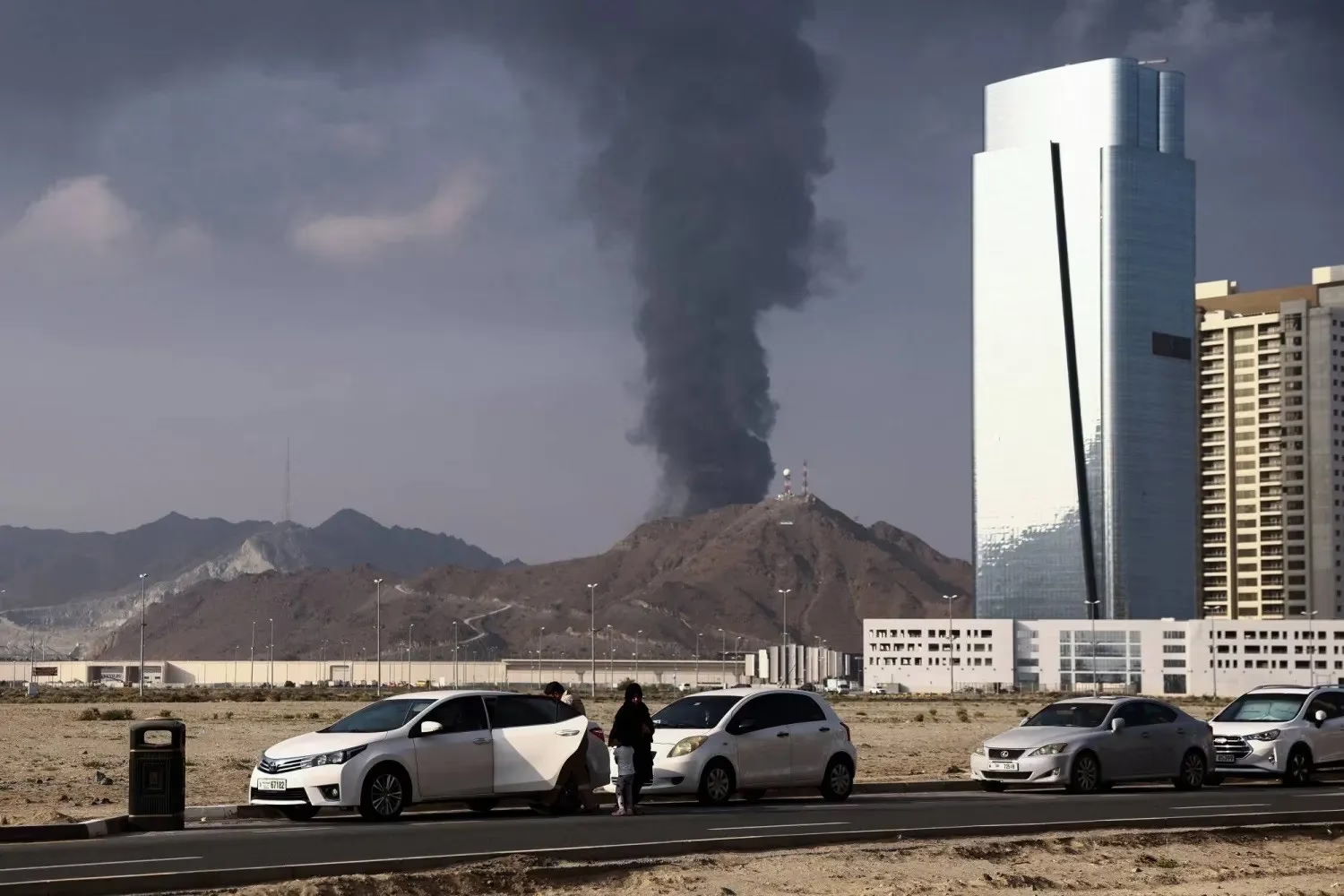
European markets kicked off the week under pressure, with traders reacting swiftly to escalating tensions in the Middle East. As geopolitical risks intensified, investor sentiment turned cautious, pushing major indices into the red.
Markets Turn Lower Amid Rising Tensions
Across the continent, stocks slipped as uncertainty dominated trading floors. The pan-European Stoxx 600 index closed slightly lower, with nearly all major sectors ending the session in negative territory.
Key national indices followed suit. France’s CAC 40, Germany’s DAX, the U.K.’s FTSE 100, and Spain’s IBEX 35 all posted modest declines. While losses were not dramatic, the uniform downturn signaled widespread concern among investors.
Meanwhile, global markets mirrored this cautious tone. European bourses tracked declines in Asia-Pacific markets, reflecting growing anxiety over geopolitical instability and its potential economic fallout.
U.S. Blockade Sparks Market Reaction
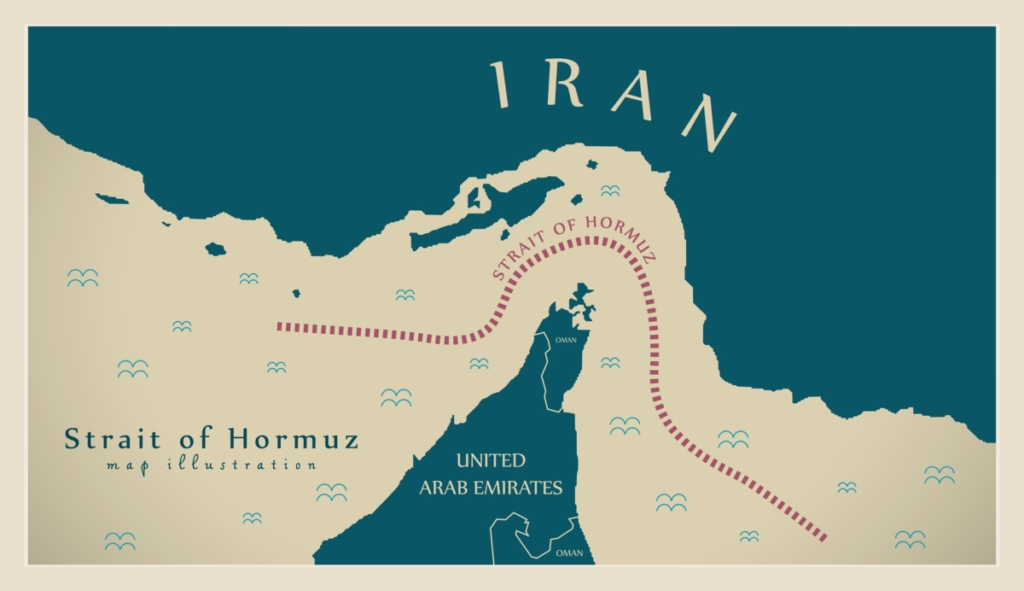
At the heart of the volatility was a dramatic move by Donald Trump. The United States initiated a blockade of the Strait of Hormuz, one of the world’s most critical oil shipping routes.
The decision was made public through a statement that quickly reverberated across financial markets. Trump declared: “Effective immediately, the United States Navy, the Finest in the World, will begin the process of BLOCKADING any and all Ships trying to enter, or leave, the Strait of Hormuz.”
He continued: “The Blockade will begin shortly. Other Countries will be involved with this Blockade. Iran will not be allowed to profit off this Illegal Act of EXTORTION.”
The move came after weekend talks between Washington and Tehran failed to produce a breakthrough, raising fears of prolonged disruption in the region.
Travel Stocks Take The Hardest Hit
Airlines and travel companies bore the brunt of investor anxiety. Concerns over jet fuel supply and rising oil costs dragged the sector sharply lower.
Shares in major carriers dropped significantly, with budget and full-service airlines alike feeling the pressure. Travel operators also slipped, reflecting fears that higher fuel prices and geopolitical uncertainty could dampen demand.
That said, the decline was not limited to airlines. Companies tied to aviation manufacturing and services also saw downward pressure as the broader sector reeled from the news.
Oil Prices Surge Above $100
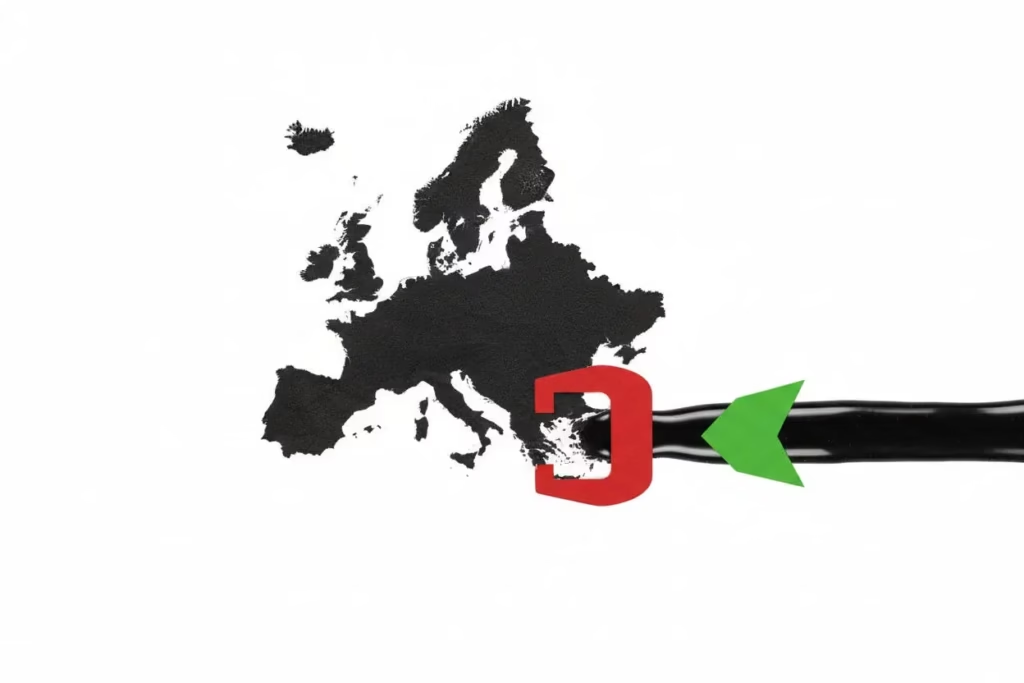
While most sectors struggled, energy companies found themselves in a stronger position. Oil prices surged past the $100-per-barrel mark as the blockade threatened supply routes.
This spike lifted oil and gas stocks, particularly firms with direct exposure to rising crude prices. Investors rotated into energy plays, seeking to capitalize on the shifting landscape.
However, the rally in oil also raised broader concerns. Higher energy costs could fuel inflation and slow economic growth, adding another layer of complexity for policymakers and markets alike.
Global Tensions Add To Uncertainty
The situation did not unfold in isolation. Alongside Middle East tensions, fresh geopolitical risks emerged elsewhere.
Trump warned China of what he described as “staggering tariffs” of around 50% if Beijing were to provide military assistance to Iran. The statement added another dimension to already strained global relations, leaving investors wary of further escalation.
As a result, markets faced a double shock, one from supply disruptions and another from potential trade conflicts.
Political Shift In Hungary Draws Attention
Meanwhile, developments in Europe added an unexpected twist. In Hungary, long-time leader Viktor Orbán conceded defeat following a sweeping victory by Péter Magyar and his pro-European Union party.
The result marked a significant political shift, with implications for regional alliances and policy direction. Markets responded positively, as Hungary’s currency strengthened notably against both the dollar and the euro.
Wall Street Opens On A Weak Note
Across the Atlantic, U.S. markets also reflected the cautious mood. Stocks opened lower, with the Dow Jones Industrial Average dropping sharply at the start of trading.
The S&P 500 held relatively steady, while the Nasdaq Composite edged down slightly. Although losses were contained, the direction underscored investor unease.
Earnings And Outlook In Focus
Investors are also keeping an eye on corporate earnings, with major European firms reporting results. However, with no significant economic data releases on the calendar, geopolitical developments are expected to remain the primary driver of market sentiment.
For now, traders appear to be bracing for continued volatility. The question remains, how long can markets withstand the pressure of rising geopolitical risks without deeper losses?