
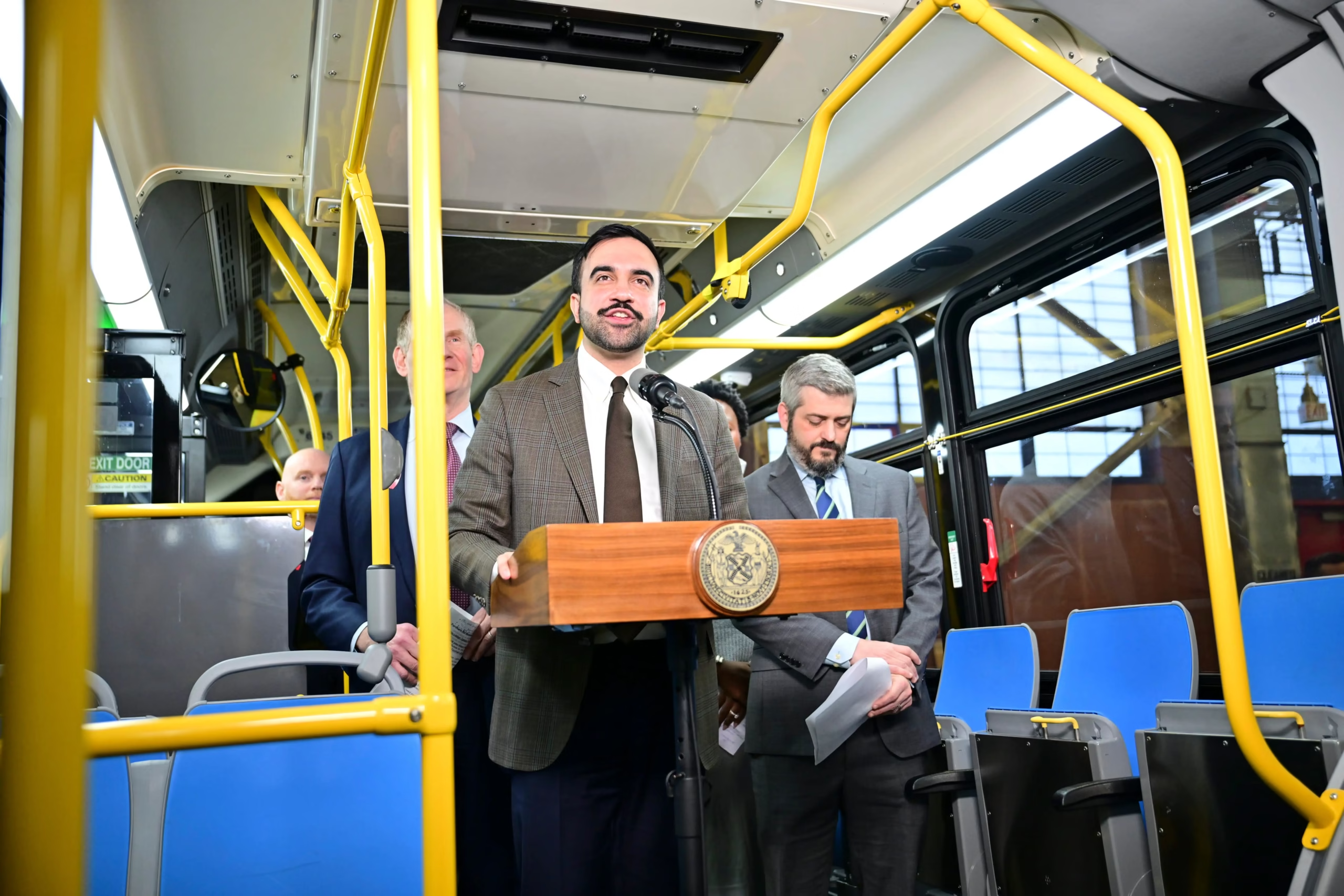
New York City Mayor Zohran Mamdani has made “fast and free buses” one of the most visible promises of his administration, pitching the idea as a fix for affordability and a long-troubled transit system. It is a headline-friendly pledge, easy to chant, easy to sell, and much harder to finance. That tension now sits at the center of a fierce debate over whether the city can really deliver “free” public transit without blowing a hole in the budget.
Supporters say the idea could ease financial pressure on riders, reduce clashes on buses, and make service more accessible for the people who depend on it most. Critics, however, warn that a citywide free bus system could create a major fiscal burden for the Metropolitan Transportation Authority unless officials find a lasting revenue stream and a realistic operating plan.
Why The Free Bus Proposal Connects With Riders
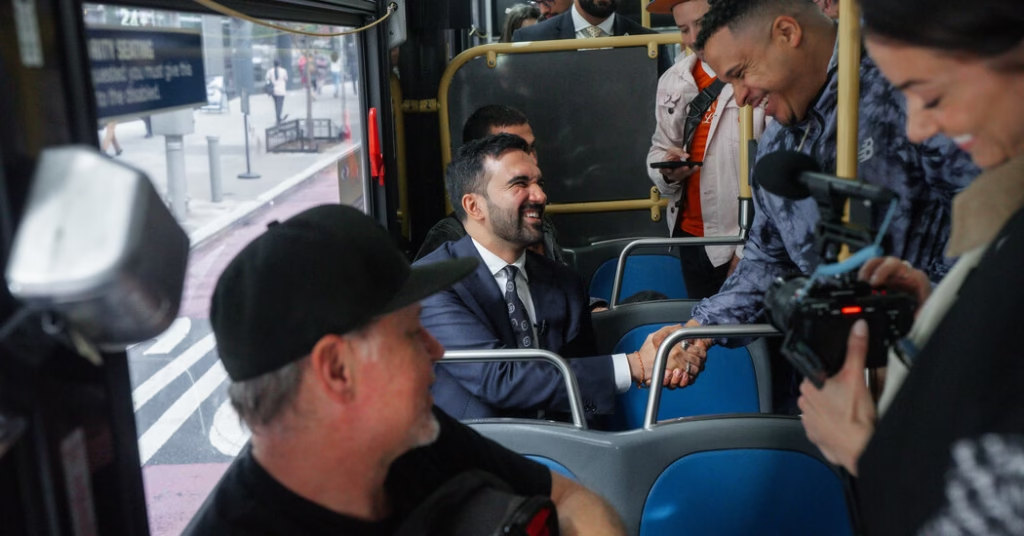
For many New Yorkers, the pitch lands because the current system frustrates them every day. Buses in the city remain painfully slow, even though millions of passengers rely on them.
“We’re the biggest ridership, and yet we’re subject to the slowest buses. It’s a fundamental unfairness. It’s an embarrassment,” Danny Pearlstein, policy and communications director at the Riders Alliance, said during a bus ride through the Bronx.
That frustration has given Mamdani’s plan real political energy. Pearlstein argued that bus riders, including students, seniors, and caregivers, often have less time and less money to spare, yet their needs have long taken a back seat on city streets.
“That is why this administration’s call for fast and free buses resonates,” he added.
Supporters Say Free Fares Could Reduce Tension
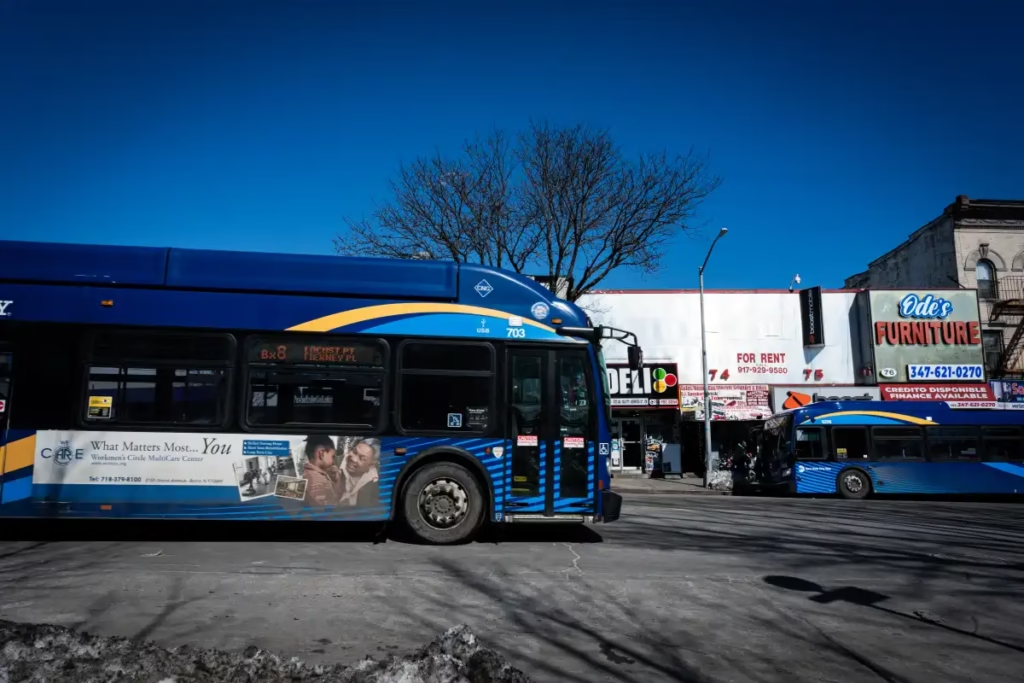
Backers of the plan say one of the clearest benefits would be safety. Their argument is simple: remove the fare dispute, and you remove a common source of conflict between passengers and drivers.
“When you eliminate fare payments on the buses, the friction between passengers and the drivers goes away,” said Brian Fritsch, associate director of the Permanent Citizens Advisory Committee to the MTA. “It does create a safer atmosphere for drivers. That has been a sore spot for a number of years.”
Transit analyst Charles Komanoff made a similar point, arguing that fare enforcement can trigger confrontations that put drivers at risk.
“Every year, there’s maybe a dozen cases in which a bus driver is assaulted,” Komanoff said. “Presumably that would shrink or maybe disappear entirely if there was no expectation to pay the fare in the first place.”
That is a compelling case, especially in a city where even a routine commute can quickly turn tense.
Pilot Program Offered Encouraging, But Limited, Results
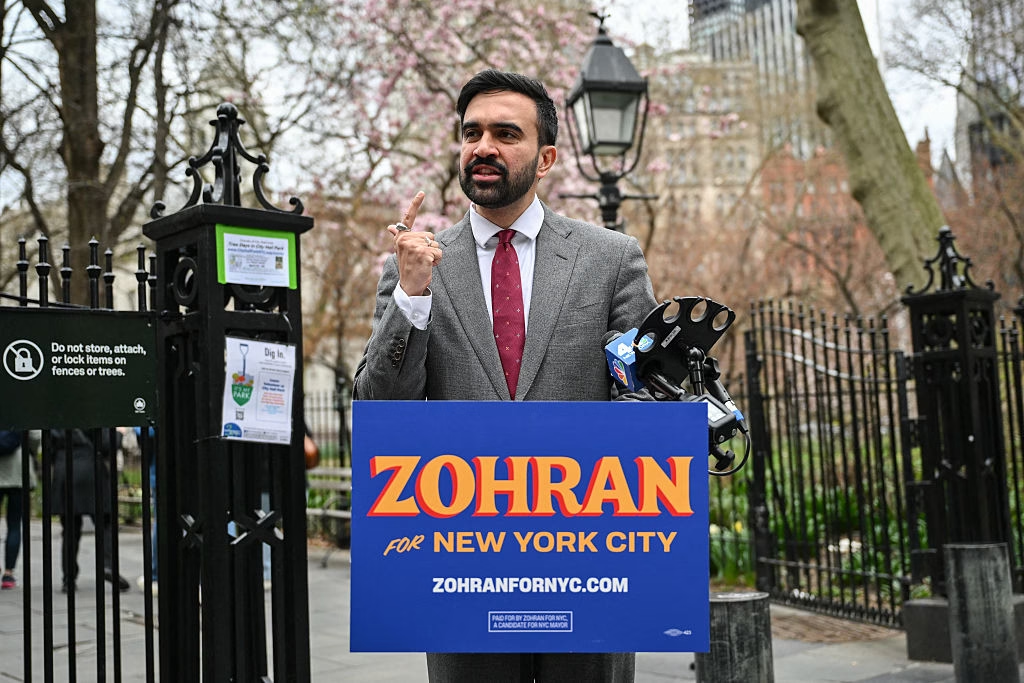
Supporters also point to the city’s fare-free bus pilot, which began in late 2023 and ran for nearly a year on one local route in each borough. Ridership rose on all five routes, with weekday use up about 30 percent and weekend use climbing closer to 40 percent.
Still, the numbers came with a catch. Much of that increase came from existing riders taking more trips, not from a wave of brand-new passengers entering the system. The MTA also estimated that the nine-month pilot cost about $12 million in lost fare revenue and related expenses.
That matters. Fare-free service may boost use, but it does not erase the bill. Someone still pays, whether it is taxpayers, Albany, or another part of the transit budget.
The Affordability Argument Remains Powerful
Even so, supporters insist the value of free buses goes beyond ridership charts. For low-income New Yorkers making short, essential trips, removing the fare could make daily life meaningfully easier.
“Most of the cost of bus operations is already paid for by public subsidies, not by fares,” Pearlstein said. “We’re collecting several hundred million dollars at the fare box, compared to several billion already invested. What we’re replacing is an order of magnitude smaller than what we already raise from other sources.”
Komanoff pushed the case further, arguing that free buses would allow people to make trips they currently skip because of cost.
“We want people to have the basic right to the city,” he said.
Supporters also say buses could move faster if riders no longer had to line up at the farebox. Komanoff estimated free fares might increase speeds by roughly 7 to 12 percent.
“That would be a material improvement in the lives of the two million New Yorkers a day who ride the buses,” he said.
Still, he also acknowledged the obvious truth that transit riders care about more than price.
“Let’s be clear,” Komanoff said. “Making the buses work better, having them be speedier, more reliable, more consistent, is probably more important than making them free. But I think we can do both.”
The Biggest Problem Is Still Money
This is where the policy runs into hard reality. Even advocates who like the concept admit that the financial piece is far from solved.
“If there were to be a free bus program, there would need to be some additional revenue coming into the MTA,” Fritsch said. “They obviously couldn’t just make cuts to make up that loss.”
That challenge is bigger than one annual budget line. Bus fare revenue helps support long-term MTA bonds, meaning the city would have to do more than just replace lost operating dollars. It would also have to rethink parts of the transit system’s financial structure.
Fritsch said potential funding ideas exist, but getting agreement is another matter.
“The mayor has initiatives, the MTA is a state agency,” he said. “They need to meet somewhere in the middle.”
Komanoff argued that city taxpayers should bear the cost, not suburban commuters or the MTA itself, and he pegged the annual price at roughly $800 million.
“That’s not chump change,” he said. “But it’s not a game changer for the city’s finances either.”
Critics Warn Of Bigger Operational Problems
Skeptics say the proposal risks overselling a transit system that already struggles to deliver consistent service. Fare-free buses may sound appealing, but expectations rise quickly when government promises something for nothing.
Charlton D’Souza, founding president of Passengers United, said the system is already under strain.
“We don’t have enough bus drivers. Trips are not getting filled,” D’Souza said. “If you make the buses free, people are going to expect a service.”
That warning cuts to the core of the debate. Riders do not just want cheaper transportation. They want buses that actually show up, move quickly, and run reliably.
D’Souza also pointed to the system’s vulnerability during tough economic periods.
“I lived through the 2008 budget cuts,” D’Souza said. “They cut bus routes; they cut subway lines. When elected officials talk, they don’t always understand the operational dynamics.”
He also questioned whether universal free service is the most equitable option if higher-income riders receive the same benefit as struggling residents.
“If somebody’s making $100,000 or $200,000, and they’re getting a free ride, how is that equitable?” D’Souza said.
For critics, that is the weakness in the universal model. They argue that targeted help, such as expanding aid for low-income riders, may make more sense than making every ride free for everyone.
A Transit Debate With A Bigger Ideological Edge
Mamdani, who identifies as a democratic socialist, has presented the funding issue through a broader political lens. His campaign message has leaned heavily on redistribution and an expanded public role in easing the cost of everyday life. Campaign materials have framed that agenda around “taxing corporations & the 1%.”
To supporters, that approach is a moral response to inequality. To skeptics, it reflects a governing philosophy that replaces user-based systems with taxpayer-funded universal benefits.
That is why this fight is about more than buses. It is also about what kind of city government New Yorkers want, and how much of daily life they believe should be publicly financed.
The Idea Has Already Shifted The Conversation
Even those who remain cautious admit Mamdani has changed the terms of the debate. What once sounded fringe now sits in the middle of a serious public discussion.
“I liked his positivity, his can-do attitude,” Komanoff said, recalling when he first met Mamdani at a congestion pricing rally. “He didn’t seem stuck in the usual parameters of politics.”
That political energy may help keep the proposal alive. But good energy alone will not close funding gaps, hire more drivers, or align City Hall with Albany.
For now, the free bus proposal remains suspended between ambition and arithmetic. It is popular with many riders, attractive to advocates, and loaded with unresolved financial and operational questions.
As Fritsch put it, “There’s no shortage of ideas. The question is where exactly the money comes from and who actually has the political courage to make it happen.”