

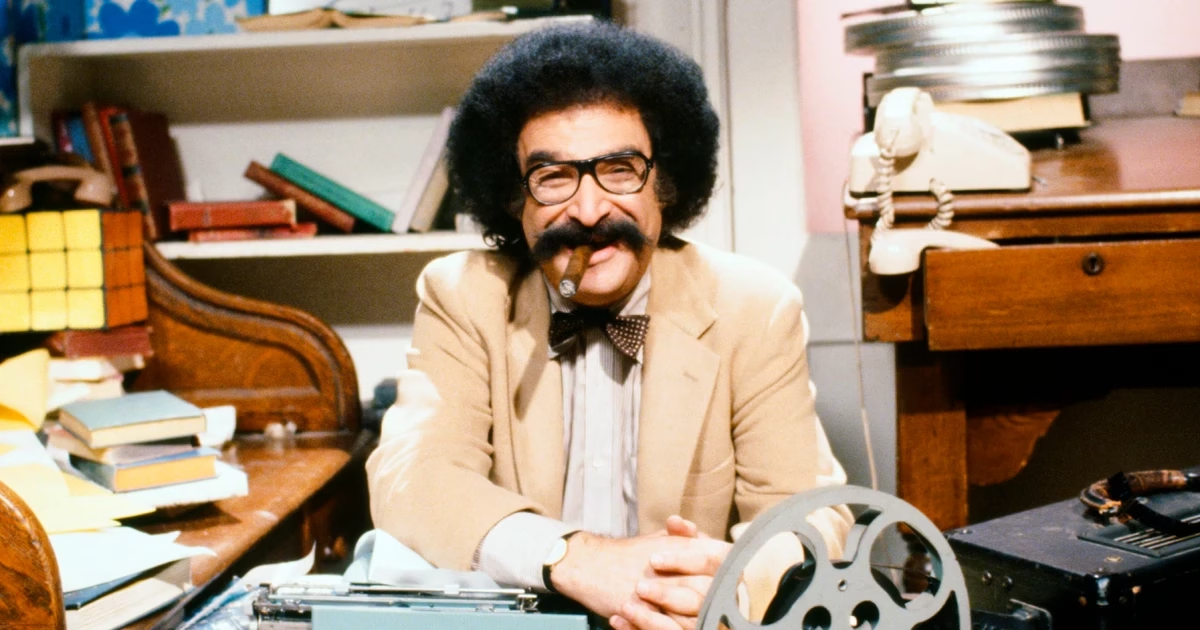
Gene Shalit, the instantly recognizable film critic whose wild hair, oversized mustache, colorful bow ties and rapid-fire puns became staples of American television, has died at the age of 100.
His death was announced Friday through a family statement cited by NBC. Additional details were not immediately released.
For more than 40 years, Shalit brought movie reviews, book discussions and cultural commentary into millions of homes through the long-running morning program “Today.” His quirky style, sharp humor and unmistakable appearance made him one of the most memorable personalities in television history.
A Critic Who Became a Cultural Icon
Shalit was far more than a reviewer. He became a television character in his own right.
With his thick handlebar mustache, unruly hair, horn-rimmed glasses and elaborate bow ties, he stood out in an industry filled with polished broadcasters. Viewers often tuned in not just to hear his opinions but to enjoy the playful delivery that made even harsh reviews entertaining.
His trademark approach mixed literary references, wordplay and self-aware humor. Over the decades, he crafted countless memorable one-liners that became part of his public identity.
Reviewing the 1987 comedy Ishtar, Shalit famously declared:
“‘Ishtar’ ish tarrible!”
His reaction to the 1974 prison football film The Longest Yard was equally biting:
“This movie should be penalized half the distance to the goal — twice.”
Years later, while criticizing the 1991 action-comedy Hudson Hawk, he joked:
“This movie is awful, spelled o-f-f-a-l.”
Those punchlines helped establish him as one of America’s most recognizable entertainment critics.
The Controversy That Sparked National Debate
While Shalit built a reputation on humor, one review generated significant backlash.
His criticism of the acclaimed 2005 film Brokeback Mountain drew condemnation from LGBTQ advocacy groups after he described Jake Gyllenhaal’s character, Jack Twist, as a “sexual predator” who “tracks Ennis (Heath Ledger) down and coaxes him into sporadic trysts.”
The remarks prompted demands for an apology.
Shalit later responded with a letter expressing regret. He acknowledged that he had “angered, agitated and hurt many people,” while emphasizing that he had had “no intention of casting aspersions on anyone in the gay community or the gay community itself.”
The episode became one of the most widely discussed moments of his career.
A Fixture on Morning Television
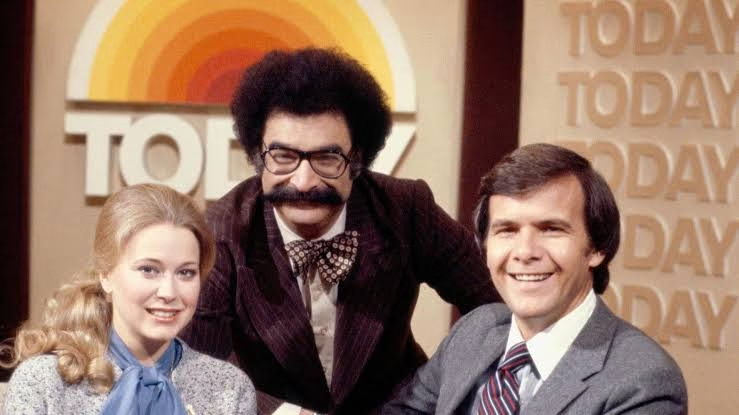
Television is known for constant change, yet Shalit remained a dependable presence for decades.
He first joined “Today” in 1968 as a book reviewer. By 1970 he had become a regular contributor, and from 1973 onward he served as the program’s principal cultural critic.
His run lasted until his retirement in 2010, making him one of the longest-serving personalities associated with a major American television program.
Throughout those years, he worked alongside generations of broadcasters and hosts as the morning show evolved through shifting audiences and changing media landscapes.
His Love of Movies Never Faded
Even after reviewing thousands of films, Shalit maintained the enthusiasm of a newcomer.
Producer Guy Ludwig recalled attending a screening with him late in his career and being amazed by his excitement.
“My God, how could you?” Ludwig remembered asking. “You’ve seen two million movies.”
Shalit’s answer perfectly captured his enduring passion:
“Yeah, but I’ve never seen this one!”
That sense of curiosity remained central to his success.
From New Jersey to National Fame
Born Eugene Theodore Shalit on March 25, 1926, in New York City, he was the son of Latvian immigrants Isadore and Anna Shalit.
He spent much of his youth in New Jersey, where his father operated a drugstore. After graduating from the University of Illinois in 1949, he moved to New York and began building a career in media.
One of his earliest jobs involved attending live performances and laughing at comedians for a small paycheck.
Recalling the unusual assignment years later, he said:
“They weren’t funny.”
He continued:
“I couldn’t laugh. One other person was laughing. He got $5 too.”
The experience lasted only a day before he quit.
Soon afterward, he worked in publicity at Look magazine before moving into journalism and cultural criticism.
Beyond Movies and Television
Shalit’s interests stretched far beyond film reviews.
He wrote for numerous major publications, hosted television programs, appeared on game shows and produced the widely syndicated NBC Radio feature Man About Anything.
In 1987, he edited and released Laughing Matters: A Celebration of American Humor, a collection featuring work from hundreds of writers and cartoonists.
Music also played an important role in his life. A bassoon player and classical music enthusiast, he performed with prestigious orchestras and even conducted a symphony concert.
He often joked that none of those organizations ever invited him back.
A Muppet-Like Legend
Shalit’s distinctive appearance inspired comparisons throughout his career.
In one of the most memorable tributes, Jim Henson’s Muppets created a version of Bert styled with Shalit’s signature hair and mustache. The resemblance became a running joke, and Shalit later participated in Muppet-related projects, including magazine features and cookbook contributions.
The connection only reinforced his status as one of television’s most visually recognizable figures.
Family and Lasting Legacy
Shalit was married to Nancy Lewis from 1951 until her death in 1978. Together they raised six children: Peter, Willa, Emily, Amanda, Nevin and Andrew. Their daughter Emily died in 2012.
His legacy extends beyond the reviews and punchlines that made him famous.
For generations of viewers, Gene Shalit represented a unique blend of intelligence, humor and enthusiasm. Whether praising a masterpiece or dismantling a box-office flop with a pun, he delivered criticism with a style that was unmistakably his own.
His voice, appearance and wit helped define an era of American television, and his influence on entertainment journalism will long outlive the films he reviewed.