

Global trade entered 2026 on the back of a historic year. Preliminary figures show international trade expanded by roughly 7% in 2025, pushing total trade value beyond $35 trillion for the first time. Yet while growth remains on track this year, economists expect the pace to cool as businesses navigate a more fragmented and uncertain global landscape.
Geopolitical tensions, shifting supply chains, rising tariffs, digital transformation and environmental policies are all reshaping how goods and services move across borders. These forces are creating both challenges and opportunities for governments, investors and exporters worldwide.
Global Growth Loses Momentum
The world economy is expected to expand by 2.6% in 2026, a modest pace that reflects slowing activity across major markets.
The United States is projected to grow by 1.5%, down from 1.8% last year. China’s economy is forecast to expand by 4.6%, compared with 5% in 2025. Across Europe, fiscal support measures may provide some relief, but demand is expected to remain relatively weak.
For developing nations, slower growth often means softer export demand, tighter financial conditions and greater exposure to economic shocks. As a result, many countries are increasingly looking toward regional trade partnerships, diversification strategies and digital integration to strengthen resilience.
WTO Reform Faces A Defining Moment
Global trade rules are approaching a critical juncture as the World Trade Organization prepares for its 14th ministerial conference in Yaoundé.
The gathering comes at a time when unilateral tariffs, trade restrictions and geopolitical disputes are placing pressure on the multilateral trading system.
Developing economies are expected to focus on restoring the WTO’s dispute settlement mechanism, preserving special treatment provisions that provide flexibility for lower-income countries, and advancing negotiations related to agriculture, fisheries, digital trade and investment facilitation.
Climate-related trade measures are also expected to dominate discussions as governments seek to balance environmental commitments with economic competitiveness.
Tariffs Continue To Drive Uncertainty
 Protectionist policies remain a significant factor in global commerce.
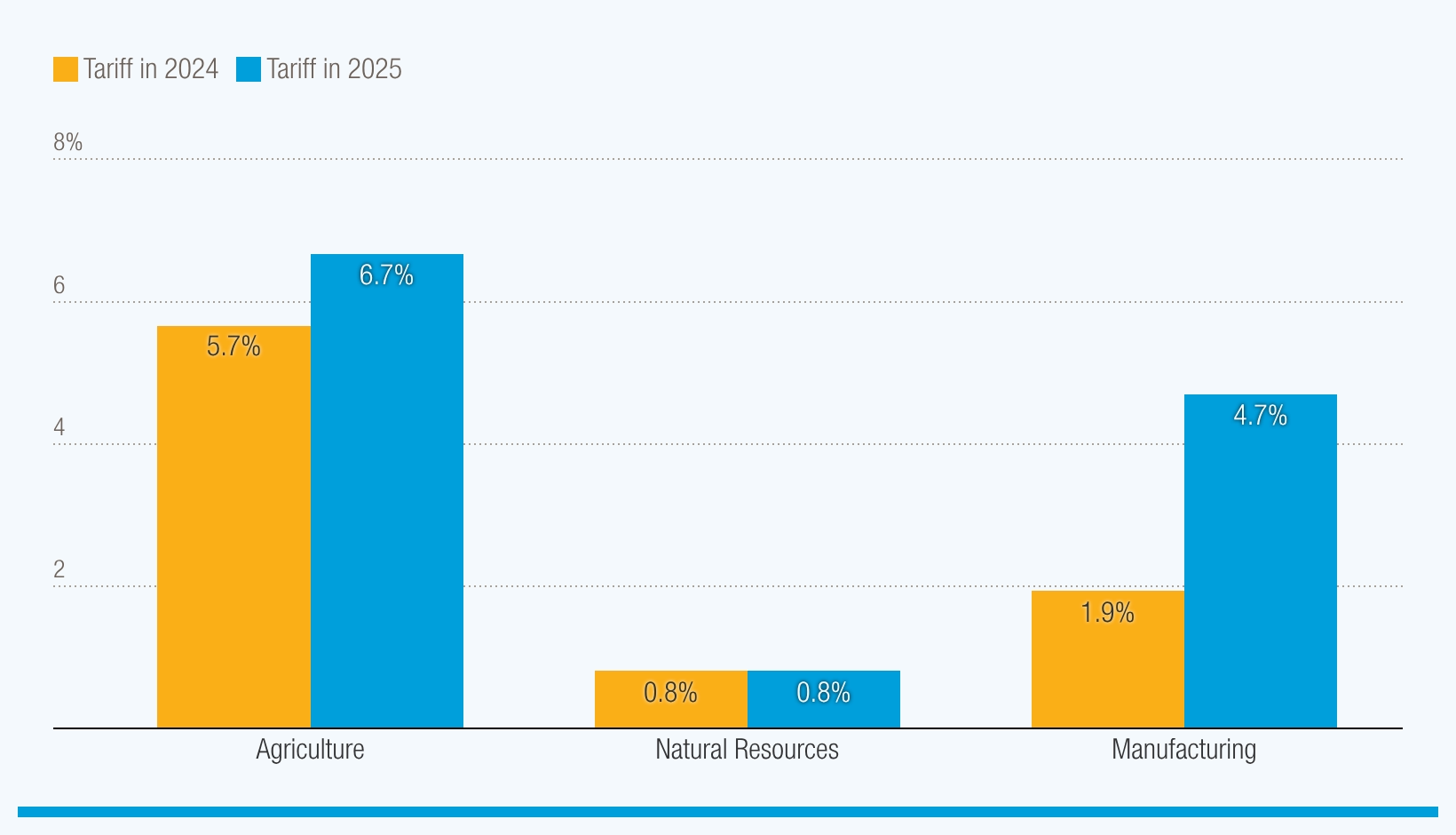
Governments increasingly view tariffs not only as economic tools but also as strategic instruments tied to industrial policy and national security objectives. Manufacturing sectors experienced some of the sharpest tariff increases during 2025, affecting industries ranging from automotive production to machinery and textiles.
Even before new tariffs take effect, businesses often feel the impact. Higher costs can reduce demand, alter sourcing decisions and discourage long-term investment planning.
Smaller economies face the greatest risks because they typically have fewer alternatives when trade conditions suddenly change.
Supply Chains Keep Shifting
Companies are continuing to rethink global value chains.
Rather than focusing solely on cost efficiency, businesses are increasingly prioritizing risk management. Many firms are diversifying suppliers, relocating production closer to consumers and bringing more operations under direct control to secure access to critical inputs.
Nearly two-thirds of global trade now takes place through interconnected value chains. While these adjustments can improve resilience, they may also increase costs and reduce efficiency.
Countries with strong infrastructure, skilled workforces and stable investment environments stand to benefit. Others risk being left behind if they fail to adapt.
Services Become The Growth Engine
Services are playing a larger role in international trade than ever before.
Accounting for 27% of global trade, services expanded by roughly 9% in 2025, significantly outpacing goods trade. Digitalization is accelerating this shift, with digitally deliverable services now representing more than half of global services exports.
However, the benefits remain unevenly distributed.
Developed economies derive a substantial share of their services exports through digital delivery, while least developed countries remain far behind. Closing this digital gap will require investments in infrastructure, workforce skills and supportive regulatory frameworks.
South-South Trade Gains Strength
 Trade among developing economies continues to expand rapidly.
Since the mid-1990s, South-South merchandise exports have surged from approximately $500 billion to $6.8 trillion. Today, a majority of exports from developing nations are directed toward other developing markets.
Asia remains the primary driver of this trend, particularly through regional manufacturing networks. At the same time, trade ties across Africa and Latin America are deepening as countries seek alternatives to slower-growing advanced economies.
The trend suggests developing nations will play an increasingly influential role in shaping future trade patterns.
Climate Policies Reshape Commerce
Environmental considerations are becoming central to trade policy.
Countries are translating climate commitments into concrete regulations, including carbon pricing systems and new border adjustment mechanisms. At the same time, governments are investing heavily in clean-energy industries and green technologies.
Markets for clean-energy products and services could reach hundreds of billions of dollars annually by the end of the decade.
For developing countries, access to financing, technology and technical support will be essential to remain competitive as environmental standards tighten worldwide.
Critical Minerals Face Growing Pressures
Prices for several key clean-energy minerals have fallen significantly from their pandemic-era highs.
Oversupply, slower battery demand and technological advancements have contributed to lower prices for materials such as lithium, cobalt and nickel.
While lower prices reduce costs for electric vehicles and renewable energy projects, they also dampen investment in new mining operations.
Meanwhile, governments continue to impose export restrictions and pursue strategic agreements aimed at securing access to critical resources. As a result, mineral supply chains remain vulnerable to geopolitical disruptions.
Food Trade Remains Essential
Agricultural trade continues to play a vital role in global food security.
Many developing nations depend heavily on imported food and agricultural products. However, conflicts, extreme weather events and trade restrictions continue to create uncertainty across food markets.
Fertilizer prices surged during 2025 and remain elevated, increasing production costs for farmers around the world.
With droughts, floods and supply disruptions still affecting agricultural output, maintaining open and efficient food trade channels will remain a priority throughout 2026.
Governments Tighten Trade Rules
Trade regulations are becoming increasingly complex.
Since 2020, governments have introduced thousands of measures that affect international commerce. Technical standards, health regulations, environmental requirements and national security controls now influence a large share of global trade flows.
Many of these policies serve legitimate objectives, but compliance costs often fall most heavily on smaller exporters and lower-income countries.
As non-tariff barriers continue to expand, policymakers face the challenge of balancing national priorities with the need to maintain an open and inclusive trading system.
Navigating A More Fragmented Future
The global trading system is entering a period defined by slower growth, greater geopolitical competition and increasing regulatory complexity.
Businesses are adjusting supply chains, governments are redefining trade priorities and emerging economies are playing a larger role in shaping global commerce. At the same time, digital services, environmental policies and strategic resource competition are creating new opportunities alongside fresh risks.
How countries respond to these shifts may determine who thrives in the next chapter of global trade and who struggles to keep pace.