
A mystery that lingered for more than two decades has finally been solved.
Authorities have identified human remains discovered inside a sleeping bag in a remote section of Washington state’s Olympic National Park, bringing long-awaited answers to a case that had remained unsolved for nearly 30 years.
The identification was made possible through advanced forensic testing and genetic genealogy, allowing investigators to determine that the remains belonged to Joseph Louis Serrao Jr., a man originally from Hawaii who disappeared in 1998.
Discovery In A Remote Wilderness Area
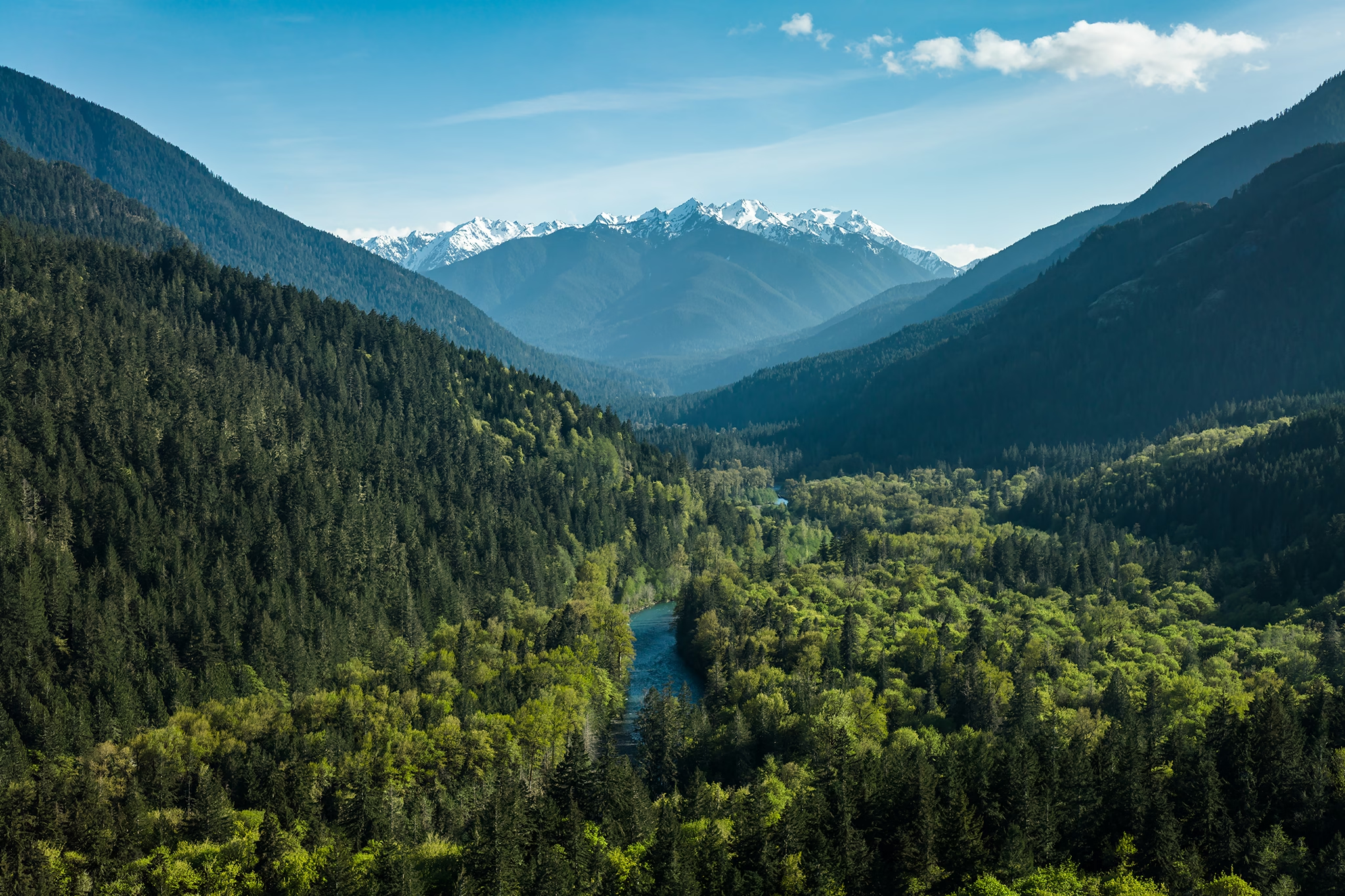
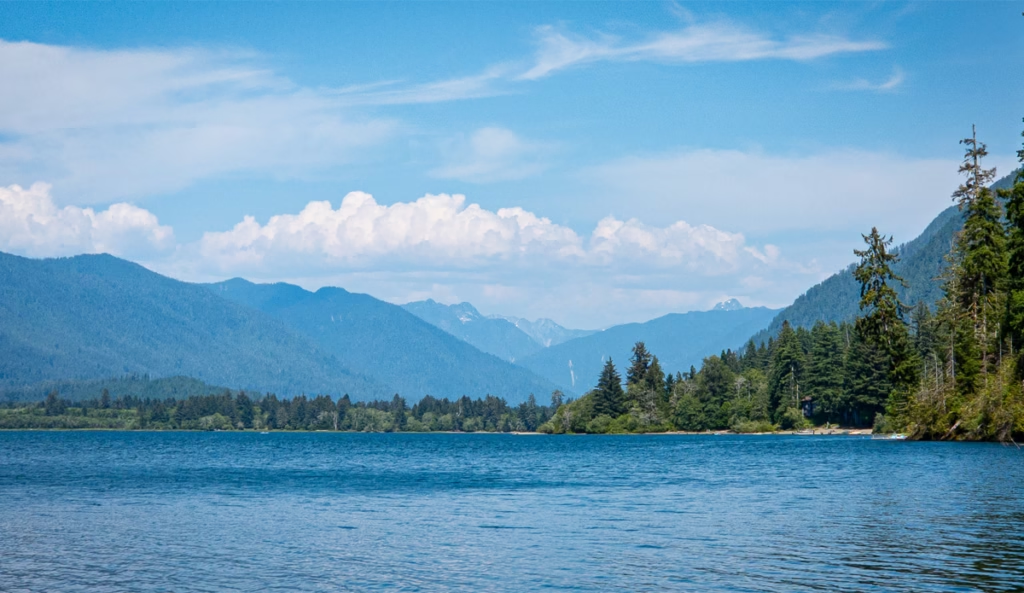
According to officials, the remains were first found in July 2000 when a researcher came across a tent in a secluded backcountry area near the Sol Duc River within Olympic National Park.
Inside the tent was a sleeping bag containing human skeletal remains. Investigators also recovered several personal belongings from the campsite, including binoculars, a day hiking pack, a shoulder bag, a folding saw, a blanket, and winter clothing.
At the time, authorities had little information to work with.
A forensic pathologist from King County’s medical examiner’s office estimated that the deceased was likely a man between 30 and 50 years old who had died anywhere from six months to two years before the remains were discovered.
Investigation Hits A Dead End
 Despite efforts to determine the person’s identity, investigators faced significant obstacles.
Officials were unable to obtain usable fingerprints, and the available evidence provided few clues. As a result, the case stalled, leaving the man’s identity unknown for years.
Meanwhile, Serrao’s family had been searching for answers of their own. Relatives later told forensic specialists that they had not heard from him since 1998.
Serrao, who was born in December 1960, would have been in his late 30s around the time investigators believe he died.
DNA Technology Provides A Breakthrough
The case took a major turn in 2024 when an anthropologist working with the medical examiner’s office submitted a DNA sample from the unidentified remains for advanced testing.
Using forensic genealogy, experts analyzed the DNA and searched for potential biological relatives. The process enabled investigators to identify possible family connections by 2025.
Authorities then contacted relatives across several states, including Hawaii. DNA samples collected from family members were ultimately compared against the genetic material recovered from the remains.
The match confirmed the identity of the man as Joseph Louis Serrao Jr.
Family Finally Gets Answers
The identification closes a chapter that remained open for decades and highlights how modern forensic science continues to solve long-standing mysteries.
Investigators credited collaboration between the National Park Service, King County authorities, forensic experts, and genealogical researchers for helping bring the case to a conclusion.
“This case remained unresolved for nearly 30 years, but investigators never lost sight of the goal of identifying this individual and finding answers for his family,” Debra Flowers, deputy chief of the park service’s criminal investigative division, said in a statement.
“I’m proud of the persistence and collaboration that made this identification possible, and I hope it brings some measure of closure to those who have spent so many years wondering what happened to Joseph.”
While questions about the circumstances surrounding Serrao’s death may remain, authorities say the successful identification offers a measure of peace to loved ones who spent decades without knowing his fate.