

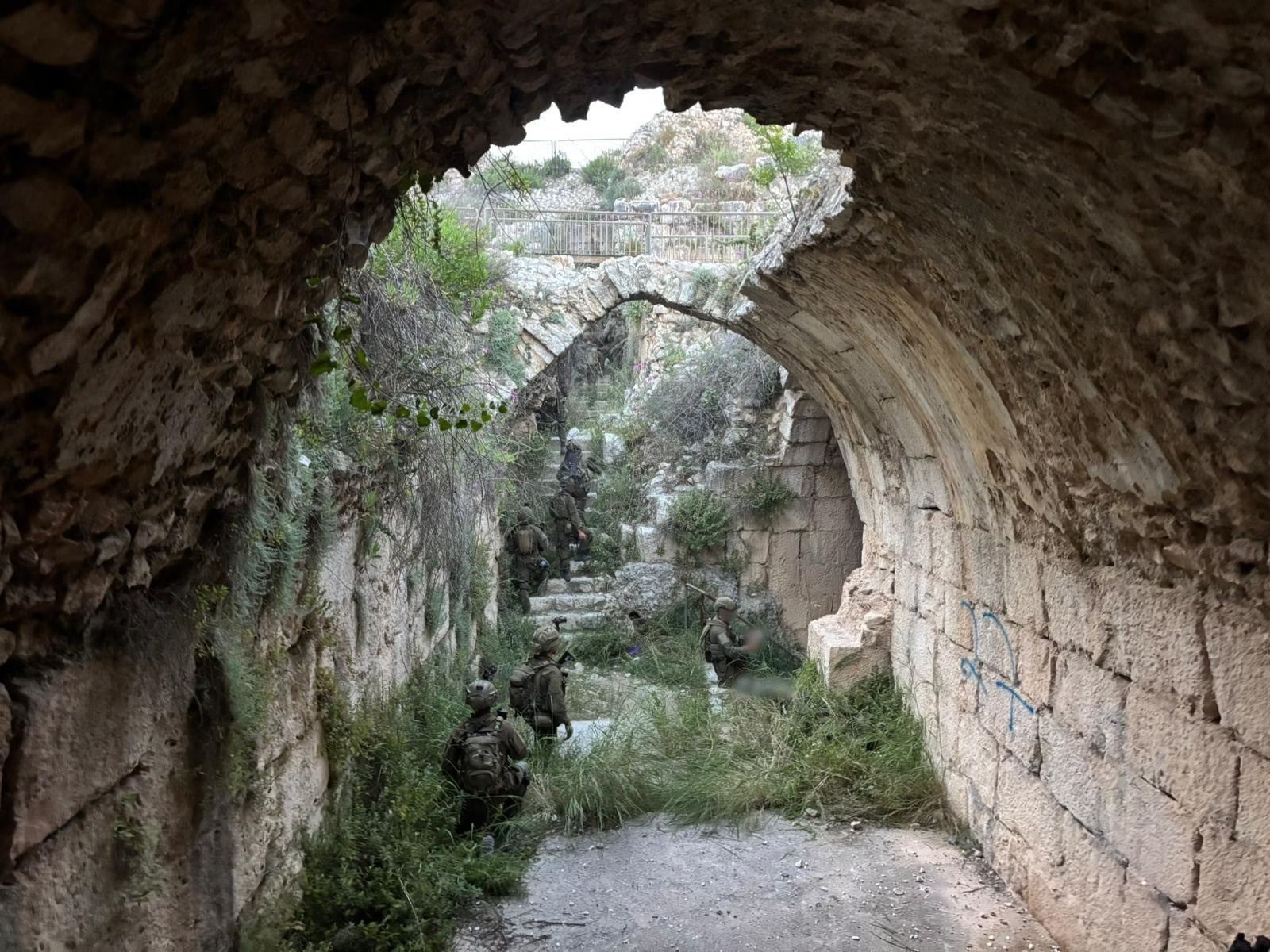
Lebanon is home to some of the world’s oldest civilizations, with archaeological landmarks that span thousands of years. Today, many of those treasured sites sit dangerously close to the front lines as Israel expands its military operations in southern Lebanon.
The latest escalation has raised growing concerns among cultural experts and international organizations, who warn that centuries of history could be lost amid the fighting. From Crusader fortresses to Phoenician temples and Roman ruins, some of Lebanon’s most significant heritage sites are now facing an uncertain future.
Beaufort Castle Becomes A Battlefield Landmark
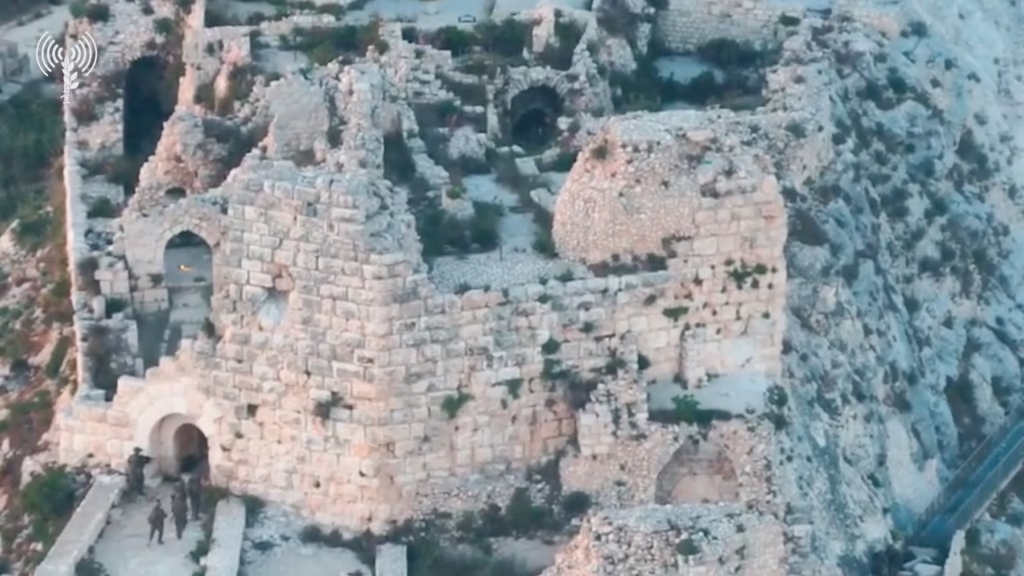
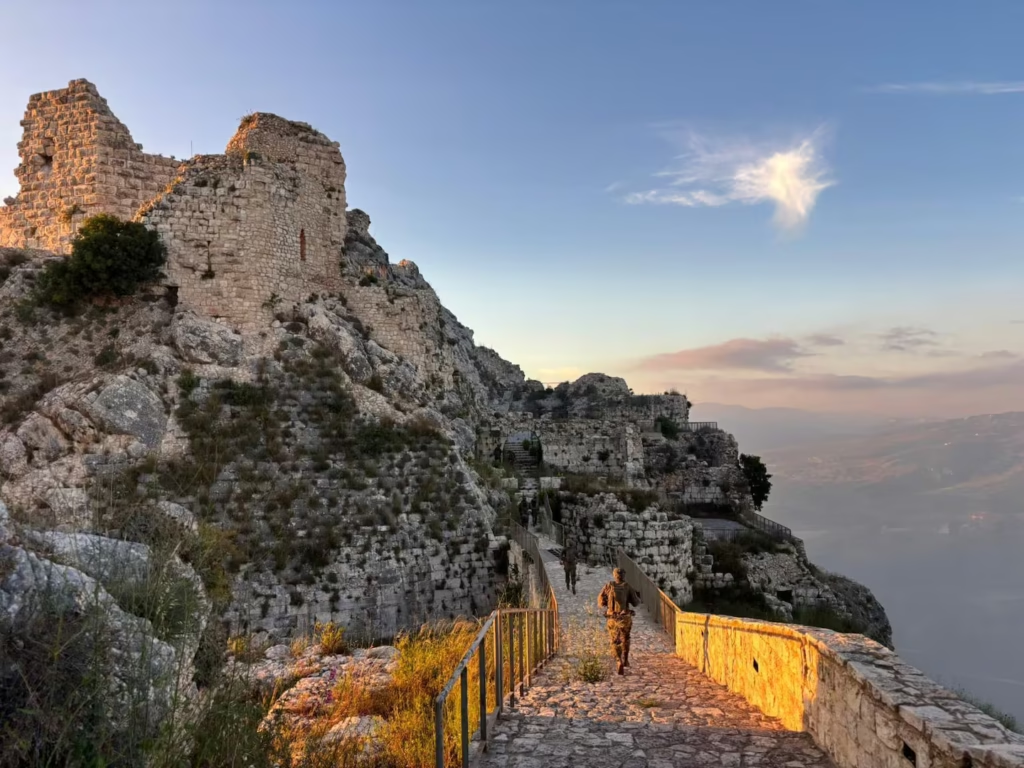
One of the most prominent sites affected by the conflict is Beaufort Castle, a medieval fortress overlooking southern Lebanon.
Israeli forces captured the castle on Saturday after days of intense clashes. The fortress, located near the city of Nabatieh, stands atop a rocky hill and has served as a strategic military position for centuries.
The seizure marks part of Israel’s deepest military push into Lebanon in more than two decades. Troops have moved north of the Litani River and advanced toward the Zahrani River, expanding the scope of military operations in the region.
Known in Arabic as Qalaat al-Shaqif, Beaufort Castle dates back to the 12th century and rises roughly 700 meters above southern Lebanon. Throughout its history, control of the fortress shifted between Crusaders, regional rulers, Ottoman authorities, Palestinian fighters, and Israeli forces.
The castle was previously occupied by Israel following its 1982 invasion of Lebanon and remained under Israeli control until the withdrawal from southern Lebanon in 2000.
UNESCO Heritage Sites Face Growing Risks
 Lebanon currently has six UNESCO World Heritage Sites, locations recognized for their exceptional cultural and historical importance.
Officials fear that continued military activity could place several of these landmarks in danger.
Lebanon’s Culture Minister Ghassan Salame warned that attacks in the country’s south are placing historic locations at risk.
“Bombings fell very close to the ruins of Tyre,” Minister Salame said, adding that the medieval Beaufort Castle overlooking Nabatieh was “directly hit”.
The concerns are especially focused on the ancient city of Tyre, one of the most important centers of the Phoenician civilization.
Ancient Tyre Under Pressure
Located approximately 83 kilometers south of Beirut, Tyre contains remarkable remnants of ancient civilizations, including extensive Roman ruins and one of the largest hippodromes ever built during the Roman Empire.
The city’s history stretches back to the third millennium BC. Over centuries, Tyre evolved into a dominant Mediterranean maritime power, flourishing under Greek, Roman, and Byzantine rule before gradually declining after the Crusades.
Recent military operations and displacement orders have forced large numbers of residents to leave the area. Estimates suggest that nearly 200,000 people have fled Tyre and nearby communities, while more than one million people have been displaced across Lebanon during the broader conflict.
Enhanced Protection For Cultural Heritage
Beyond its UNESCO-listed landmarks, Lebanon also hosts at least 39 cultural sites that have been granted provisional enhanced protection status.
This designation provides the highest level of legal safeguarding available under international law. Violations involving protected cultural sites can constitute serious breaches of international agreements, including the 1954 Hague Convention and its Second Protocol.
In April, UNESCO officials highlighted the importance of preserving cultural heritage during conflicts.
“When heritage is destroyed anywhere, moral standards are undermined, social cohesion is eroded, and trust and resilience are jeopardised,” stated Lazare Eloundou Assomo, UNESCO’s assistant director-general for culture.
Historic Castles Across Southern Lebanon
 Beaufort Castle is not the only medieval fortress facing potential threats.
The Mount Amel region contains four additional castles that reflect centuries of military and architectural evolution. These include Qalaat Tibnin, Qalaat Chakra, Qalaat Deir Kifa, and Qalaat Chamaa.
Originally built as Crusader strongholds during the 12th century, the fortresses were repeatedly expanded and modified by later rulers. Archaeological evidence found at some locations dates back to the Roman era and even the Bronze Age.
Together, the castles provide a unique record of military architecture and regional history spanning hundreds of years.
Temple Of Eshmun Reflects Phoenician Legacy
Near the coastal city of Sidon stands the Temple of Eshmun, one of the most important religious sites of the ancient Phoenician world.
Covering nearly nine acres along the Awali River, the sanctuary was dedicated to Eshmun, the Phoenician god of healing. The site remains one of the most significant surviving examples of Phoenician religious architecture.
Its preservation is considered critical to understanding the region’s ancient spiritual traditions.
Sidon’s Historic Center Holds Centuries Of History
The historic core of Sidon, also known as Saida, represents another protected cultural treasure.
The city prospered as a major Phoenician port and became famous for trade, glass production, metalwork, and the manufacture of purple dye.
Today, the historic district contains an ancient settlement mound, a fishing harbor, and medieval sea and land castles. The area remains one of Lebanon’s most important living historical centers.
Other Protected Sites Across Lebanon
Several additional archaeological landmarks remain under enhanced protection.
The Chhim Archaeological Site preserves the remains of a Roman and Byzantine village, complete with residential buildings, a temple dedicated to Helios, and a Byzantine basilica.
The Chehabi Citadel overlooks Hasbaiyya and served as a major stronghold for the Chehab family after originally functioning as a Crusader fortress.
Near Tyre, Qabr Hiram, traditionally known as the Tomb of Hiram, features a massive limestone sarcophagus associated with the legendary Phoenician ruler.
Qana Cave, revered in Christian tradition, contains archaeological remains dating to the Chalcolithic and Early Bronze Age periods and is believed by some to have been visited by Jesus and his disciples.
Meanwhile, the Shawakeer Archaeological Tell preserves evidence of human activity dating back to the Lower Paleolithic era, making it one of the oldest known archaeological locations in southern Lebanon.
Heritage Preservation Amid Conflict
As military operations continue across southern Lebanon, historians, archaeologists, and cultural officials are increasingly concerned about the future of the country’s irreplaceable landmarks.
Many of these sites survived empires, invasions, and centuries of political change. However, experts warn that modern warfare poses a serious threat to cultural treasures that cannot be rebuilt once destroyed.
The conflict is not only reshaping the region’s present but could also leave a lasting mark on the remnants of its ancient past.