

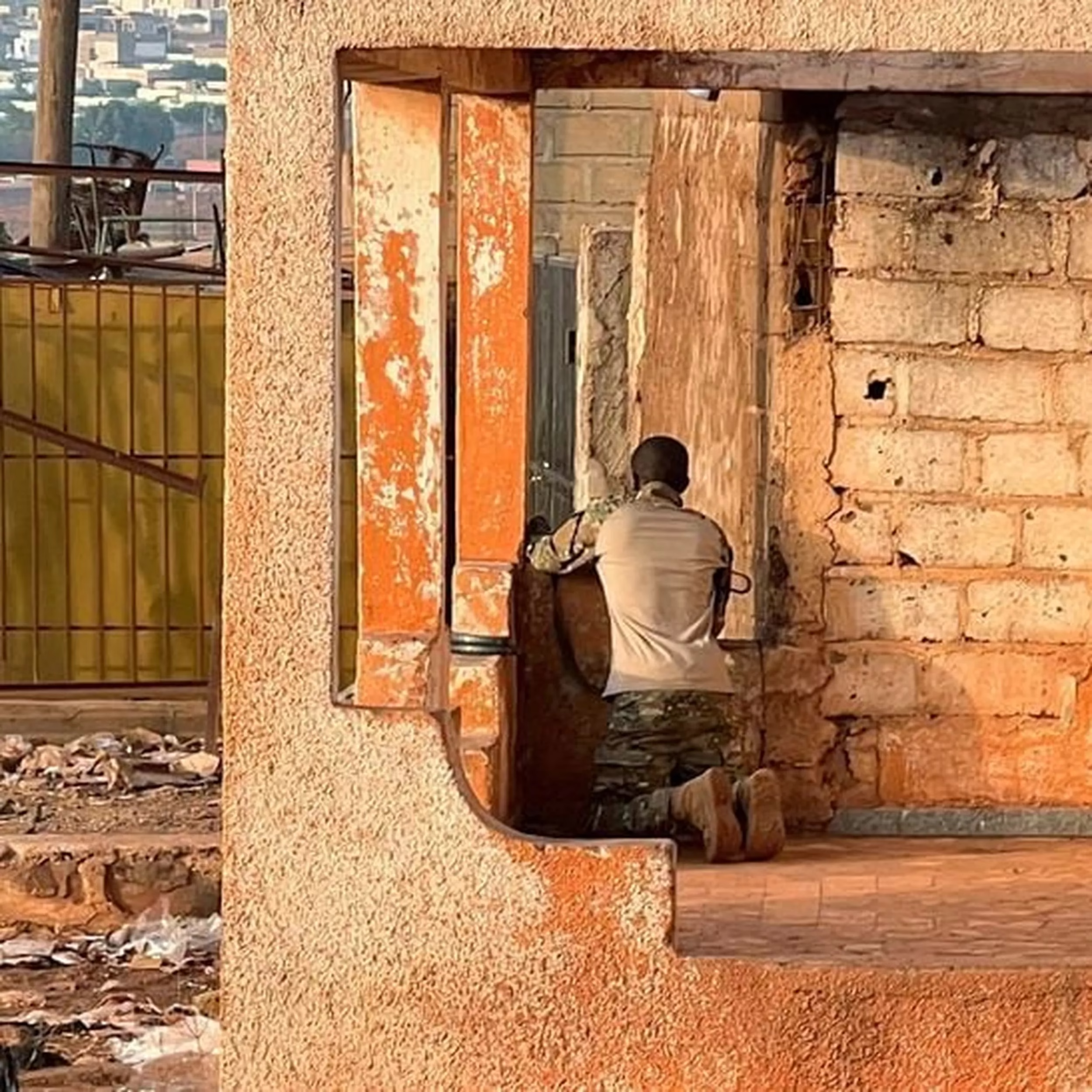
Mali has been thrown deeper into crisis after Defence Minister Sadio Camara was killed in a devastating assault near the capital Bamako, as a sweeping wave of militant and separatist attacks struck multiple parts of the country.
The death of one of the junta’s most senior figures marks a dramatic escalation in a nation already battling years of insurgency, military rule, and territorial unrest.
Suicide Truck Bombing Hits Minister’s Residence
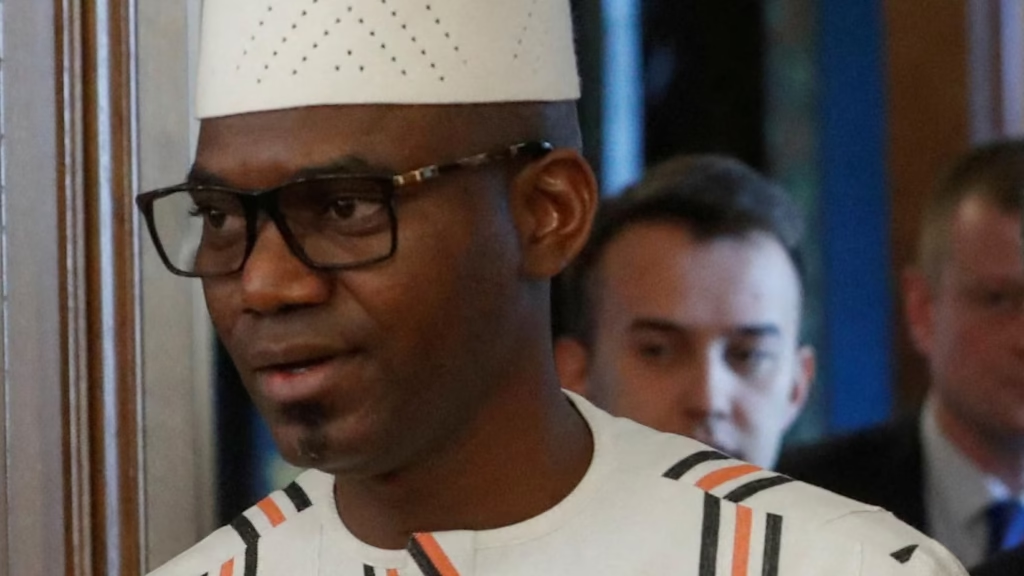
Authorities said Camara died after attackers rammed an explosives-filled vehicle into his residence in Kati, a strategic military town outside Bamako.
Government spokesman Issa Ousmane Coulibaly said the minister was killed when “a vehicle laden with explosives and driven by a suicide attacker targeted the minister’s residence”.
Officials added that Camara fought back during the attack and “succeeded in neutralising some of them”.
He was later taken to hospital with serious injuries, where he died.
Reports also said at least three of Camara’s relatives were killed in the blast.
The explosion reportedly caused Camara’s residence to collapse and also destroyed a nearby mosque, where several worshippers were killed.
Nationwide Violence Sparks Alarm
The deadly strike formed part of a wider, carefully coordinated campaign across Mali.
Fighting was reported in Kati, Gao and Kidal in the north, along with the central cities of Sevare and Mopti.
Analysts believe two separate armed factions may have launched parallel offensives. Northern separatists linked to the Azawad Liberation Front, or FLA, appeared focused on reclaiming territory, while jihadist network Jama’at Nusrat al-Islam wal-Muslimin, known as JNIM, launched simultaneous attacks elsewhere.
Ulf Laessing, head of the Sahel programme at the Konrad Adenauer Foundation in Mali, described the violence as the “largest co-ordinated jihadist attack on Mali for years”.
Fierce Battle For Kidal
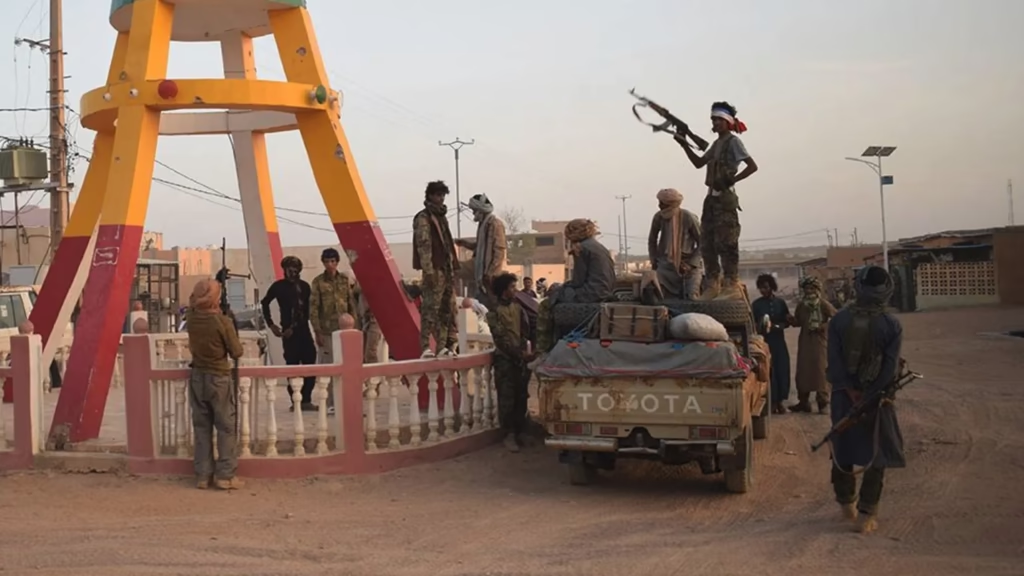
Attention has now turned to Kidal, a key northern city long associated with Tuareg separatist movements.
FLA spokesman Mohamed Elmaouloud Ramadane said Kidal had “not fallen completely” during those attacks, while insisting his forces still held ground because “elements of the Malian army and Russian mercenaries” remained there.
Later, he claimed: “An agreement was reached between the Azawad forces and the Russian elements of the Africa Corps with a view to ensuring their secure withdrawal from the fighting.”
He then declared Russian-linked forces were “permanently withdrawing from Kidal” and that “Kidal is now free”.
Those claims have not been independently confirmed by Mali’s military.
An FLA field commander also revealed the offensive had been in planning stages for some time, saying it had been prepared “for months”.
He added: “Our main goal now is to control Gao and then Timbuktu will be easy to fall.”
Government Says Situation Under Control
State broadcaster ORTM reported that 16 people, including civilians and soldiers, were wounded in the attacks and said the violence caused “limited damage”.
It also claimed several “terrorists” had been killed and insisted the situation is “completely under control” in all affected areas.
However, military officials later acknowledged combat was still underway in Kidal, Kati and other regions.
In a statement on Sunday, the armed forces warned the attacks would “not go unanswered”.
Authorities said a nationwide alert had been issued, with patrols increased and checkpoints reinforced.
Curfews were also imposed in several areas, including Bamako, where residents faced overnight restrictions from 21:00 to 06:00 local time.
Regional Leaders React
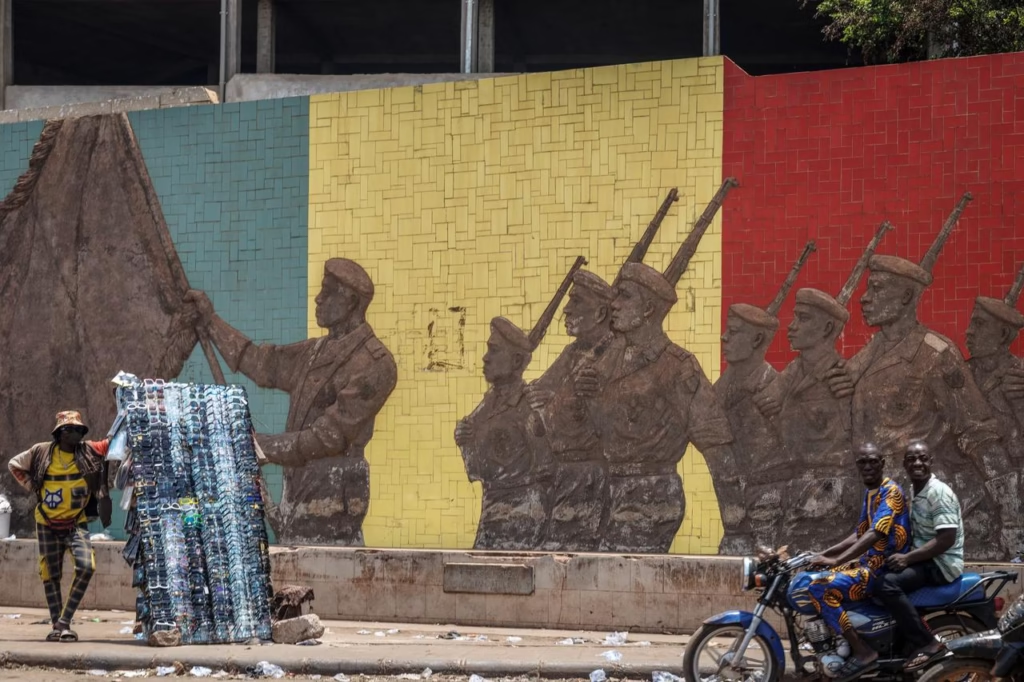
The attacks triggered condemnation from across Africa and beyond.
UN Secretary-General Antonio Guterres denounced the “acts of violence” and expressed his “solidarity with the Malian people”.
West African bloc Ecowas also condemned the bloodshed, despite Mali having withdrawn from the organisation alongside Niger and Burkina Faso after recent coups.
Mahmoud Ali Youssouf, chair of the African Union Commission, said he was monitoring events with “deep concern”.
Meanwhile, Burkina Faso ruler Captain Ibrahim Traoré blasted the assaults as “barbaric and inhumane”.
He further claimed the violence was “backed by the enemies of the Sahel liberation struggle”.
Traoré added the attacks would not “shake the will of the valiant people of Sahel to live in freedom, peace and dignity”.
A Nation Still At War
Mali remains under military rule after Gen Assimi Goïta seized power in 2020.
The junta initially won support by promising to restore order after years of rebellion and Islamist expansion.
Since then, French troops and UN peacekeepers have left, while Russian mercenaries were brought in to support government forces.
Yet despite those moves, vast areas of northern and eastern Mali remain beyond state control, and the latest violence shows the conflict is far from over.