

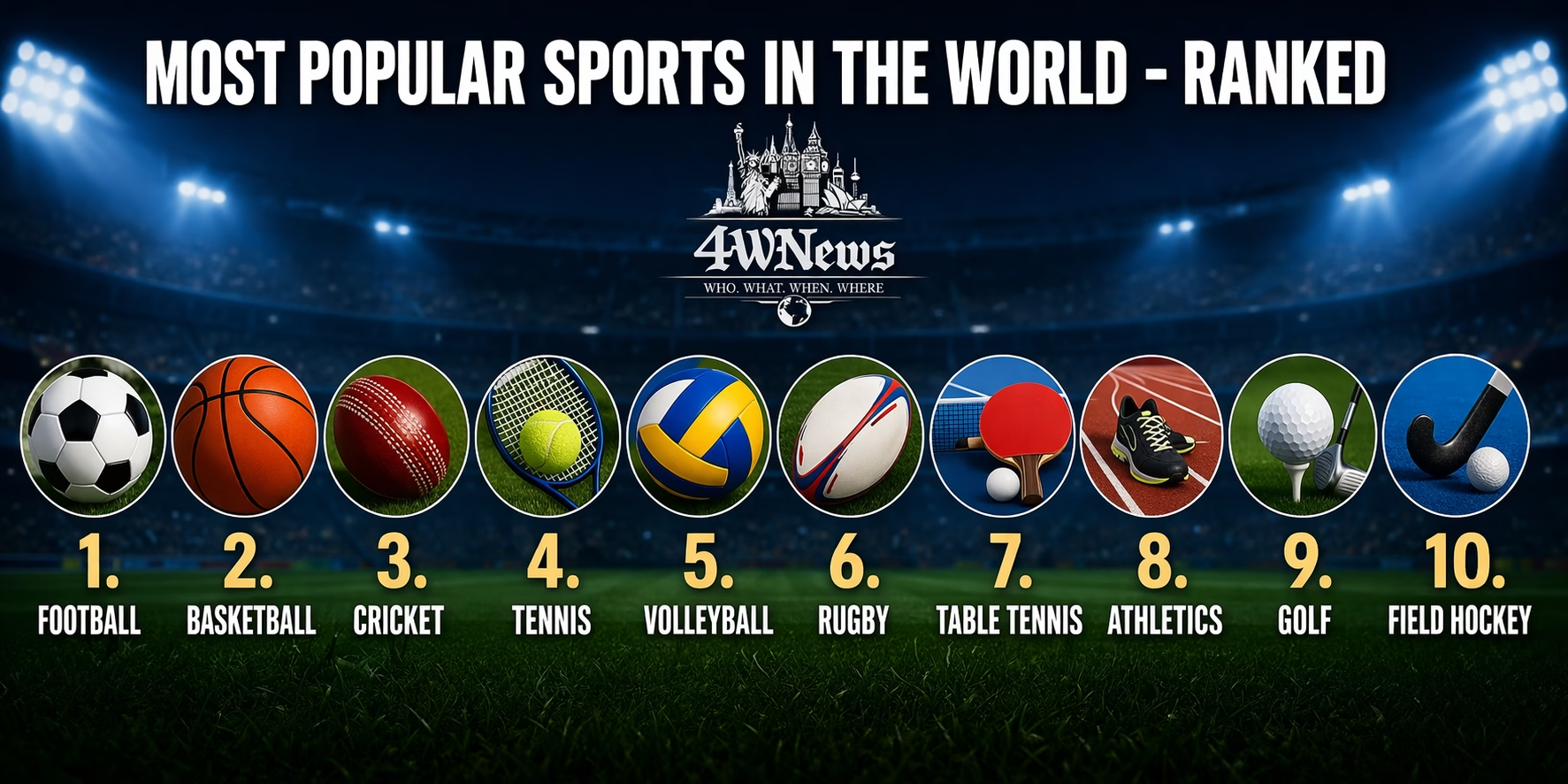
Sports connect people across languages, cultures, and borders. Some games are deeply local, but a smaller group has grown into global entertainment giants with huge fan bases, major tournaments, and year-round participation. That is why ranking the Most Popular Sports is not just about stadium size or TV ratings. It is also about how many people play, watch, discuss, and follow each sport worldwide.
This ranking looks at global fan interest, participation, media reach, international structure, and cultural influence. Football clearly leads the field, while basketball, cricket, tennis, and volleyball continue to grow across continents. A few other sports may not dominate everywhere, but they still hold enormous regional and international power.
How The Most Popular Sports Are Ranked
Popularity in sports can be measured in different ways, so no ranking is perfect. Some sports have massive global fan bases, while others are played widely but watched less often. A fair list has to consider both.
For this article, the ranking is based on five main factors:
- Global fan base
- Participation numbers
- International tournament reach
- Geographic spread
- Commercial and media influence
Using that mix helps explain why football stays at the top, why cricket ranks so highly despite being concentrated in certain markets, and why sports like volleyball and table tennis remain powerful worldwide.
Ranked List Of Most Popular Sports
Below is a practical ranking of the Most Popular Sports in the world today, based on current official data, event reach, and global presence.
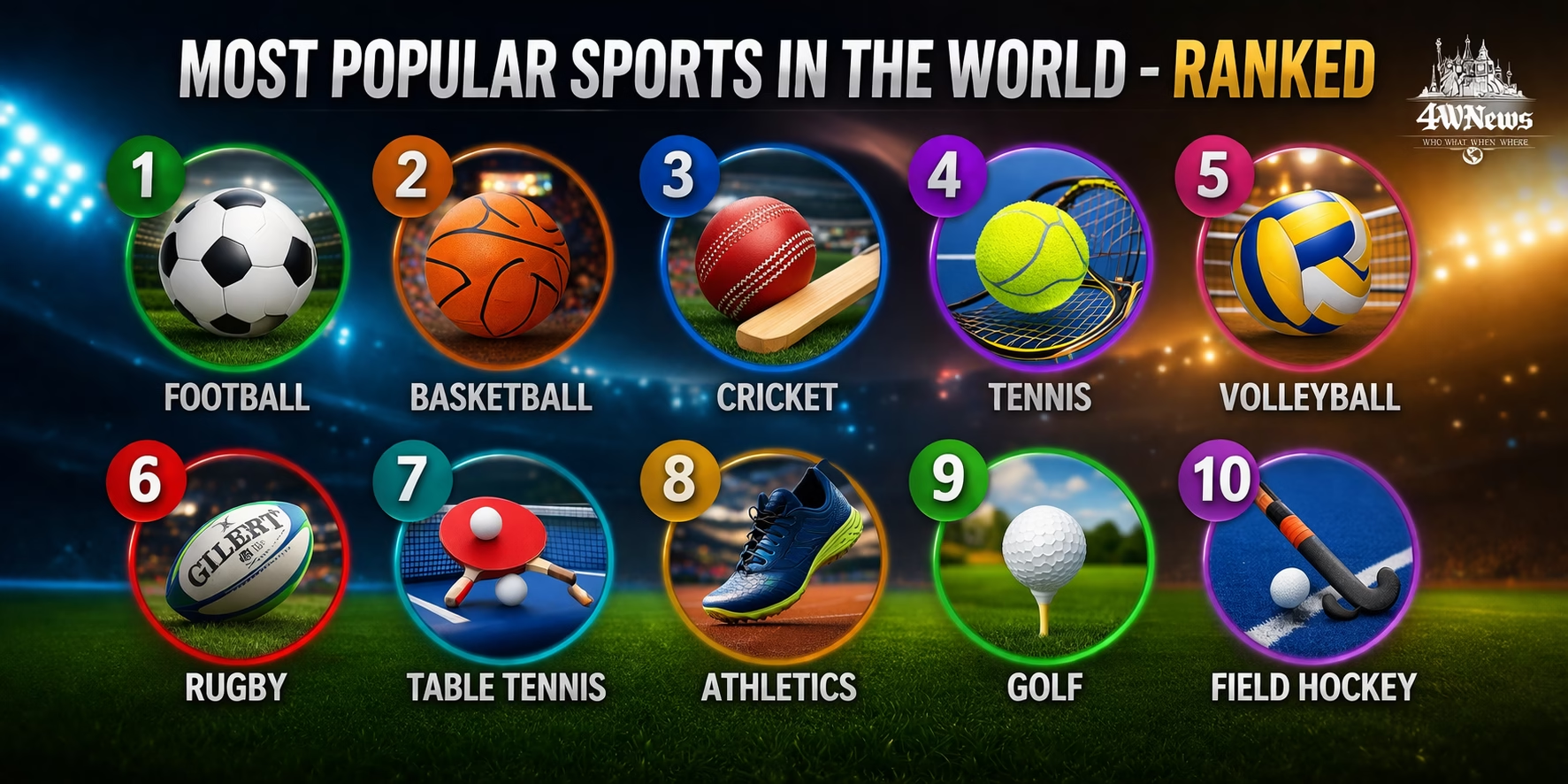
1. Football
Football is the clear number one. FIFA says the sport has around five billion fans worldwide, and the 2022 World Cup alone engaged five billion people across media platforms. Few sports come close to that level of universal reach.
Its strength comes from simplicity and scale. Football is easy to play almost anywhere, from city streets to professional stadiums. It has elite club competitions, strong national team rivalries, and huge followings in Europe, South America, Africa, Asia, and the Middle East. From the Premier League to the World Cup, football has built the broadest global sports culture of them all.
2. Basketball
Basketball ranks second because of both fandom and participation. FIBA says the sport has more than 3.3 billion fans globally, and it also reports that more than 610 million people play basketball at least twice a month. That mix of viewers and players makes basketball one of the strongest sports in the world.
Its rise has been helped by the NBA, strong Olympic visibility, school and street-level play, and a fast digital culture built for highlights and social media. Basketball is especially strong in the United States, China, the Philippines, parts of Europe, and across younger audiences worldwide. It is one of the few sports that feels equally powerful on television, on playgrounds, and online.
3. Cricket
Cricket sits near the top because its audience power is enormous. The ICC has reported that Cricket World Cup content has delivered record digital and broadcast results, including one trillion global live viewing minutes for the 2023 men’s tournament. Earlier ICC material also pointed to access reaching around 2.5 billion people for World Cup broadcasts.
Cricket may not be equally dominant in every region, but where it is strong, it is massive. India, Pakistan, Bangladesh, Australia, England, South Africa, and several other markets give the sport extraordinary loyalty and commercial force. Test cricket, One Day Internationals, and T20 leagues keep it active year-round, and the IPL has pushed cricket even further into the global sports economy.
4. Tennis
Tennis remains one of the most global individual sports. The ITF says the sport has 1.2 billion fans, 106 million players worldwide, and 213 member nations. That reach is remarkable for a sport built around both professional tours and recreational play.
What keeps tennis so high is its balance. It has four major Grand Slams, a long season, strong men’s and women’s competition, and a fan base spread across many regions rather than one core area. Tennis also works across age groups, which helps it remain popular at club, amateur, and elite levels.
5. Volleyball
Volleyball deserves a high place because it combines strong participation with wide international reach. The FIVB says volleyball has over 800 million fans worldwide and 222 national federations. That makes it one of the broadest team sports on the planet.
Another reason volleyball ranks well is versatility. Indoor volleyball, beach volleyball, school competition, and community-level play all help expand the sport. It is especially popular in parts of Asia, Europe, and Latin America, and it performs well at both the Olympic and grassroots levels.
6. Rugby
Rugby may not match football or basketball in total reach, but it is still one of the world’s major sports. World Rugby says the 2019 Rugby World Cup drew a global audience of more than 857 million, and the governing body now includes 134 national member unions.
The sport has strong foundations in countries such as New Zealand, South Africa, England, France, Ireland, Australia, Argentina, and Japan. Rugby union and rugby sevens both help widen its footprint, especially through the World Cup and Olympics. Its global spread is smaller than some sports above it, but its fan commitment is extremely strong.
7. Table Tennis
Table tennis is often underestimated because many people see it as casual recreation. In reality, it has one of the widest international structures in sport. The ITTF says it has 227 member associations worldwide, which shows how deeply the game is embedded across countries.
Its popularity is driven by accessibility, low space requirements, school use, and strong elite competition, especially in Asia and Europe. While its commercial profile is lower than football or basketball, its participation footprint is huge, and that matters in any serious ranking of the Most Popular Sports.
8. Athletics
Athletics, especially running, has a unique kind of global appeal. World Athletics has said that an estimated 1.4 billion people run regularly worldwide, while its 2024 annual report noted that 1.2 billion people tuned in to watch athletics and described it as the top Olympic sport by broadcast reach in Paris 2024.
This category is broader than a single game, which makes it different from team sports. Still, sprinting, marathon running, jumping, and track events remain central to school sports, local races, and global championships. Athletics may not dominate everyday media in the way football does, but its participation base is enormous.
9. Golf
Golf has grown well beyond its old image as a niche sport. The R&A reported in 2025 that 108 million adults and juniors were playing golf across its affiliated markets, showing clear global growth. That is a very strong number for a sport once seen as limited to a few regions.
Golf also benefits from major events that carry strong prestige, including the Masters, The Open, and the Ryder Cup. It has a powerful recreational side, steady commercial value, and increasing interest in newer formats that make the game more flexible and accessible.
10. Field Hockey
Field hockey rounds out the list because of its long international history and global governing presence. FIH oversees the sport worldwide, and the federation’s structure reflects a broad international base. The sport remains especially important in countries such as India, Pakistan, the Netherlands, Germany, Australia, Belgium, and Argentina.
While field hockey does not command the same commercial power as the sports above it, it remains a major international sport with Olympic relevance, strong national programs, and loyal fans in key markets. That sustained global presence is enough to keep it in the top ten.
Why Some Sports Missed Out
A few sports came close to this ranking. Baseball has major strength in the United States, Japan, South Korea, and parts of Latin America. MMA and Formula 1 also have huge visibility, but their participation base is much smaller than the sports listed above.
American football is another interesting case. It is commercially massive, but it remains far less international than football, basketball, tennis, or volleyball. That limits its place in a true worldwide ranking of the Most Popular Sports.
What These Rankings Show

The biggest lesson is that global popularity is not built in one way. Football leads because it dominates almost every measure. Basketball grows because it blends youth culture, participation, and media power. Cricket proves that a sport can be regionally concentrated and still rank near the top because of intense scale in those regions.
The rest of the list shows a different truth. Sports like tennis, volleyball, rugby, athletics, and table tennis stay relevant because they are deeply rooted in schools, clubs, federations, and international competition. That kind of structure gives them lasting power even when media attention shifts.
Why These Rankings Matter
Looking at the Most Popular Sports helps explain more than entertainment. It shows where cultural influence is strongest, where youth participation is growing, and where future media investment is likely to go.
It also reminds readers that popularity is not static. Basketball is rising fast, cricket keeps expanding digitally, volleyball has huge untapped room for growth, and tennis continues to hold a truly international position. Football still leads comfortably, but the race behind it remains active and fascinating.