

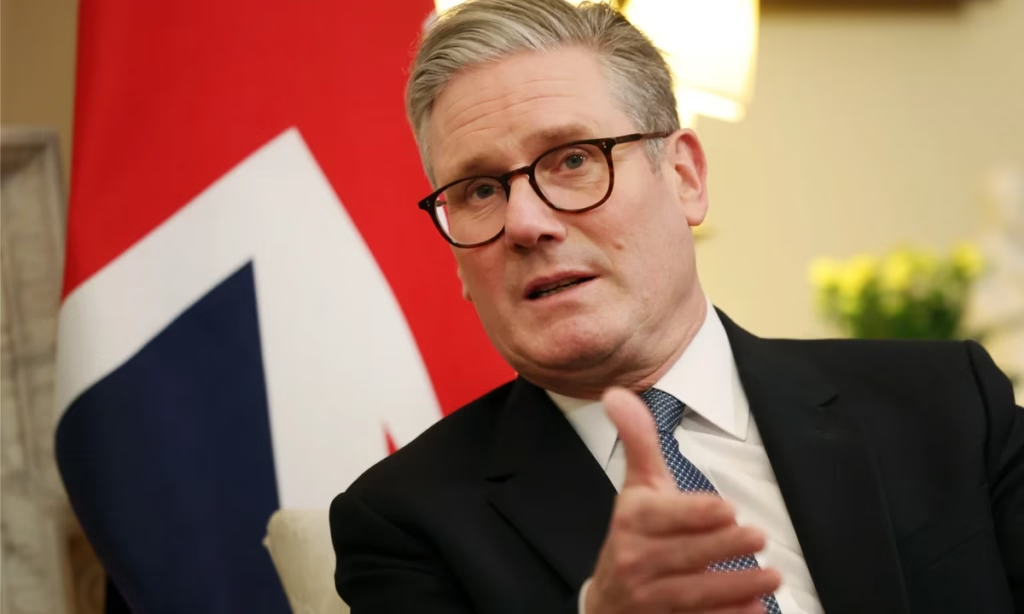
The political ground beneath Britain shifted dramatically Thursday night as Prime Minister Keir Starmer faced growing calls to step aside after Labour suffered bruising losses in local elections across England.
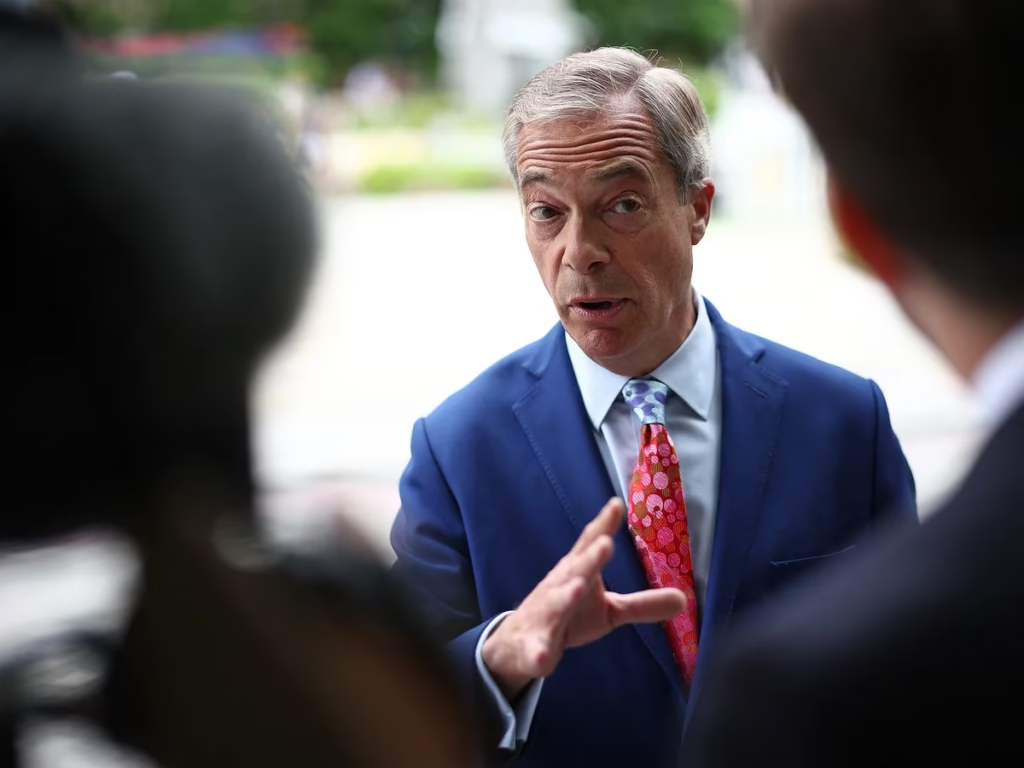
At the center of the storm stood Nigel Farage, whose insurgent Reform UK party delivered one of the most disruptive election performances in recent British political history. The party gained more than 600 local council seats, rattling both Labour and the Conservatives while exposing deep voter frustration across the country.
For Starmer, the results landed like a political earthquake. For Farage, they marked a breakthrough years in the making.
Labour Faces Mounting Internal Revolt
 British local elections are often treated as a referendum on the government in power. This year’s outcome sent a harsh message to Labour leadership.
With Labour already losing nearly 500 council seats while vote counting continued, several MPs within the party began openly discussing Starmer’s future. Some demanded the prime minister commit to a timeline for leaving office.
“Many, many Labour voters that I represent, I guess, in the north of England and elsewhere that the direction the government [has] taken has not delivered the change that they thought they voted for,” Labour MP Jon Trickett said of the results. “They’re angry, they’re upset, they feel let down, they’ve sent us a clear message: The party, the leadership, must change with immediate effect if we want to recover.”
The comments reflected growing anxiety within Labour ranks, particularly in former strongholds that once reliably backed the party.
Meanwhile, Starmer acknowledged responsibility for the losses but stopped short of announcing any plans to resign.
He insisted he was “not going to walk away and plunge the country into chaos.”
Still, observers quickly noted that he did not explicitly reject the possibility of a managed departure later on.
Reform UK Turns Red Wall Blue
Farage’s Reform UK continued its rapid rise by targeting working-class communities in northern and central England, especially areas long considered part of Labour’s so-called “Red Wall.”
Those voters, many frustrated over immigration, economic stagnation and rising living costs, appeared increasingly willing to abandon Britain’s traditional political parties.
Farage’s campaign leaned heavily into populist themes. Reform promised tougher immigration controls, lower taxes and the rollback of environmental measures the party argues are damaging economic growth.
The veteran Brexit campaigner also used the moment to mock Starmer’s growing political troubles.
“Personally, I’ll be very sad to see the Prime Minister go. I will be very, very sad indeed. He’s the greatest asset we’ve got.”
The jab drew laughter from supporters and highlighted Farage’s confidence as Reform expanded its footprint nationwide.
Britain’s Two-Party Era Faces New Threat
Political analysts say the election results may signal something much bigger than a temporary protest vote.
Alan Mendoza, executive director of the London-based Henry Jackson Society, told Fox News Digital, “The era of two-party politics is definitively over with Reform UK’s stunning national success and the Green Party’s more localized wins. The two traditional parties of government, Labour and the Conservatives, have been routed nationally and in some cases have ceased to exist as a meaningful force in whole swathes of the country. By backing Reform across much of the political landscape and the Greens in pockets, British people are indicating they’ve had enough of the politics of the past and are ready to embrace different ideas.”
The elections covered more than 5,000 seats across 163 councils and six mayoral contests, making them one of the biggest local electoral tests in recent years.
At the same time, Scotland and Wales also held elections for their devolved governments.
Green Party Gains Add To Labour’s Problems
 Labour’s setbacks did not come only from the political right.
In urban areas and university towns, the party lost support to the Green Party and independent candidates, many of whom campaigned heavily on the war in Gaza and criticism of Labour’s stance toward Israel.
Green Party leaders made the conflict a defining issue throughout the campaign.
Zach Polanski, the head of the party, declared on election day that “Palestine is one of the elements on the ballot.”
Polling conducted before Thursday’s vote showed nearly 60% of Muslim voters were willing to support pro-Palestinian independent candidates to block Labour victories locally. Roughly half also said they would consider backing the Greens.
Notably, many respondents ranked support for Palestinians above economic concerns when deciding how to vote.
Independent and Green candidates together secured roughly 90 additional seats as counting continued.
A Political Warning Shot For Starmer
Thursday’s results delivered more than just a rough night for Labour. They exposed widening cracks inside Britain’s political establishment and raised serious questions about whether Starmer can hold together the coalition that brought Labour back to power.
At the same time, Farage’s momentum is becoming increasingly difficult for rivals to dismiss.
What once looked like a fringe protest movement now appears capable of reshaping the country’s political map.
And if these local elections are any indication, Britain’s next national battle could look very different from anything voters have seen before.