

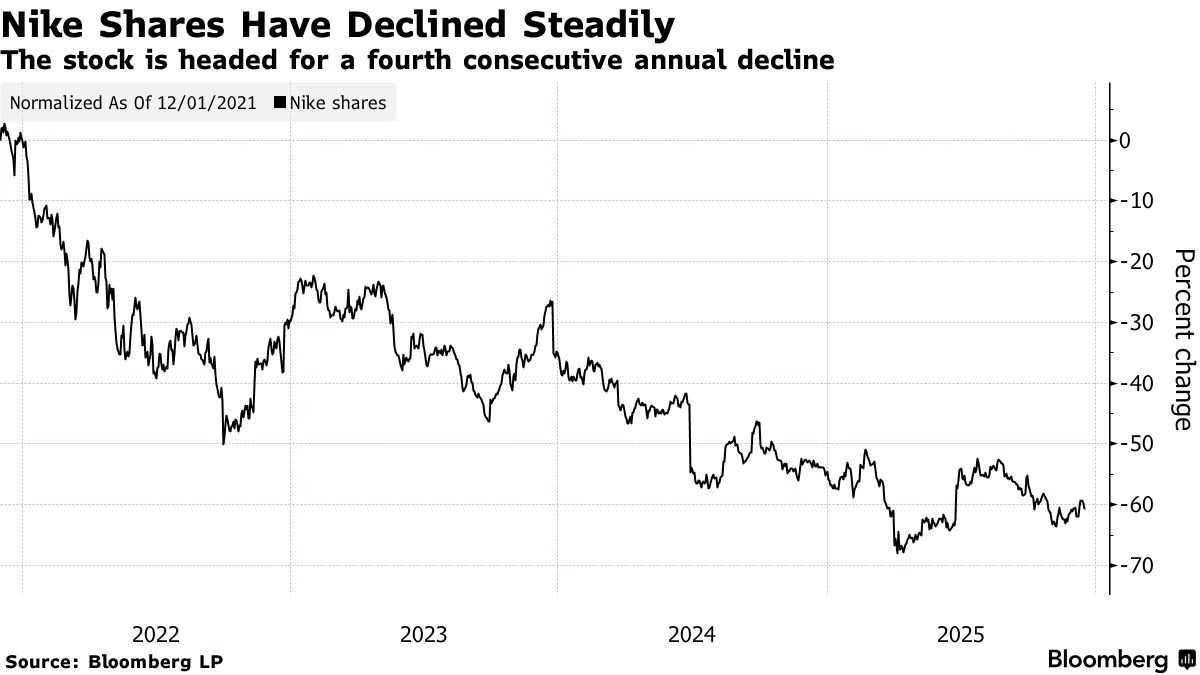
A steep drop in a major stock usually sends investors running. However, what if that same decline quietly opens the door to long-term opportunity? That is the question now surrounding Nike, a global sportswear giant whose stock has taken a heavy hit since its peak.
While falling prices often trigger concern, they can also reshape valuations in ways that attract patient investors. And right now, Nike sits right at that crossroads.
Sell-Off Pain Brings Hidden Opportunity
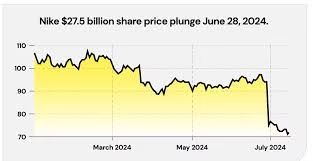
Most investors dislike watching stock prices fall. Losses on paper can feel very real, and they often hint at deeper market uncertainty. Still, there is a lesser-discussed upside to these declines.
As prices drop, dividend yields rise. That dynamic can turn beaten-down stocks into attractive income opportunities, especially for long-term holders.
Nike currently offers a dividend yield of around 3.2%. Notably, this increase is less about aggressive dividend growth and more about the stock’s sharp decline since the pandemic. Even so, the company maintains a strong history of raising its quarterly payouts, giving investors some confidence in its long-term commitment to shareholders.
A 71% Drop Raises Big Questions
 Nike stock has now plunged roughly 71% from its all-time high in 2021. Moreover, the downward trend has continued in recent months.
Geopolitical tensions, particularly tied to the Iran conflict, have rattled markets. Rising oil prices and fears of a broader economic slowdown have added pressure on consumer-focused companies like Nike.
However, before these macro concerns took center stage, early signs of recovery had begun to emerge within the company.
Turnaround Efforts Gain Early Momentum
Nike brought in CEO Elliott Hill about a year and a half ago, aiming to stabilize the business after a challenging period under former CEO John Donahoe.
Under previous leadership, the company leaned heavily into digital and direct-to-consumer strategies. While that approach had its merits, it also strained relationships with key retail partners. At the same time, innovation slowed as Nike relied too heavily on classic product lines.
Hill has been working to rebalance that strategy.
Encouragingly, Nike has returned to growth in its running category, a core segment for the brand. Additionally, the company has posted modest revenue growth over the last two quarters, marking a shift after five consecutive quarters of declines.
Challenges Still Cloud The Outlook
Despite these improvements, Nike is far from out of the woods.
Broader economic pressures continue to weigh on discretionary spending, affecting not just Nike but also competitors like Deckers and Lululemon. Meanwhile, weaker performance in China remains a persistent challenge.
On the profit side, expectations remain subdued. Nike is actively clearing older inventory and investing in new product innovation, both of which are expected to compress margins in the near term.
Still, the brand’s strength remains difficult to ignore. Nike continues to dominate key markets such as basketball, and its lineup of sponsored athletes remains one of the strongest in the industry.
What Investors Should Watch Next
A quick recovery seems unlikely. However, the current valuation suggests the stock may be oversold relative to its long-term potential.
Investors will get a clearer picture when Nike reports its third-quarter earnings on March 31. Analysts expect revenue to slip slightly by 0.4% to $11.2 billion. Meanwhile, earnings per share are projected to fall sharply, from $0.54 to $0.28.
That report could prove pivotal in determining whether Nike’s turnaround story gains traction or faces further delays.
Long-Term Play Or Risky Bet?
Nike’s current position presents a classic investment dilemma.
On one hand, the stock’s sharp decline, combined with a solid dividend and early signs of operational improvement, makes it an intriguing long-term opportunity.
On the other hand, macroeconomic uncertainty and ongoing internal adjustments mean risks remain elevated.
For patient investors willing to ride out volatility, Nike could offer meaningful upside over time. However, those expecting quick gains may need to temper their expectations.