

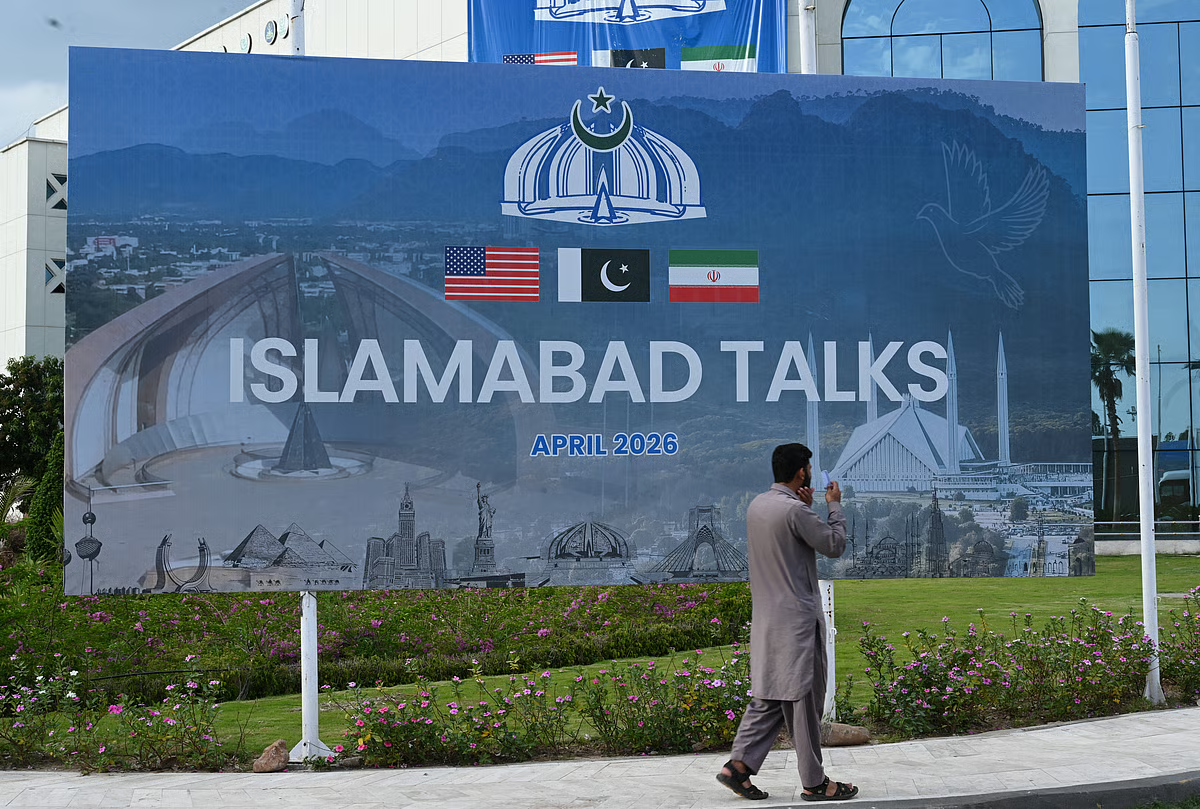
Pakistan’s role in brokering a temporary ceasefire between the United States and Iran has pushed the country back into the global spotlight. For a nation navigating political instability and economic strain, the moment carries weight. But beneath the headlines lies a deeper question: is this a bold display of ambition, or a careful move driven by survival?
A Quiet Return To Global Relevance
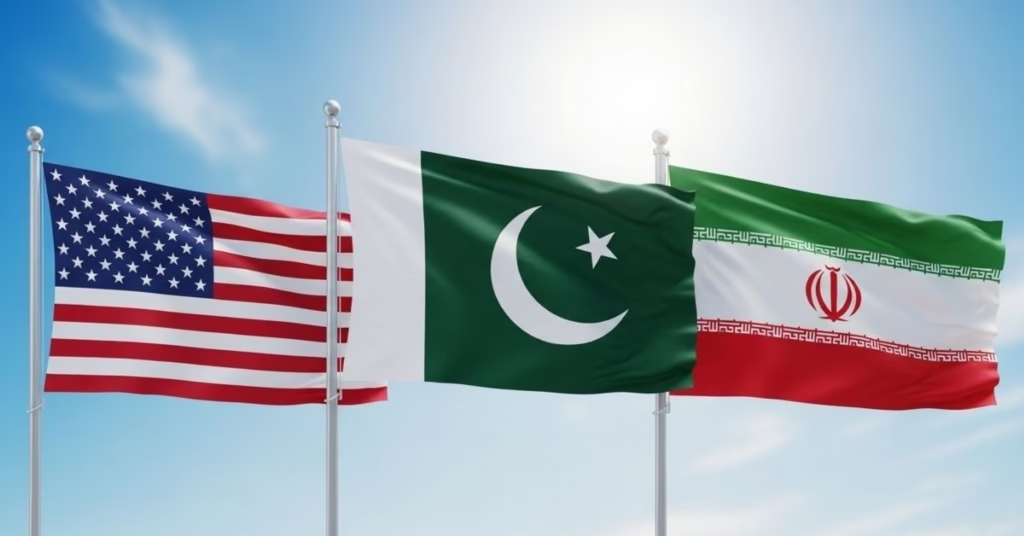
At first glance, the ceasefire appears to be a rare diplomatic win for Islamabad. It signals a return to relevance on the international stage, something that has eluded Pakistan in recent years.
However, this moment is not about dominance or power projection. Instead, it reflects Pakistan’s ability to stay connected across divides that others struggle to bridge.
As Michael Kugelman observes, Islamabad maintains working relationships with all key stakeholders: Washington, Tehran, Beijing, and the Gulf capitals. This rare combination allows Pakistan to function as a diplomatic bridge at moments when direct communication between adversaries becomes politically or strategically untenable.
That positioning, built over years, is now paying off.
Geography As Strategy, Not Coincidence
Pakistan’s geopolitical importance is not accidental. Its location places it at the crossroads of major global and regional powers.
Still, geography alone is not enough. What matters is how that position is used.
In moments of crisis, Islamabad becomes a connector rather than a controller. It does not dictate outcomes, but it helps keep conversations alive when tensions run high. That role, subtle but significant, explains why Pakistan often finds itself pulled into sensitive diplomatic situations.
Mediation Rooted In Self-Preservation
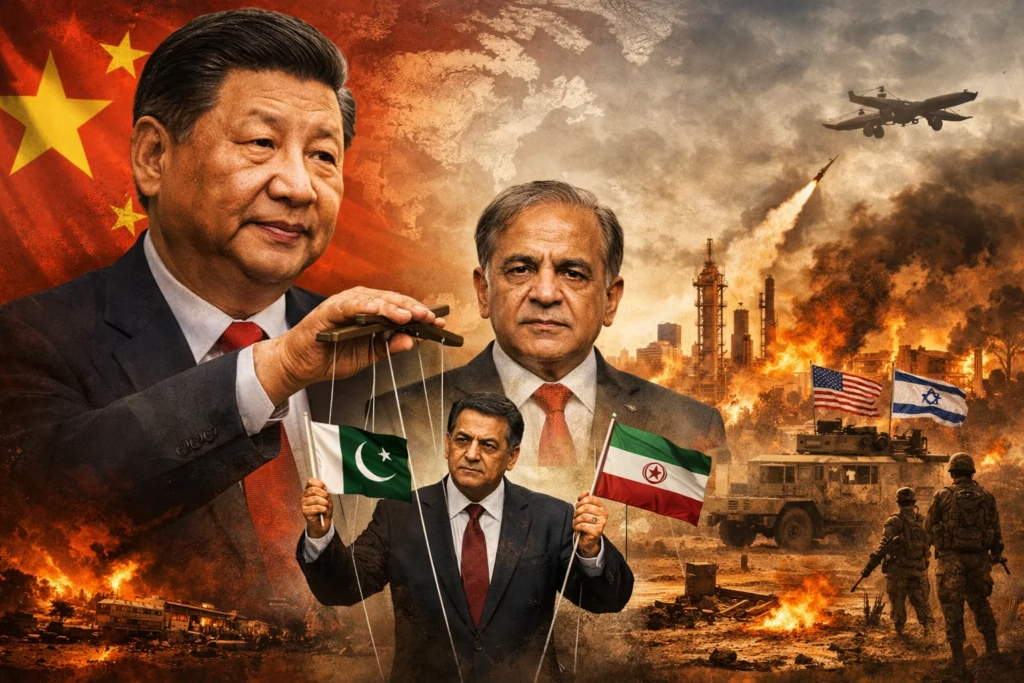
However, the driving force behind Pakistan’s involvement is less about ambition and more about necessity.
A direct conflict between the United States and Iran would not stay contained. It would spill across borders, disrupt trade routes, and create immediate security challenges for Pakistan, especially along its western frontier.
Put simply, Islamabad cannot afford escalation.
In this context, mediation becomes a defensive strategy. It is about preventing fallout, protecting economic stability, and avoiding a regional crisis that could quickly spiral beyond control.
Regional Dynamics And Hidden Constraints
Pakistan’s diplomatic moves do not happen in isolation. They are shaped by a wider network of alliances and expectations.
As Iranian-American scholar Vali Nasr argues, any meaningful Pakistani initiative is unlikely to proceed without at least tacit support from Saudi Arabia. The depth of military, financial, and political ties between Islamabad and Riyadh imposes clear constraints on Pakistan’s autonomy. Moreover, the Gulf states have little appetite for a wider conflict, given the economic and security risks such a war would entail. Their preference for de-escalation creates an enabling environment for intermediary efforts.
This layered dynamic limits how far Pakistan can go, even as it plays a visible role.
China’s Quiet But Crucial Influence
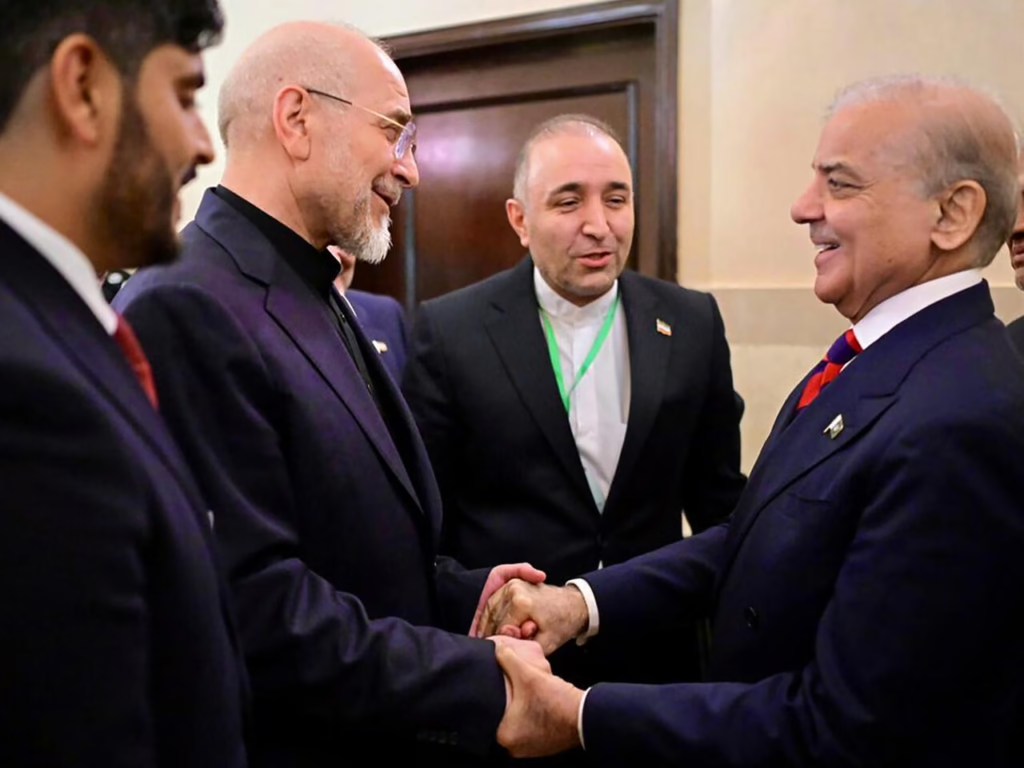
Meanwhile, China adds another dimension to the equation.
Beijing’s growing influence in Tehran, combined with its strategic partnership with Islamabad, creates a behind-the-scenes channel that strengthens mediation efforts.
Pakistan’s access to Washington and China’s influence with Iran together form a loose, multi-layered framework through which de-escalation can be facilitated. Pakistan, in this configuration, is not the architect of peace — but it is a useful conduit.
That distinction matters. Pakistan is not leading the process, but it is enabling it.
Why Islamabad Stays “Front And Center”
This unique positioning explains why Pakistan often appears at the center of high-stakes diplomacy.
It is one of the few countries capable of maintaining simultaneous communication with deeply opposed actors. That alone gives it strategic relevance, especially during moments of crisis when direct dialogue breaks down.
Being “front and center” is not about influence alone. It is about access.
A Fragile Window For Lasting Peace
For now, the ceasefire stands as a meaningful, if temporary, achievement.
It highlights the value of quiet diplomacy, the kind that happens away from cameras but shapes real outcomes. Pakistan’s role in facilitating this pause in tensions underscores how sustained engagement can shift the direction of a fast-moving crisis.
Looking ahead, the next phase is set to begin in Islamabad on April 10. Delegations are expected to explore the possibility of a more durable arrangement.
Whether this fragile truce holds or evolves into something lasting remains uncertain. Much will depend on what happens within that narrow diplomatic window.