

The Trump administration has renewed a temporary waiver allowing countries to continue buying sanctioned Russian oil transported by sea, a move that underscores growing concern over soaring global energy prices as conflict in the Middle East rattles markets.
The decision, announced Friday, comes despite fierce criticism from lawmakers who argue Washington is softening pressure on Moscow while Russia’s war in Ukraine continues.
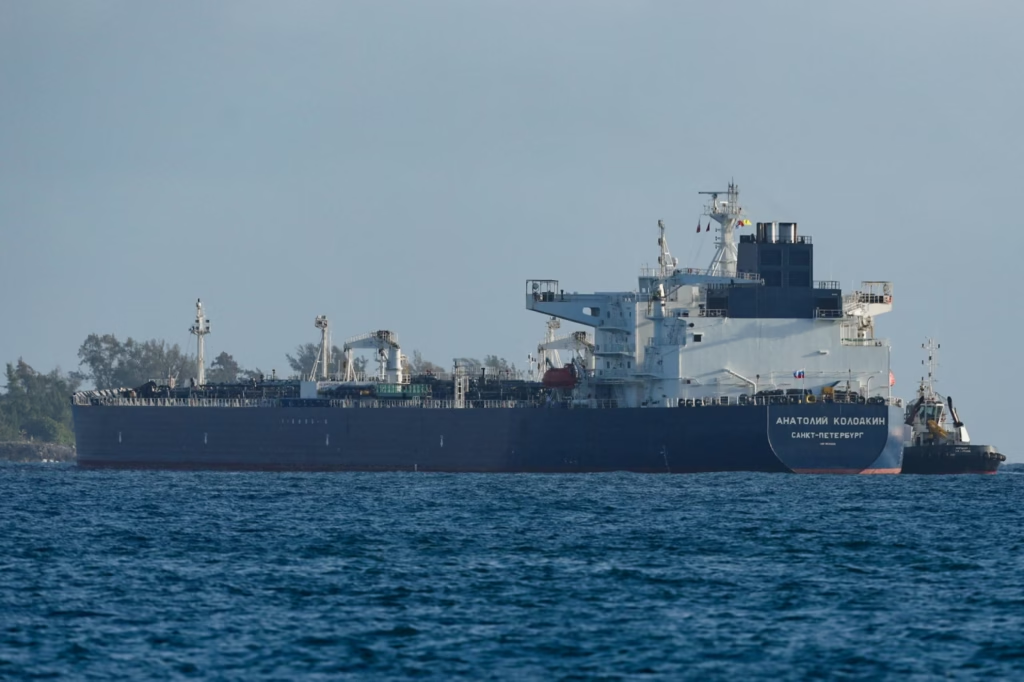
Under the updated Treasury Department waiver, countries may purchase Russian oil and petroleum products loaded onto vessels as of Friday through May 16. It replaces a previous 30-day exemption that expired April 11. Transactions involving Iran, Cuba and North Korea remain excluded.
Energy Prices Drive Sudden Policy Shift
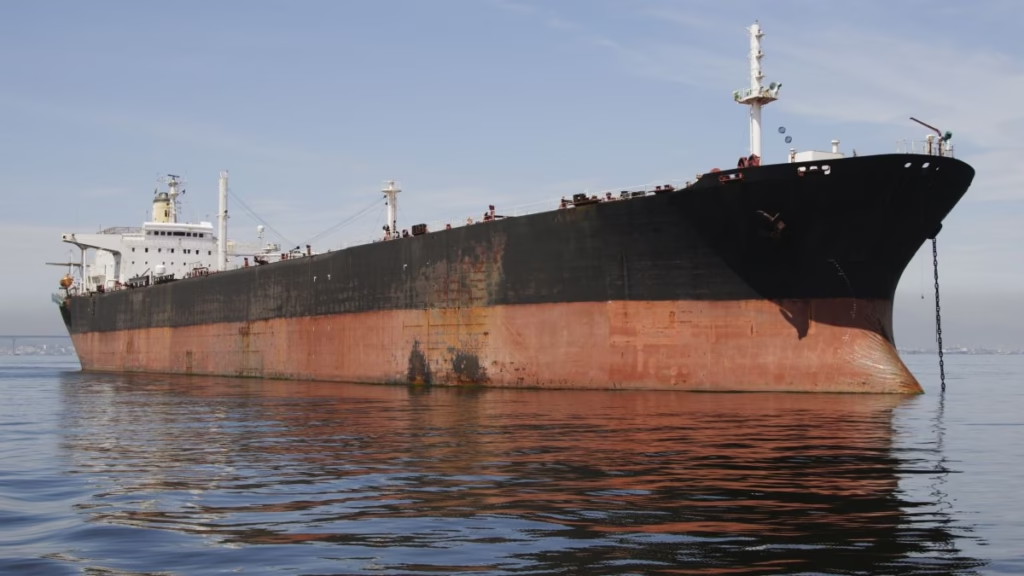
The extension appears tied directly to the administration’s scramble to keep oil supplies flowing after the U.S.-Israeli war with Iran sent prices sharply higher.
Several Asian nations hit hard by the energy shock reportedly urged Washington to keep alternative barrels on the market.
“As negotiations (with Iran) accelerate, Treasury wants to ensure oil is available to those who need it,” a Treasury Department spokesperson said.
The statement marked a striking turn. Just two days earlier, Treasury Secretary Scott Bessent had indicated the U.S. would not renew the Russian oil waiver, or a separate Iranian oil waiver set to expire Sunday.
Markets Swing As Hormuz Reopens
Global crude prices plunged 9% Friday to around $90 a barrel after Iran temporarily reopened the Strait of Hormuz, one of the world’s most critical oil chokepoints.
Still, the damage from the war has already rippled across international markets. The International Energy Agency described the disruption as the worst global energy supply crisis in history.
Now entering its eighth week, the conflict has reportedly damaged more than 80 oil and gas facilities across the Middle East.
Tehran has also warned it “could close the strait again if the recent U.S. Navy blockade of Iranian ports continued.”
Political Pressure Builds Ahead Of Midterms
High gasoline and energy prices pose a political threat for Republicans ahead of November’s midterm elections.
President Donald Trump has also faced direct lobbying from allied nations worried about supply shortages and inflation.
A U.S. source said countries attending Group of 20, World Bank and International Monetary Fund meetings in Washington this week asked the administration to extend the waiver.
Trump also discussed oil prices during a recent call with Indian Prime Minister Narendra Modi. India remains one of the largest buyers of Russian crude.
Iran Waiver Also Added Supply Relief
The separate Iranian oil waiver issued March 20 allowed roughly 140 million barrels of crude to enter global markets, helping ease supply concerns, Bessent said last month.
That relief now appears central to Washington’s broader strategy: keep fuel moving, even while maintaining sanctions pressure where possible.
Critics Warn Russia Benefits
Lawmakers from both parties have blasted the waivers, arguing they could boost the economies of both Iran and Russia during active conflicts involving U.S. interests and allies.
European leaders have also raised alarms. European Commission President Ursula von der Leyen has said now is not the time to relax sanctions against Russia.
Russian President Vladimir Putin’s special envoy Kirill Dmitriev said the latest extension would affect another 100 million barrels of Russian oil, bringing the combined total under both waivers to 200 million barrels.
Dmitriev, who visited the U.S. on April 9 for talks with Trump administration officials before the prior waiver expired, said on Telegram that the extension faced “active political opposition.”
Experts Say Options Are Running Out
Analysts warn the White House may have few tools left to calm markets if tensions worsen again.
Brett Erickson, a sanctions expert at consulting firm Obsidian Risk Advisors, said Friday’s decision may not be the last.
“The conflict has done lasting damage to global energy markets, and the tools available to stabilize them are nearly exhausted,” Erickson said.