


A California courtroom is becoming the latest battleground over the impact of social media on young users. At the center of the case is a Stanford psychiatrist who says the design of major platforms is not accidental. Instead, she argues, many features are intentionally built to keep people hooked.
The testimony comes as part of a lawsuit filed by a California woman against Meta, the parent company behind Facebook and Instagram. The trial has drawn national attention as experts examine how social media platforms influence user behavior, especially among teenagers.
Expert Witness Says Social Media Mimics Drug-Like Effects
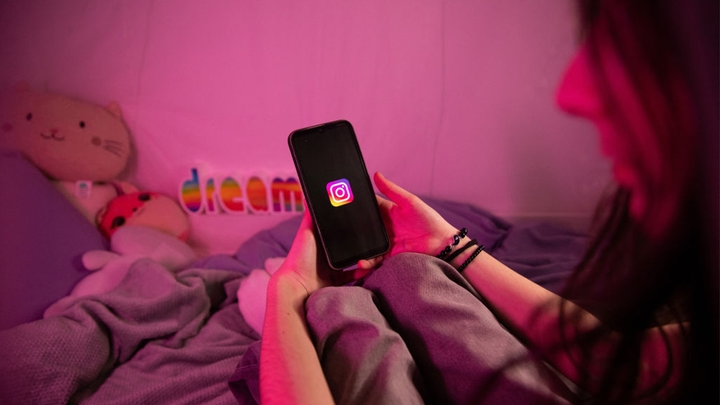
During testimony Tuesday, Stanford University psychiatrist Dr. Anna Lembke told the court that the architecture of social media apps resembles addictive substances in how they affect the brain.
After reviewing thousands of pages of internal company documents along with research conducted by social media companies themselves, Lembke concluded that the platforms use design tools that drive compulsive behavior.
She defined addiction as “the continued, compulsive use of a substance or a behavior despite harm to self or others.”
According to Lembke, certain built-in features intensify that cycle of dependency. Instagram’s endless content feed and algorithm-driven recommendations constantly stimulate dopamine release in the brain.
She argued that these mechanisms effectively “drugifies human connection.”
Concerns Grow Over Impact On Teen Mental Health

Lembke told the court that the consequences of excessive social media use can be severe. Among the harms she listed were depression, anxiety, eating disorders, self-harm, loneliness, suicidal ideation, cyberbullying and sexual exploitation.
Young users appear especially vulnerable.
She testified that children struggling with social media addiction may experience emotional outbursts, screaming episodes, threats of self-harm and chronic sleep problems.
An expert witness testified Tuesday that social media apps such as Instagram are addictive, likening them to a “drug,” especially when affecting youth.
Internal Company Documents Under Scrutiny

During the testimony, Lembke pointed to internal documents from Meta that she reviewed while preparing for the case.
Those documents referenced a term used within the company, “Problematic Internet Use.”
Lembke told the court the phrase appears to function as a substitute for addiction, suggesting the company was aware of the issue but avoided using the stronger label.
She said the internal terminology indicates the company is “working hard not to call it addiction” or acknowledge the gravity of the issue.
Why Social Media Addiction Is Hard To Diagnose
Another key point raised in the courtroom involved diagnosis.
Lembke explained that individuals rarely recognize their own social media addiction. Instead, trained professionals are typically required to identify the problem.
According to her testimony, therapists who lack specialized knowledge about addiction may focus on unrelated issues instead of addressing the underlying compulsive behavior.
Having diagnosed people with social media addiction, Lembke said identifiers are typically frequency of use, loss of control, cravings and withdrawal, consequences and risk factors.
Brain Development Makes Teens Especially Vulnerable
Adolescents face higher risks because their brains are still developing.
However, Lembke emphasized that addiction is not limited to teenagers. With enough exposure, anyone can develop compulsive behavior related to social media.
She told the court the neurological response can mirror other addictive substances.
“A child growing up in a family not feeling supported or verbally abused, it would be natural to turn to a self-soothing mechanism,” Lembke said.
Research Raises Alarms About Child Safety
The courtroom testimony comes amid growing scrutiny of social media safety practices.
On Monday, a safety researcher for Meta warned executives that there may be upward of half a million cases of sexual exploitation of minors every day on social media platforms.
Those claims have intensified debate over whether technology companies are doing enough to protect young users.
Gender Differences In Social Media Impact
Lembke also highlighted how boys and girls often experience social media differently.
Internal Meta research suggested that female users may be more vulnerable to the pressures created by the platforms.
In her clinical work, Lembke said boys are more likely to become absorbed in gaming environments. Girls, meanwhile, often struggle with self-image issues fueled by online comparisons.
She testified that many girls experience “negative social comparisons,” body dysmorphia driven by filters, and a heightened need for validation and approval after viewing idealized bodies and faces girls feel unable to measure up to.
Instagram Features Criticized In Court
Lembke criticized several design choices within Instagram’s platform.
She said the system allows nearly seamless entry into the app, calling it “frictionless access.” Children frequently bypass the platform’s safeguards by lying about their age during the “ineffective age verification” process.
According to her testimony, even highly educated parents struggle to manage the app’s parental control tools.
Lembke also singled out notifications and disappearing stories as features that intensify compulsive use.
She said notifications “triggers” cravings for users to return repeatedly. Meanwhile, the platform’s 24-hour story expiration encourages constant checking due to “fear of missing out,” often referred to as “FOMO.”
Trial Continues With More Testimony Expected
The trial is ongoing in California, with additional testimony expected in the coming days.
Adam Mosseri, the head of Instagram, is scheduled to face questioning in court Wednesday as attorneys continue examining how social media companies design their platforms.
Editor’s note: The story has been updated to clarify that Dr. Anna Lembke testified at a California trial, not New Mexico.