
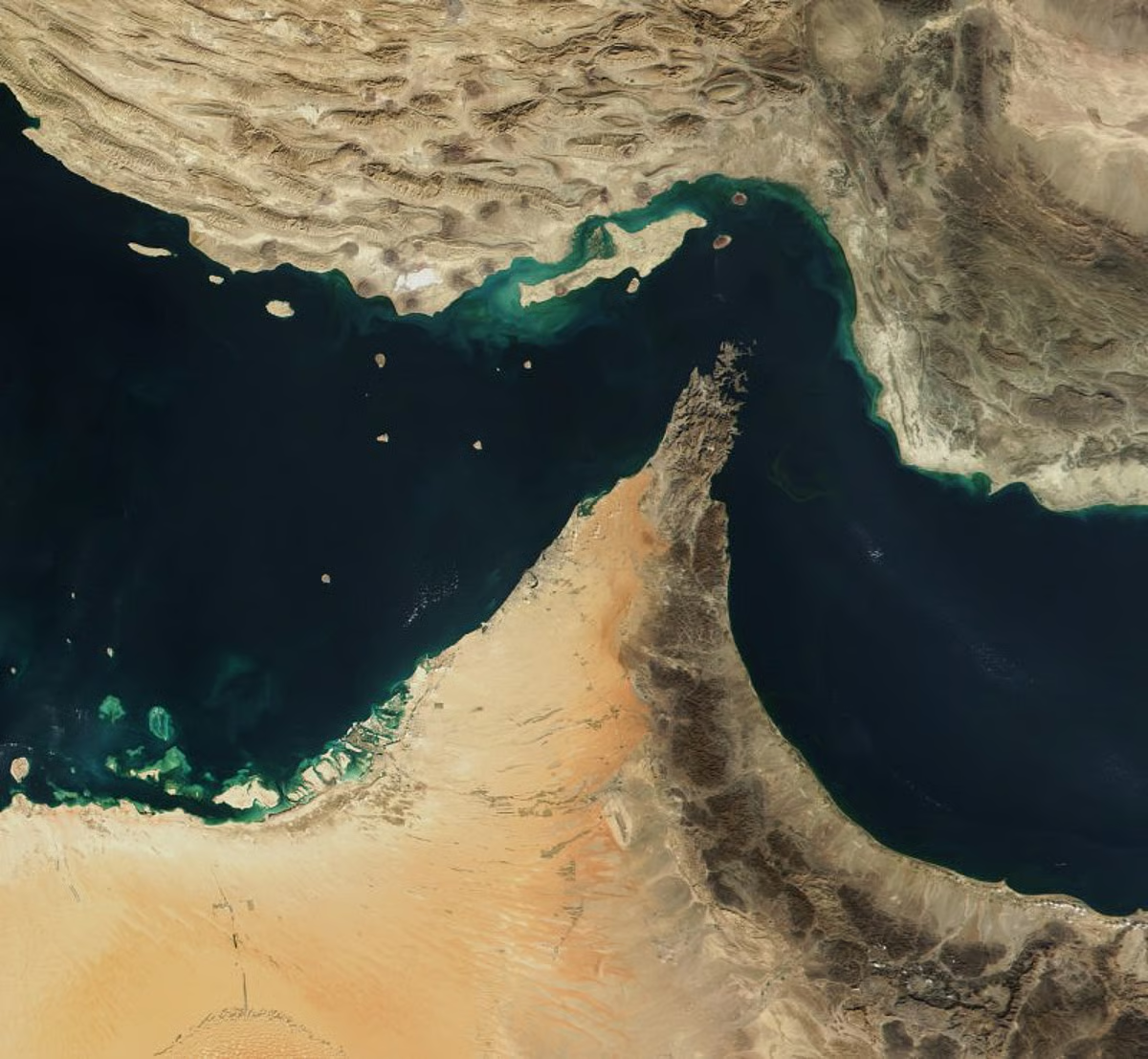
Tensions in the Persian Gulf have taken a dangerous turn, as US officials warn that Iran may have lost track of naval mines scattered across the Strait of Hormuz. The development raises serious concerns about global shipping, oil supply routes, and the feasibility of reopening one of the world’s most critical waterways.
The situation is not just complex. It is chaotic.
A Waterway Turned Into A Hazard Zone
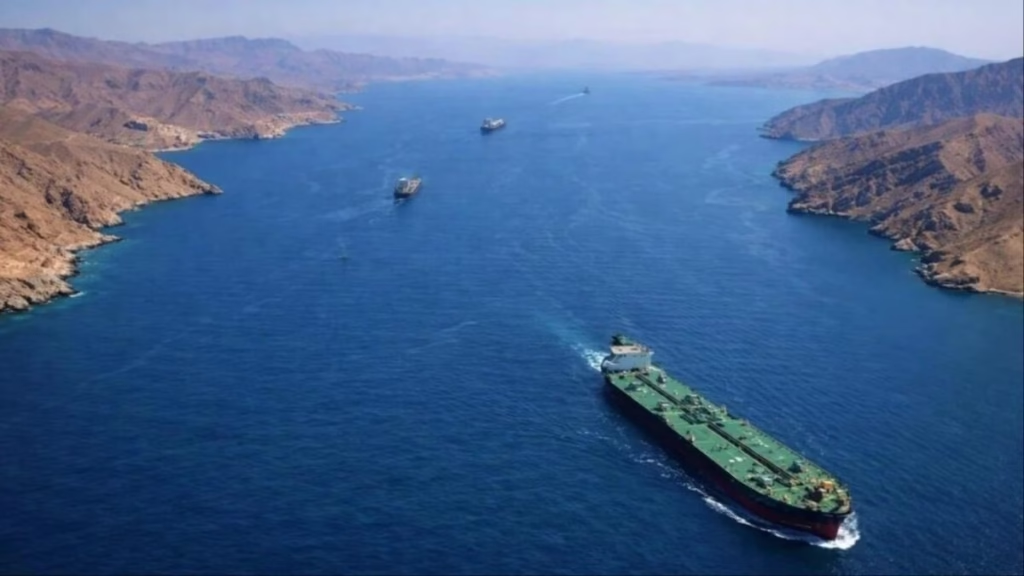
According to US officials speaking to The New York Times, Iran deployed mines during the conflict without maintaining a clear record of their locations. Small boats carried out much of the operation, often acting independently and without a structured command system.
That lack of coordination is now proving costly.
The officials describe the mining effort as “haphazardly,” with intelligence indicating Iran does not know where many of the explosives were placed. As a result, navigating the Strait has become extremely risky, if not outright impossible.
This narrow passage is no ordinary route. Nearly 20% of the world’s oil supply flows through it. Even minor disruptions can ripple across global markets. This is far from minor.
Ships Forced Into Risky And Costly Alternatives
With the main shipping lane effectively blocked, vessels are left with limited options. One of them involves detouring through Iranian-controlled waters.
But that path comes at a steep price.
Reports suggest Iran has proposed a $2 million toll for ships seeking safe passage, as part of a broader 10-point negotiation demand sent to the United States. For shipping companies already dealing with heightened risks, this adds another layer of financial strain.
Meanwhile, uncertainty continues to dominate decision-making across the maritime industry.
No Clear Path To Remove The Mines
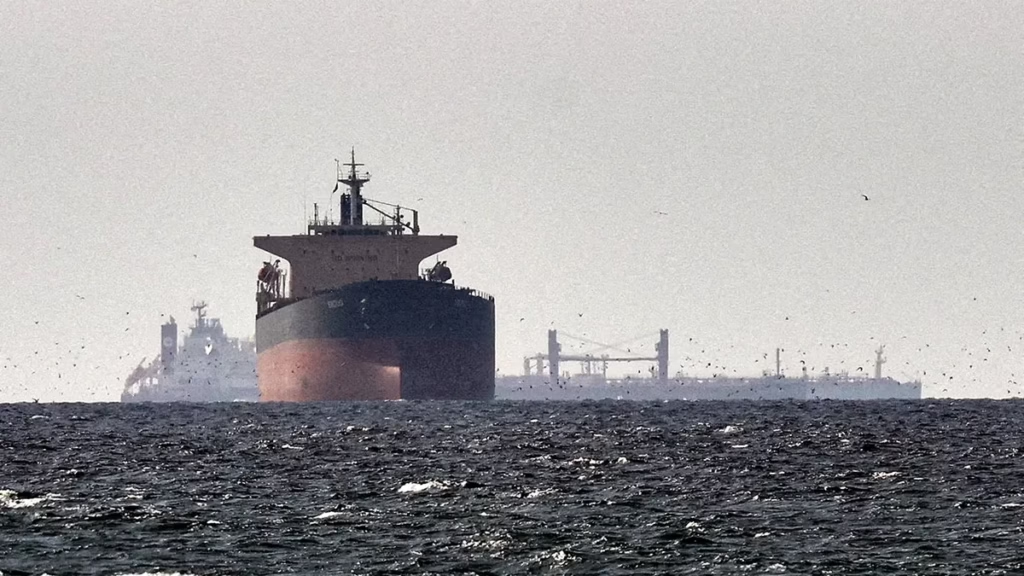
The crisis is made worse by a troubling reality. Neither side appears fully equipped to resolve it quickly.
The US currently lacks its primary minesweeping vessels in the region. Iran, on the other hand, reportedly has no reliable method to locate and remove the mines it deployed.
In short, the Strait remains a ticking time bomb.
This deadlock has become a central issue in ongoing tensions between United States and Iran. Without a solution, reopening the waterway safely seems increasingly unlikely in the near term.
Trump Pushes For Immediate Reopening
Pressure is mounting from Washington.
Earlier this week, Donald Trump called for the “complete, immediate, and safe opening” of the Strait as a condition for moving forward with negotiations. His message was clear and uncompromising.
Later on Friday, Trump said that Iran’s only choice was to negotiate, calling the closure of Hormuz a “short-term extortion of the world.”
That statement underscores the urgency of the situation. It also signals that diplomatic tensions are far from easing.
Traffic Shows Slight Uptick, But Risks Remain High
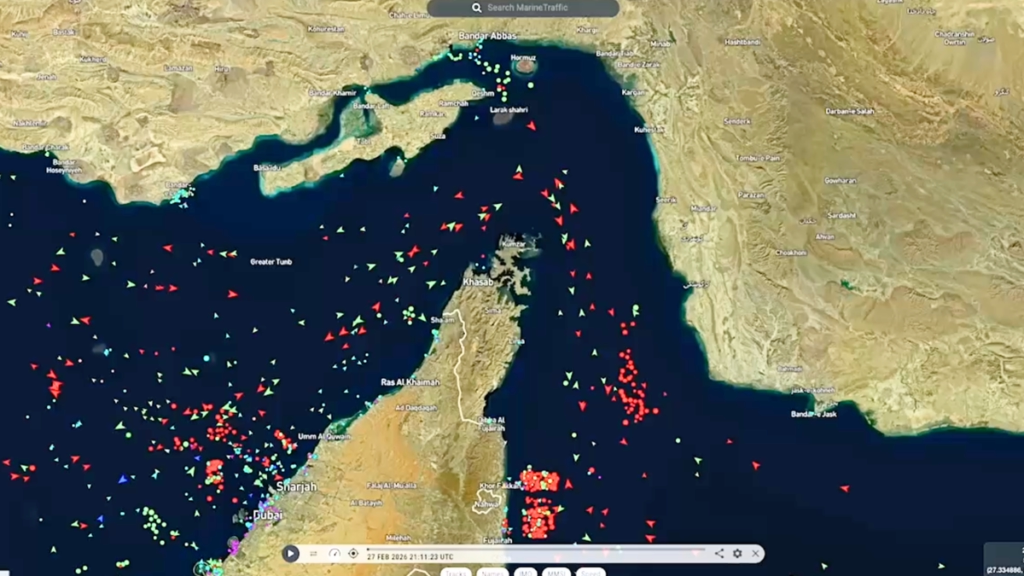
There are small signs of movement, but they offer little reassurance.
Data from MaritimeTraffic shows that nine ships passed through the Strait on Thursday. While that figure nearly doubles the previous day’s activity, it is still far below normal levels.
Before the conflict, more than 130 vessels would typically transit the waterway each day.
The gap is stark.
Even with this slight increase, operational risks remain largely unchanged. Ships continue to depend on Iranian approval to pass through territorial waters, adding another layer of uncertainty.
At the same time, fears of attacks linger. Although no new drone or rocket strikes have been reported recently, the threat has not disappeared. Combined with the hidden danger of mines, the Strait remains one of the most volatile maritime zones in the world.
A Crisis With Global Consequences
This is not just a regional issue. It is a global one.
Energy markets, shipping routes, and international trade all hinge on what happens next in the Strait of Hormuz. The longer the uncertainty continues, the greater the economic and geopolitical impact.
The question now is simple, but critical. How do you reopen a waterway when no one knows where the danger lies?