
Nearly a decade after it first shook audiences, the world of The Handmaid’s Tale is back, and it feels unsettlingly close to reality once again. With The Testaments, the story pushes forward into a darker, more normalized version of Gilead, raising an uncomfortable question: what happens when oppression stops shocking people and starts feeling routine?
A Sequel That Feels Too Timely
When Hulu’s adaptation of Margaret Atwood’s seminal dystopian novel The Handmaid’s Tale premiered just after Donald Trump’s first inauguration, it met the political moment in a way no one could have anticipated.
Back in 2017, disbelief shaped the cultural mood among critics of the administration. The show captured that anxiety, portraying a future shaped by totalitarianism, civil war, and systemic repression. What once felt like a warning now lands differently.
Meanwhile, the final season aired as Trump returned to office, with policies that seemed to blur the line between fiction and reality. That eerie overlap lingers in The Testaments, a sequel that wastes no time pulling viewers deeper into Gilead’s grip.
Life Inside Gilead’s “New Normal”
Unlike its predecessor, The Testaments doesn’t dwell on how Gilead came to be. Instead, it throws viewers directly into a world that has stabilized after environmental collapse, where oppression has been normalized.
Here, the role of Handmaids has diminished, largely because Wives can now conceive. That shift signals a disturbing evolution, not progress, but adaptation.
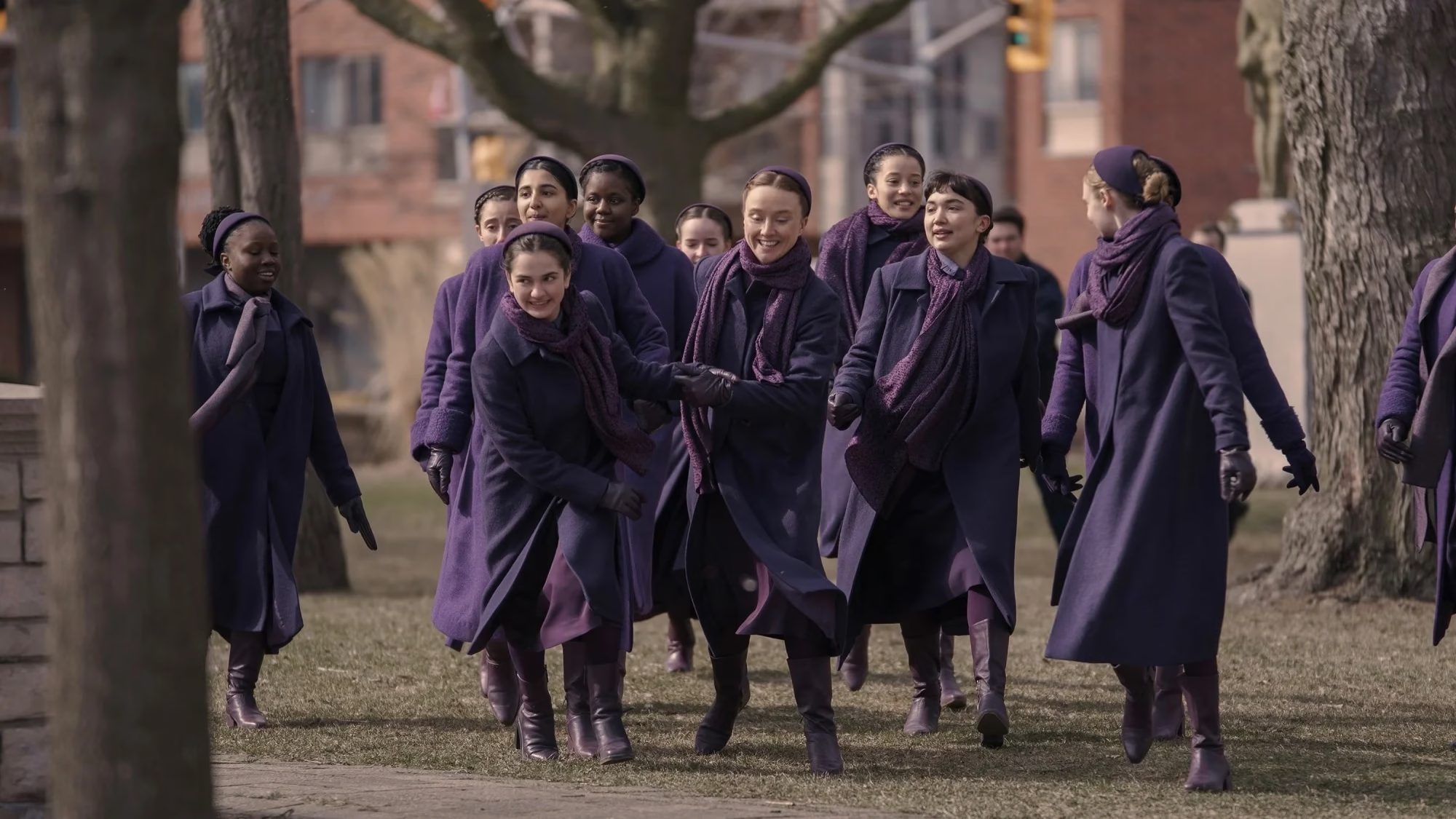
The series focuses on a new generation, particularly teenage girls raised entirely within this system. Their reality is not questioned, it is accepted.
Agnes And Daisy Lead The Story
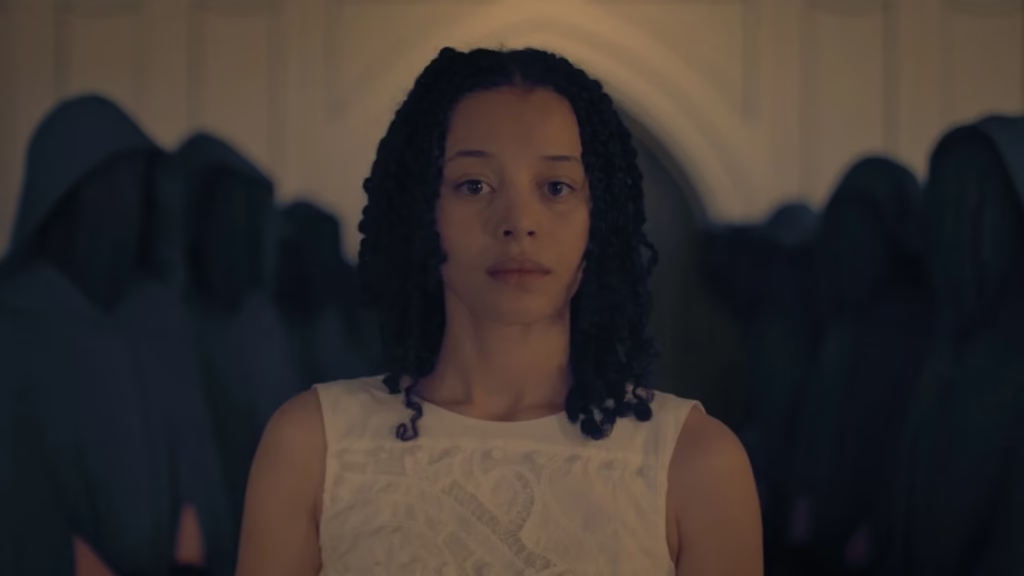
At the heart of the narrative is Agnes, played by Chase Infiniti, whose performance anchors the show with a complex mix of innocence and inner conflict. Born as Hannah, she is the daughter of June, though she remains largely unaware of her past.
Agnes attends an elite school alongside daughters of powerful Commanders. These girls are raised with one goal, marriage, and they eagerly await milestones that mark their readiness.
Meanwhile, Daisy, a defector from Canada, offers a stark contrast. Her presence introduces tension, resistance, and perspective from the outside world.
As the two stories unfold, their paths highlight the stark divide between indoctrination and awareness.
A Disturbing Reflection Of Modern Ideas
One of the show’s most unsettling elements lies in how easily its characters accept their roles. Agnes, despite glimpses of another world, struggles to reject what she has been taught.
“It sounds horrible,” she replies to someone from outside of Gilead describing their freedoms, calling her way of life “so much less confusing.”
That line lands with weight. It echoes modern ideologies that promote simplicity over autonomy, raising uncomfortable parallels.
Daisy quickly challenges that thinking.
“I guess, the way I said it,” Daisy (Lucy Halliday), a defector from Canada who attends Agnes’ school. “But at least we get to choose.”
That contrast, choice versus control, becomes one of the show’s central tensions.
Resistance, Fear, And Control
As the story expands, Gilead’s control mechanisms become more visible. Surveillance is constant. Even small actions are monitored.
Meanwhile, scenes set in Toronto hint at growing resistance movements, drawing visual parallels to real-world protests.
Daisy voices frustration at the lack of rebellion within Gilead, only to be met with a chilling explanation.
“Girls in Gilead have spent their lives being vigilant in a way you never have,” Daisy is told when she expresses outrage that they won’t rise up against the injustices they face.
That statement cuts deep. The girls are not just controlled, they are conditioned.
Aunt Lydia’s Complicated Return
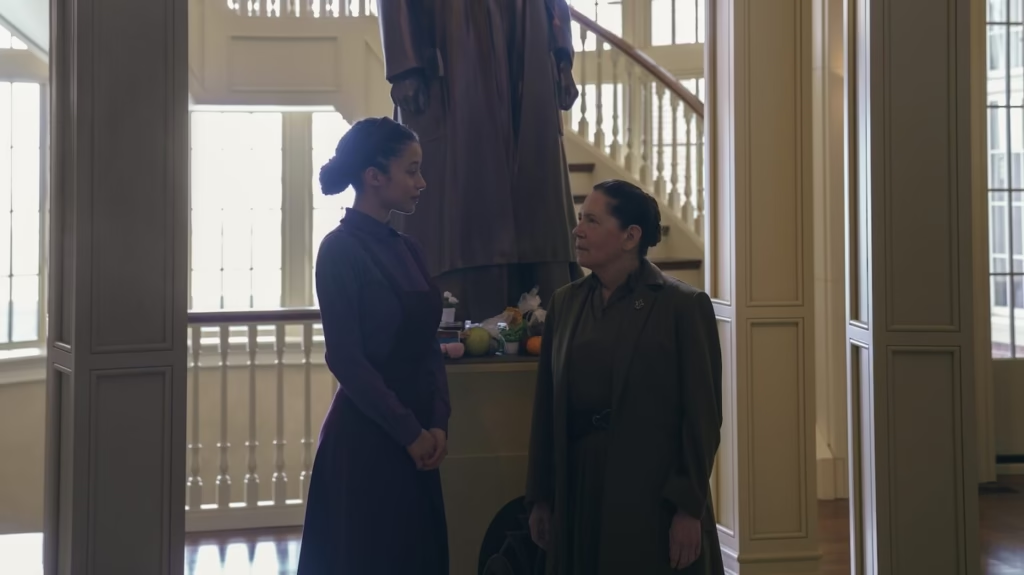
A familiar face returns in Aunt Lydia, portrayed once again by Ann Dowd. Her character remains as complex as ever, navigating a system she helped uphold.
Now pardoned, Lydia works closely with the younger generation. Interestingly, the rules have shifted enough to allow Aunts to read and write.
At one point, Lydia reflects on the power of truth and silence.
“What was I to write? The crimes of these men…?” Lydia says at one point. “No, that could bring them down.”
Her words reveal a quiet awareness, but also a continued complicity.
A Dark Story With A Different Tone
While The Handmaid’s Tale often felt relentlessly heavy, The Testaments introduces a slightly different tone. By focusing on teenagers, the series occasionally takes on the rhythm of a tense coming-of-age drama.
Still, the darkness remains. Child marriage, authoritarian control, and rigid gender roles define the world these characters inhabit.
However, this shift in perspective makes the story more engaging, and at times, even more unsettling.
A Story Rooted In Reality
Margaret Atwood has long insisted that her stories are grounded in real events. That claim feels especially relevant now.
In 2026, the parallels between fiction and reality feel sharper than ever. The Testaments does not just continue a story, it reflects a world that seems uncomfortably familiar.
And that may be what makes it so hard to ignore.