

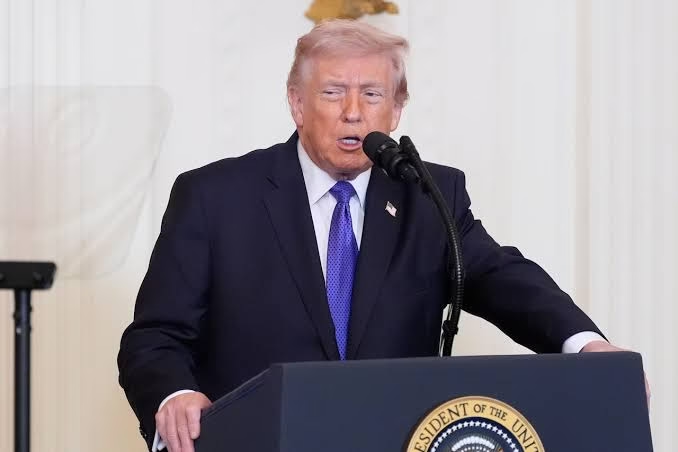
Five hundred days into his second term, President Donald Trump is facing a new political milestone, and not one his supporters will celebrate.
A major national survey released this week shows Trump recording the lowest net approval rating ever measured in a long-running presidential tracking poll, as concerns over the Iran conflict and the economy continue to weigh on public opinion.
Poll Shows Record-Low Approval Rating
According to new findings released Thursday by The Economist and YouGov, Trump has reached the lowest net approval rating recorded during the poll’s 17-year history of tracking American presidents.
The survey placed Trump’s net approval at -25, a decline of 1.1 points from the previous week. Overall, 35% of respondents approved of the president’s performance, while 60% disapproved.
The numbers mark a significant setback for the administration as it moves deeper into its second term and prepares for a politically critical midterm election cycle.
Iran Conflict Appears To Be Taking A Toll
One of the biggest factors driving Trump’s declining approval appears to be public reaction to the ongoing conflict involving Iran.
Survey data cited in the report found that more than half of Americans believe involvement in the conflict was the “wrong decision.”
The findings suggest growing voter unease over foreign policy decisions at a time when global tensions remain elevated. As military developments continue to unfold, public sentiment could become an increasingly important factor for both the White House and congressional candidates.
Economic Concerns Continue To Grow
Meanwhile, economic worries remain a major source of frustration for voters.
The poll found that roughly three-quarters of Americans describe the nation’s economic condition as “fair” or “poor.” In addition, 59% believe the economy is getting worse rather than improving.
Those figures indicate that many Americans remain dissatisfied with current economic conditions despite ongoing debates over inflation, wages, and broader economic performance.
Political analysts often view perceptions of the economy as one of the strongest indicators of presidential approval, making the issue particularly significant heading into election season.
Midterm Outlook Raises Challenges For Republicans
 The report also warned that continued economic dissatisfaction could create difficulties for Republicans in upcoming congressional races.
“If that doesn’t change it will hurt the Republican Party in November’s midterm elections,” The Economist reported. “Our forecasting model says the Democrats have a nine-in-ten chance of winning control of the House of Representatives. The Senate is a toss-up.”
Those projections suggest Democrats may have a strong opportunity to regain control of at least one chamber of Congress if current political trends continue.
Support Remains Strong In A Handful Of States
Despite the national decline, Trump continues to maintain positive approval numbers in several heavily Republican states.
The poll found positive net approval ratings in only four states:
- Wyoming: +18
- Idaho: +14
- West Virginia: +10
- North Dakota: +1
Outside those states, approval ratings were generally negative, reflecting broader national dissatisfaction captured in the survey.
Massachusetts Among Trump’s Weakest States
The state-by-state analysis highlighted particularly poor numbers in Massachusetts.
According to the report, Trump’s net approval rating there stands at -38, placing the state among the least favorable toward the president.
The figures underscore the sharp political divide that continues to define the American electorate as the administration enters the latter stages of its second term.
Political Pressure Builds Ahead Of Midterms
With approval ratings slipping, economic concerns lingering, and debate surrounding the Iran conflict continuing, Trump faces mounting challenges as attention shifts toward November’s midterm elections.
Whether public opinion improves over the coming months may play a crucial role not only in shaping the remainder of Trump’s presidency but also in determining which party controls Congress after voters head to the polls.