
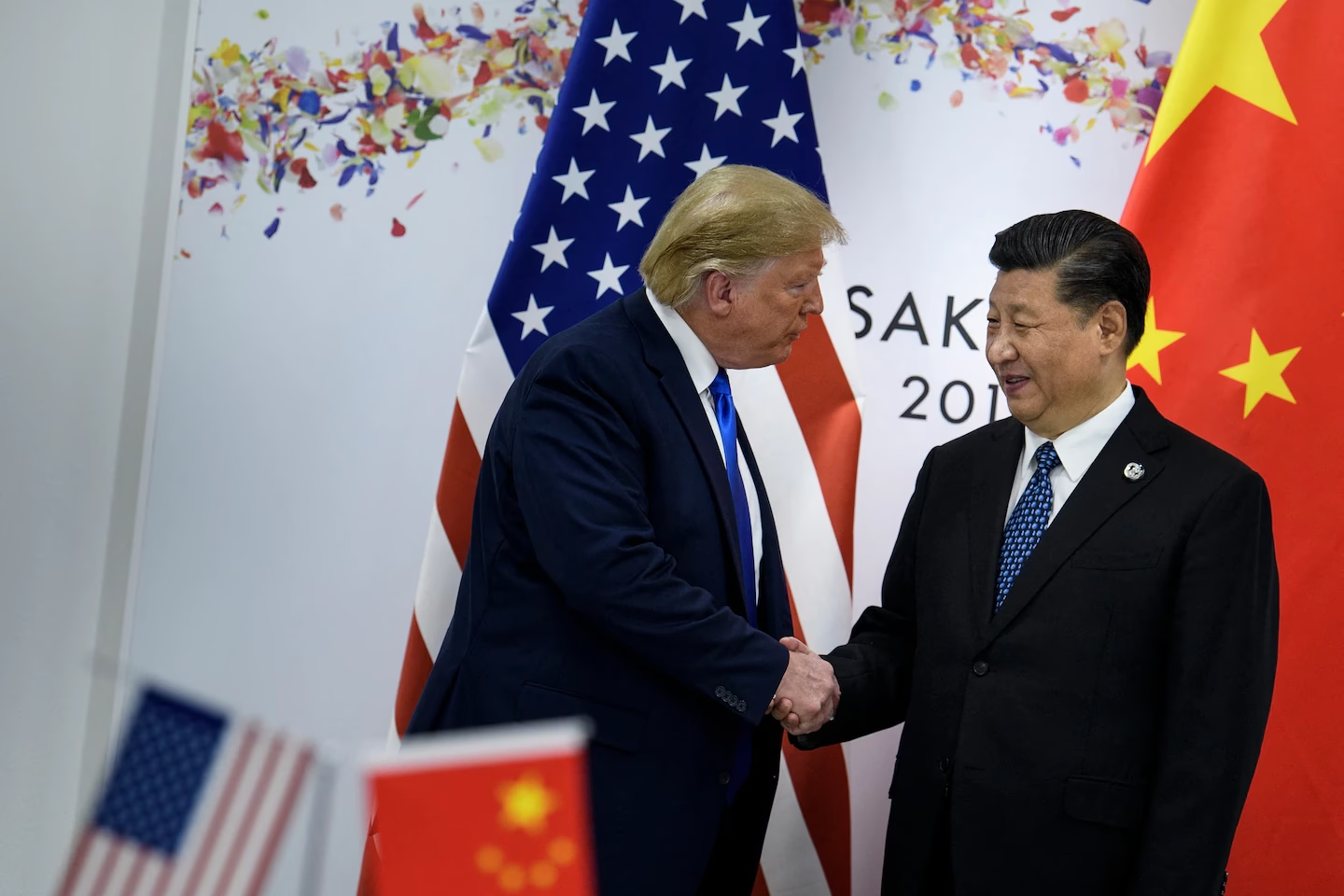
President Donald Trump said a recent phone call with Chinese President Xi Jinping led to progress on several key issues, including trade tensions and the future of TikTok in the United States. The conversation marked the first time the two leaders had spoken since June and came as both countries continue to navigate a complicated economic and political relationship.
Trump described the discussion as constructive and said it could pave the way for future meetings between the two leaders later this year and into next year.
Trump Describes Phone Call With Xi As Productive
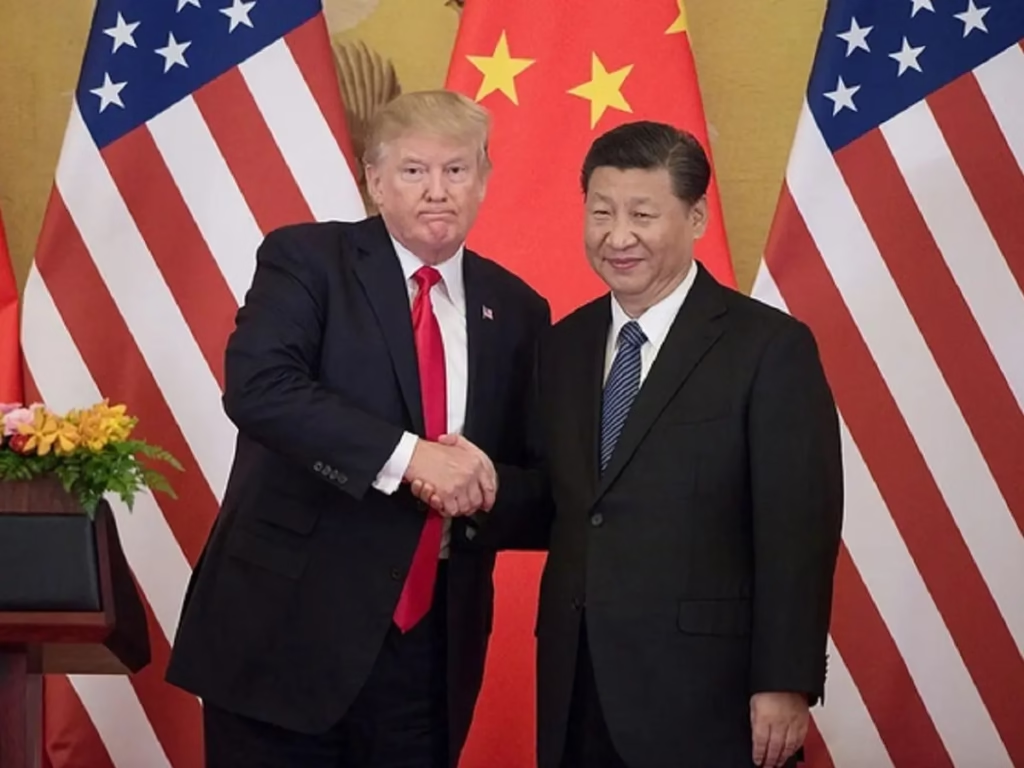
The president shared details of the call in a message posted on Truth Social after the conversation, which he said began early Friday morning.
“I just completed a very productive call with President Xi of China. We made progress on many very important issues including Trade, Fentanyl, the need to bring the War between Russia and Ukraine to an end, and the approval of the TikTok Deal,” Trump wrote.
The conversation covered several major topics affecting the relationship between the United States and China, including trade policy and global conflicts.
Meanwhile, Trump suggested that both sides were moving forward on an arrangement involving TikTok, though he did not confirm a finalized agreement.
Plans For Future Meetings Between Leaders
Trump also said the call included plans for future diplomatic meetings between the two leaders.
“The call was a very good one, we will be speaking again by phone, appreciate the TikTok approval, and both look forward to meeting at APEC!” the president wrote.
According to Trump, the two leaders agreed to meet during the upcoming Asia-Pacific Economic Cooperation summit scheduled for Oct. 31 through Nov. 1 in South Korea.
He added that he intends to travel to China early next year and that Xi is expected to eventually visit the United States.
White House Clarifies TikTok Deal Status
Although Trump indicated progress on a TikTok agreement, administration officials emphasized that a final deal has not yet been announced.
A White House official said any confirmation of a completed deal would ultimately come directly from the president.
Speaking to reporters later in the Oval Office, Trump offered mixed signals about the status of negotiations.
He first stated that Xi “approved the TikTok deal,” but then suggested that additional steps remain before it becomes official.
Asked whether the agreement had been fully approved, Trump replied, “Well, I think so. I mean — when you say fully approved, I don’t know what that means. We have to get, we have to get it signed. I guess it could be a formality.”
He added that “the TikTok deal is well on its way.”
China Describes Call As Constructive
Chinese state media also issued a summary of the conversation, describing it as a positive exchange between the two leaders.
According to a report published by Xinhua, the leaders had a “candid and in-depth exchange of views” and that the call was “pragmatic, positive, and constructive.”
During the conversation, Xi reportedly urged the United States to avoid additional restrictive trade measures.
Chinese officials said Washington should avoid such actions “to prevent undermining the outcomes achieved through multiple rounds of consultations.”
On the subject of TikTok, Xi signaled support for business negotiations under existing legal frameworks.
He said the Chinese government “respects the will of companies and is pleased to see companies conduct business negotiations on the basis of market rules and reach solutions that comply with Chinese laws and regulations and balance interests.”
The Chinese statement also called for fair treatment of Chinese businesses operating in the United States.
“We hope the U.S. side will provide an open, fair, and non-discriminatory business environment for Chinese companies investing in the United States,” it said.
ByteDance Responds To TikTok Negotiations
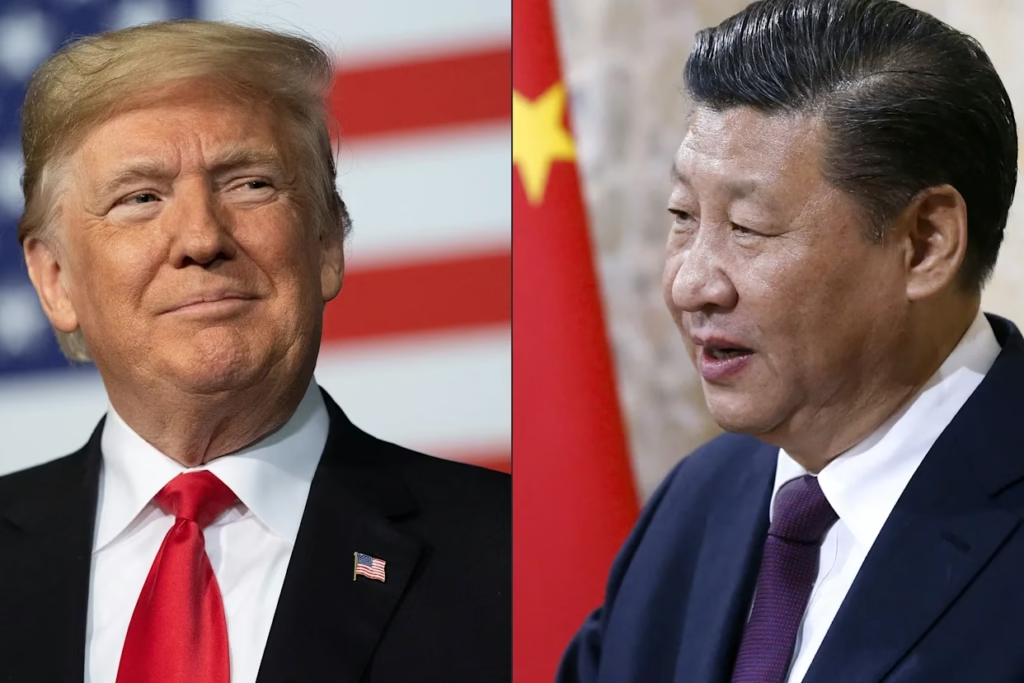
TikTok’s parent company ByteDance issued a statement thanking both leaders for efforts to keep the app available in the United States.
The company said it appreciates their efforts and will continue working toward a solution that allows the platform to operate legally within U.S. regulations.
ByteDance thanked the two leaders “for their efforts to preserve TikTok in the United States” and said it will “work in accordance with applicable laws to ensure TikTok remains available to American users through TikTok U.S.”
Trade Disputes Still Loom Over Talks
Despite signs of progress, the broader U.S. China relationship remains complicated by ongoing trade disputes.
Earlier this year, tariff tensions escalated sharply. At one point in April, combined tariffs between the two countries reached levels as high as 145 percent, effectively creating what analysts described as a trade standoff between the world’s two largest economies.
Since then, both sides have scaled back tariffs as part of a framework agreement. Under that arrangement, U.S. tariffs on Chinese goods were capped at 30 percent, while China imposed an additional 10 percent tariff on American products.
Those lower tariff levels are scheduled to expire on Nov. 10 unless negotiators reach a new agreement or extend the existing truce.
Meanwhile, disagreements continue over export restrictions involving critical technologies and rare earth minerals.
TikTok Deal Remains Politically Sensitive
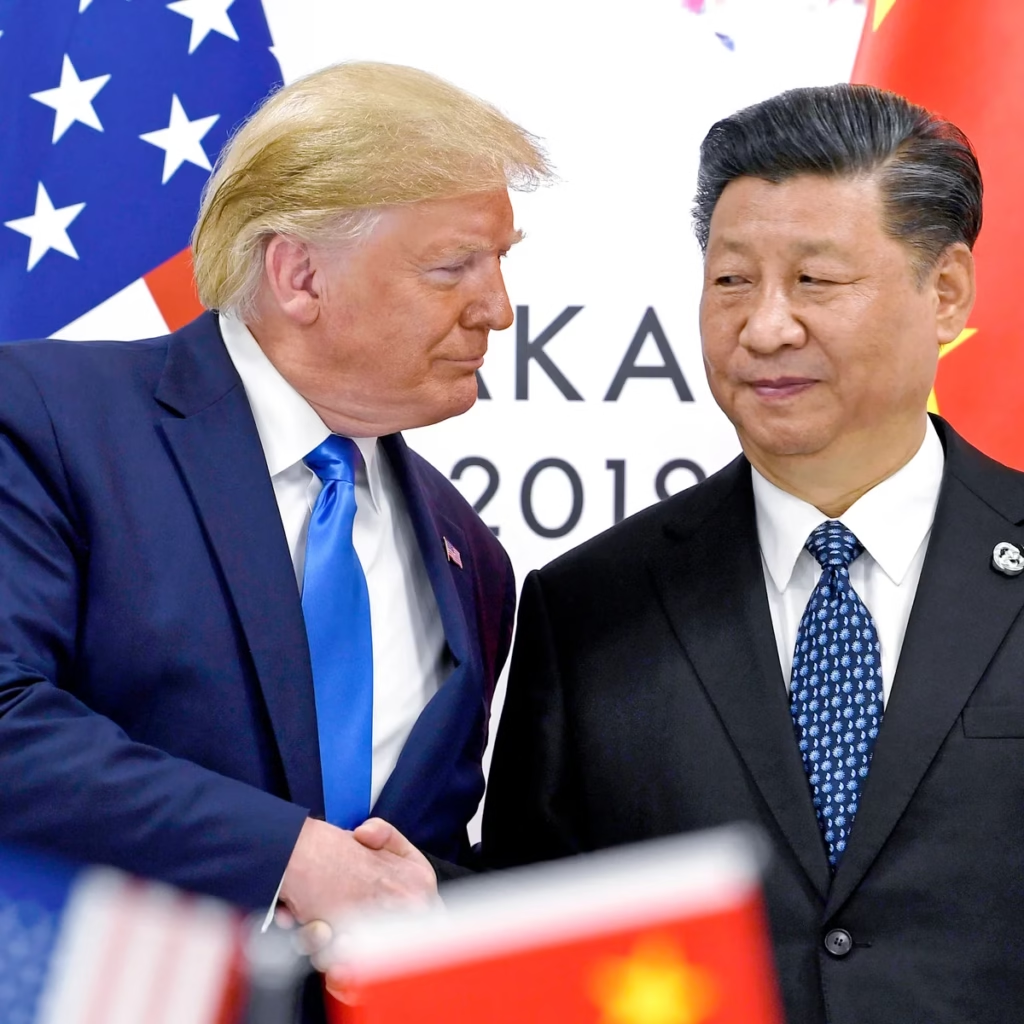
TikTok’s future in the United States remains uncertain despite ongoing negotiations.
The platform, which has about 170 million users in the country, faces a potential ban unless its Chinese parent company agrees to sell its U.S. operations to American owners.
Congress passed legislation last year requiring such a sale because of national security concerns tied to Chinese laws that could require companies to share user data with the government.
Trump recently extended the deadline for a TikTok agreement for the fourth time, pushing it to Dec. 16 while negotiations continue.
The president has repeatedly credited the platform with helping him connect with younger voters during the last election.
At the same time, U.S. officials remain wary of how TikTok collects user data and operates its powerful recommendation algorithm.
Lawmakers Continue To Debate TikTok Ownership
Members of Congress from both parties have raised concerns about any deal that would allow Chinese companies to maintain control of TikTok’s algorithm or data systems.
Rep. Raja Krishnamoorthi emphasized the importance of ensuring American oversight of the platform.
“President Trump has all the leverage he needs to strike a deal that saves TikTok and complies with the law — which means making sure TikTok’s data and algorithm are truly in American hands,” Krishnamoorthi said in a statement Thursday.
Experts say negotiations surrounding TikTok could also play a role in the broader geopolitical relationship between Washington and Beijing.
Political scientist Dimitar Gueorguiev noted that the platform’s significance in negotiations may be shifting over time.
“TikTok is, I think, a less valuable bargaining chip from the Chinese perspective, and an easier concession,” he said.
At the same time, the app remains politically influential in the United States.
“On the other hand, for the United States, it’s as visible and kind of politically salient as ever.”
Still, Gueorguiev said the bigger question goes beyond a single technology platform.
“If we’re thinking about what is the ultimate outcome of this, and who wins and who loses, there’s still a lot to be told,” he said.
Future Of US China Relations Still Uncertain
The latest phone call between Trump and Xi suggests both sides are willing to continue negotiations despite ongoing tensions.
However, whether those discussions lead to a finalized TikTok agreement or a broader economic understanding between the two nations remains unclear.
For now, the conversation signals movement, but the final outcome may depend on future talks, upcoming diplomatic meetings, and how both governments choose to manage their complex economic rivalry.