

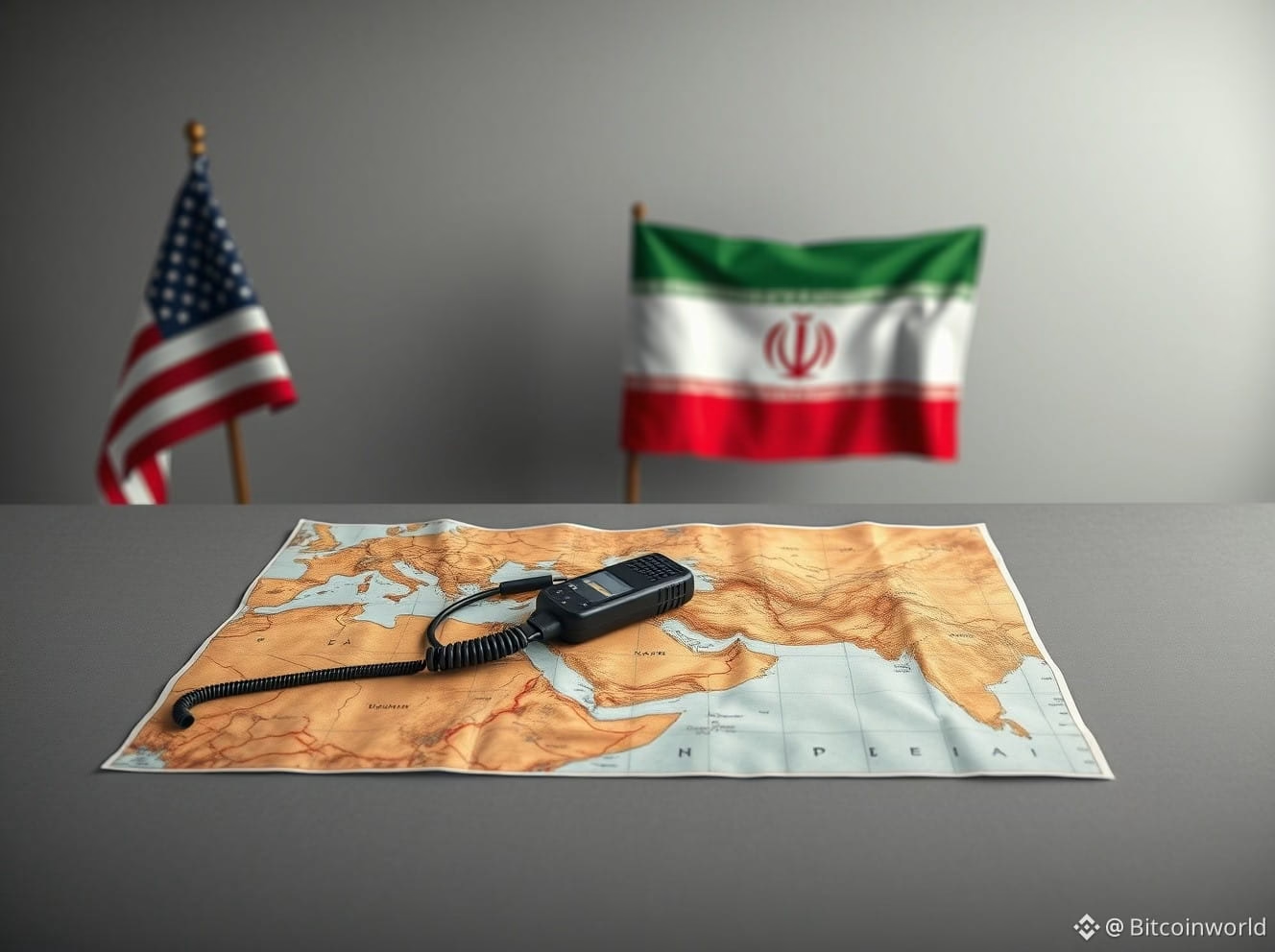
A fragile ceasefire between the United States and Iran faced another serious challenge after both sides exchanged military strikes across the Gulf region, raising fresh concerns about stability in one of the world’s most strategically important waterways.
The latest flare-up saw American forces target Iranian military assets, while Iran responded with missile attacks aimed at US military facilities in Gulf states. The exchange marks another setback for diplomatic efforts intended to halt months of escalating conflict.
US Targets Iranian Drones And Radar Sites
The US military said it launched strikes after detecting Iranian drones heading toward the Strait of Hormuz, a critical shipping route that handles a significant share of global energy exports.
According to US Central Command, four Iranian “one-way attack drones” were launched toward the strait and represented an immediate threat to maritime traffic in the region. American forces intercepted and destroyed the drones before they could reach their targets.
In addition to downing the drones, US strikes reportedly targeted radar installations in Sirik and on Qeshm Island.
However, Tehran strongly condemned the operation and accused Washington of breaching the ceasefire agreement.
“The US attack demonstrates this country’s complete disregard for the principles of international law and the United Nations Charter,” the statement added.
Iran Responds With Missile Attacks
Iran quickly answered the US operation with missile strikes targeting American military installations in the Gulf.
Iran’s state-linked media reported that ballistic missiles were launched toward two US air bases in Kuwait as well as US Navy facilities in Bahrain.
The Iranian foreign ministry described the American strikes on its territory as a “flagrant” violation of the ceasefire and “an attack on the national sovereignty and territorial integrity of the Islamic Republic of Iran”, according to news agencies.
Meanwhile, Iran’s Islamic Revolution Guard Corps (IRGC) said it had struck “enemy bases” in retaliation for the American attacks.
Gulf Nations Condemn The Escalation
Bahrain and Kuwait both denounced the missile and drone attacks, saying their defense systems successfully neutralized the incoming threats.
US Central Command reported that seven Iranian missiles were fired during the operation. Initial assessments indicated that six were intercepted, while one failed to reach its intended target.
The United Arab Emirates and Qatar also criticized the Iranian attacks, joining regional allies in expressing concern over the renewed violence.
Strait Of Hormuz Remains A Global Flashpoint
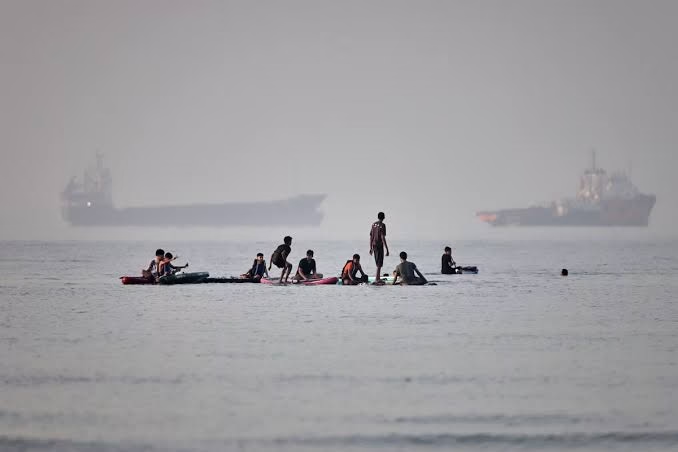 The latest exchange highlights the continued importance of the Strait of Hormuz, one of the world’s most critical maritime corridors.
The waterway serves as a key route for oil and liquefied natural gas exports from several Gulf nations, including Iraq, Kuwait, Qatar, Saudi Arabia, the UAE, and Iran itself.
The conflict has already demonstrated how vulnerable global energy markets remain. Earlier disruptions around the strait sent oil prices sharply higher, fueling concerns about broader economic consequences.
Peace Talks Continue To Struggle
The military escalation comes as negotiations aimed at ending the conflict remain deadlocked.
Reports indicate that ceasefire discussions have stalled after disagreements emerged over the terms of a potential settlement. US media outlets reported that President Donald Trump sought revisions to elements of a proposed agreement.
On Monday, Iran’s foreign ministry spokesman accused Washington of inconsistency during negotiations.
The spokesman said the US was “constantly changing its views and putting forward new or contradictory demands”.
World Cup Twist Amid Ongoing Conflict
Despite the ongoing hostilities, one unusual development has emerged from the standoff.
The United States has granted visas to Iran’s national football team ahead of its opening World Cup match in Los Angeles on June 15.
The move creates a rare and historic situation, marking the first time a World Cup host nation will welcome the team of a country with which it is actively engaged in armed conflict.
Conflict Roots Stretch Back Months
The current crisis began after large-scale US and Israeli strikes on Iran on February 28, triggering a wider regional confrontation.
Iran responded by launching attacks against Israel and Gulf states aligned with Washington. The country also moved to effectively shut down the Strait of Hormuz, disrupting one of the world’s busiest energy routes.
Although a ceasefire was reached in early April, tensions never fully subsided.
Soon after the agreement took effect, the United States imposed a blockade on Iranian ports. Trump stated the measures would remain “in full force and effect until an agreement is reached, certified, and signed”.
With both sides continuing to exchange military strikes and diplomatic negotiations making little progress, the ceasefire remains under intense pressure.