

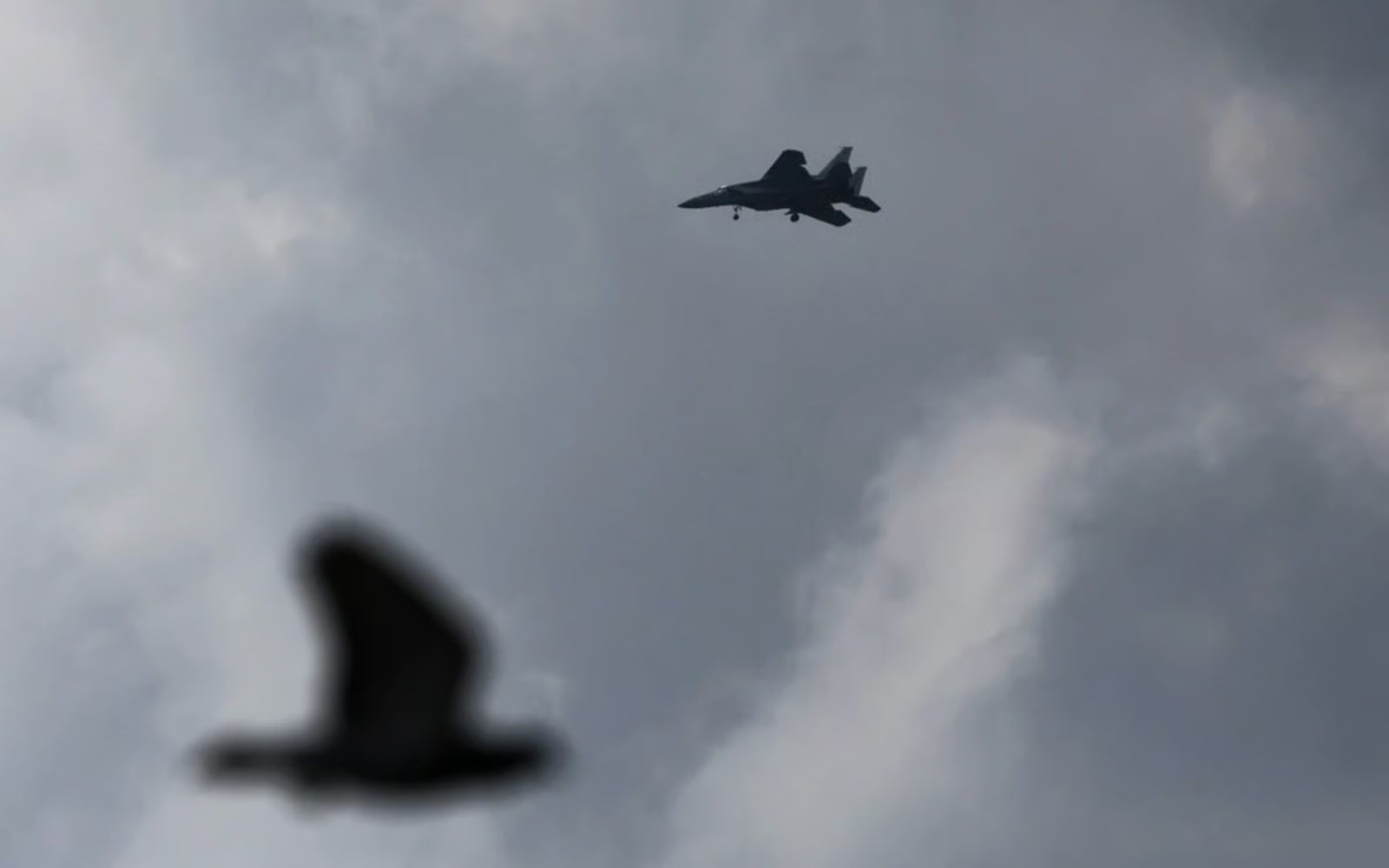
A dramatic overnight mission deep inside Iranian territory has brought a wounded U.S. airman back to safety, marking one of the most intense rescue operations in recent years. The high-stakes extraction followed the downing of an American F-15E fighter jet, triggering a complex response involving intelligence tactics, elite forces, and heavy air support.
High-Risk Rescue Operation Unfolds
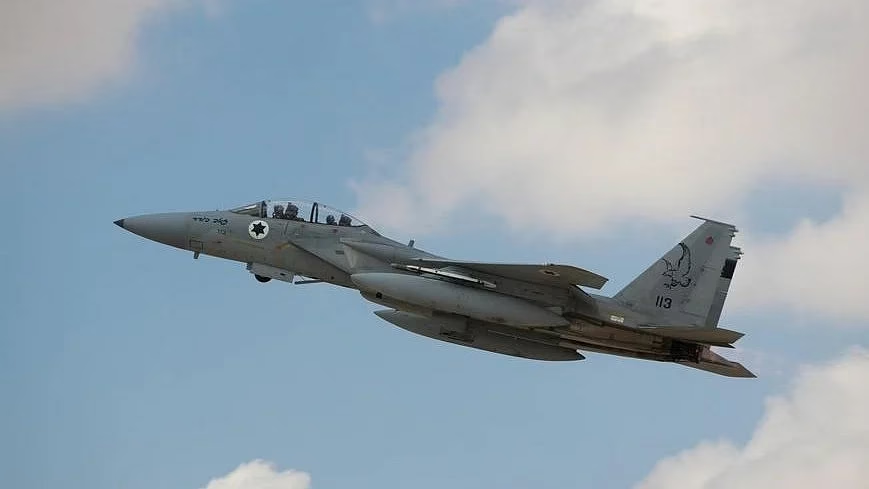
The rescue effort came together rapidly after the aircraft was shot down on Friday. In a post on Truth Social, Donald Trump revealed the outcome just after midnight, saying the missing officer had been successfully recovered without any American casualties.
He initially said the airman “sustained injuries, but he will be just fine.” However, hours later, the president clarified the severity, stating the officer was “seriously wounded.”
Meanwhile, the second crew member aboard the F-15E had already been rescued earlier and was receiving medical care by Friday afternoon.
Despite the loss of the aircraft, Trump emphasized the broader military picture, stating the U.S. had achieved “overwhelming Air Dominance and Superiority over the Iranian skies.”
CIA Deception Strategy Played Key Role
Behind the scenes, intelligence operations proved critical. The Central Intelligence Agency reportedly launched a calculated deception campaign to mislead Iranian forces searching for the downed officer.
Officials indicated the agency spread false signals suggesting the airman had already been located and was being extracted. This tactic helped divert attention while U.S. forces moved in.
Eventually, the missing officer activated a beacon, allowing rescuers to pinpoint his location. Notably, military training discourages constant signal transmission in hostile territory, making the timing of that signal crucial.
Elite Forces Execute Extraction Under Fire
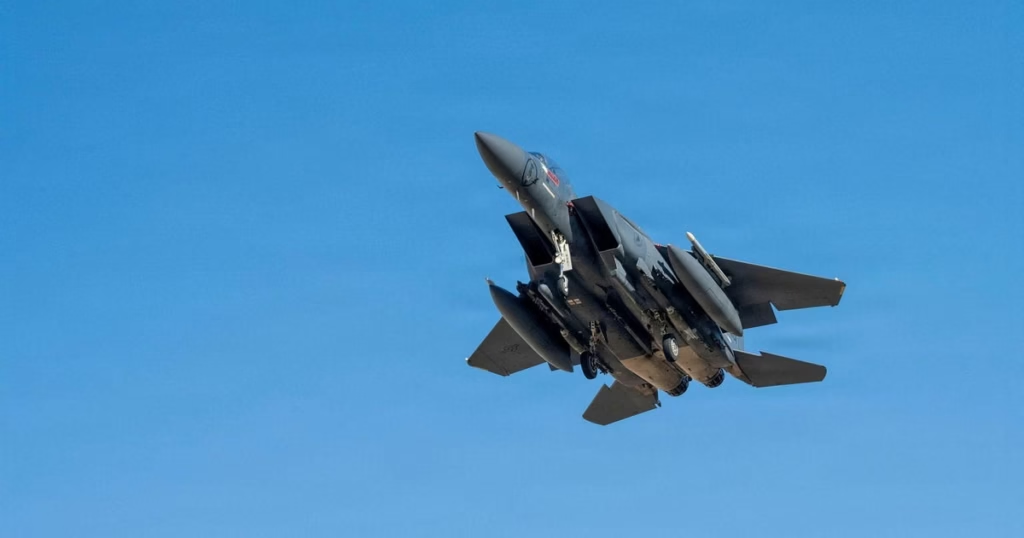
The rescue itself involved hundreds of personnel, dozens of aircraft, and multiple intelligence assets. According to reports, members of Navy SEAL Team 6 carried out the final extraction.
As the operation intensified, U.S. forces bombed areas surrounding the airman’s location. During the extraction, SEALs opened fire at Iranian forces nearby. However, a military official stated they did not exchange gunfire directly, and remarkably, no American troops were injured.
The wounded officer was then flown out and transported to a military hospital in Kuwait for treatment.
Iran Mobilized Civilians To Hunt Down Airmen
Before the rescue, Iranian authorities launched a public campaign urging civilians to locate the missing U.S. personnel. State television issued a chilling directive:
“If you capture the enemy pilot or pilots alive and hand them over to the police, you will receive a precious prize,”
In a more alarming escalation, broadcasts also warned locals to “shoot them if you see them.”
Reflecting on the urgency of the situation, Trump later said the officer had been “being hunted down by our enemies, getting closer and closer every hour.”
Additional Aircraft Losses Raise Questions
The rescue mission came at a cost. Trump confirmed the operation involved “dozens” of aircraft, while Iranian media aired footage claiming destruction of U.S. assets.
However, American officials stated that two MC-130J transport planes were deliberately destroyed by U.S. forces during the mission, likely to prevent them from falling into enemy hands.
Second Crash Adds To Chaos
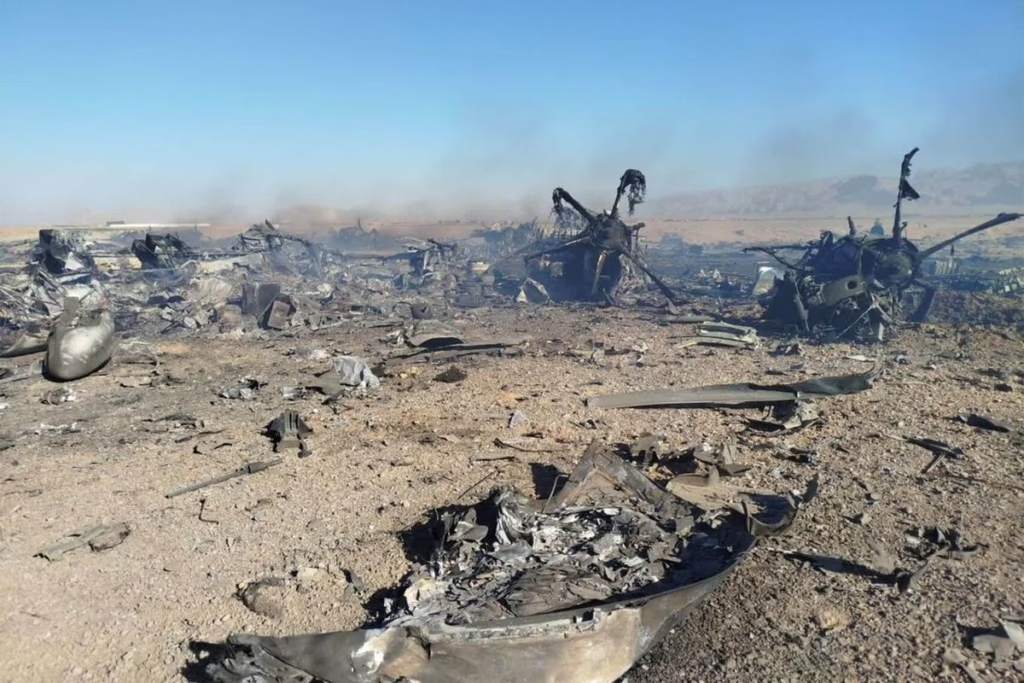
At nearly the same time, another U.S. aircraft incident unfolded. An A-10 Warthog attack plane crashed near the Strait of Hormuz.
The pilot was safely rescued, though details surrounding the cause of the crash remain unclear. The timing of both incidents has raised fresh concerns about operational risks in the region.
Inside The F-15E Strike Eagle
The aircraft involved in the initial incident was an F-15E Strike Eagle, a two-seat fighter designed for both air-to-air and air-to-ground combat missions.
These jets, developed in the 1980s, remain a critical part of U.S. military operations. They can reach speeds up to 1,875 mph and travel roughly 2,400 miles without refueling.
Originally costing $31.1 million in 1998-adjusted dollars, newer variants of the aircraft can approach $100 million per unit. The jet is capable of carrying both conventional and nuclear weapons.
Notably, this is not the first recent incident involving the aircraft. On March 1, three F-15E jets were downed over Kuwait in what officials described as a friendly fire incident, though all six crew members survived after ejecting safely.
Rising Tensions And Massive Defense Spending
The rescue mission comes amid escalating tensions between the U.S. and Iran. Earlier, Trump had warned of intensified military action, stating there was “much more to follow” after a strike on infrastructure near Tehran.
At the same time, the administration is pushing for a massive defense budget increase. Trump has requested $1.5 trillion for fiscal year 2027, a 40% jump over the previous budget.
At a private gathering, he underscored his priorities, saying, “We’re fighting wars. We can’t take care of day care . . . it’s not possible for us to take care of day care, Medicaid, Medicare, all these individual things.”
He added that states should take responsibility for such programs instead of the federal government.