
The opening day of the World Cup 2026 had no shortage of talking points. Fans witnessed five goals, three red cards, multiple hydration breaks, a vibrant opening ceremony, and plenty of debate that is likely to continue throughout the tournament.
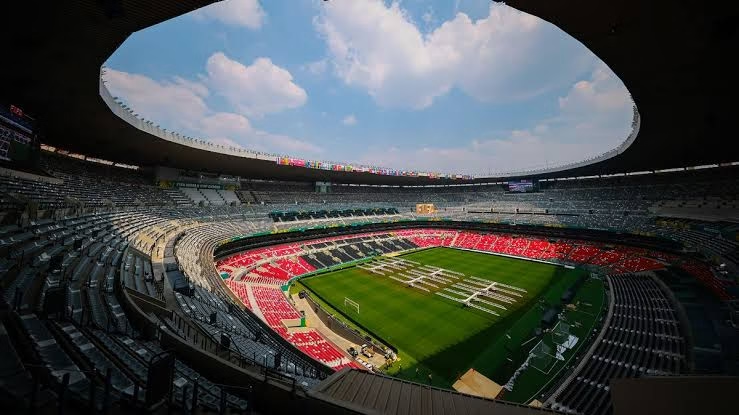
From Mexico City’s iconic Estadio Azteca to Guadalajara and Zapopan, the first day of football’s biggest event provided drama, controversy, and a glimpse of what could be an unpredictable month ahead.
Red Cards Dominate The Opening Match
One of the biggest headlines from day one came during Mexico’s 2-0 victory over South Africa, where officials handed out three red cards.
South Africa’s Yaya Sithole and Themba Zwane, along with Mexico defender Cesar Montes, all received marching orders in a match that quickly became one of the most disciplinary-heavy World Cup games in recent memory.
The number is particularly striking when compared to recent tournaments. Across the entire Qatar 2022 and Russia 2018 World Cups, referees issued just four red cards in each competition. The opening match of this year’s tournament nearly matched that total on its own.
Historically, only one World Cup match has produced more dismissals. The infamous Portugal versus Netherlands clash at Germany 2006, often remembered as the “Battle of Nuremberg,” featured four red cards and remains one of the tournament’s most chaotic contests.
With referees often establishing standards early in major tournaments, Thursday’s strict officiating could signal a tougher disciplinary approach throughout the remaining 104-match competition.
VAR Sparks Fresh Debate
Video Assistant Referee technology found itself back in the spotlight after one of the day’s most controversial moments.
South Africa’s Themba Zwane was initially spared a red card after an incident involving Mexico’s Roberto Alvarado. However, referee Wilton Sampaio was later instructed to review the play on the pitchside monitor.
After reviewing the footage, Sampaio upgraded the punishment and dismissed Zwane for violent conduct.
The decision immediately generated discussion. Replays appeared inconclusive to many viewers, with some believing Zwane was merely attempting to move past Alvarado when contact occurred.
South Africa manager Hugo Broos strongly questioned the ruling after the match.
“The second red card, I think the Mexican player blocked my player,”
Broos continued:
“It’s the position of the referee, and we have to accept it also, but I don’t think [it was a red], it was too soft to give that as a red card.”
The incident has once again reignited conversations about VAR’s influence and whether technology is helping officials reach the right conclusions or creating additional controversy.
Hydration Breaks Face Early Backlash
 Another major talking point centered on FIFA’s newly mandated hydration breaks.
For the first time in World Cup history, teams are required to pause once in each half for water breaks, regardless of weather conditions. While the measure was introduced to prioritize player welfare, reactions on opening day were mixed.
Some television viewers expressed frustration when broadcasters interrupted coverage during the stoppages. In the United States, many fans complained after portions of the Mexico versus South Africa match were replaced by commercial breaks.
The pauses also divided opinion among coaches.
United States manager Mauricio Pochettino acknowledged some benefits but questioned whether the breaks are necessary in normal playing conditions.
“I don’t like it. I only like it when the conditions are very extreme, but when the conditions are good, it is not necessary to have water breaks,”
Pochettino added:
“For me, it’s 50-50. For coaches and staff, it’s a chance to make some changes or fix problems. But it’s part of the game, and we accept that.”
He further explained:
“I don’t agree with it, but it’s not a big issue and won’t have a big effect on the games,”
Although the rule is unlikely to disappear during the tournament, discussion surrounding its impact on momentum and the viewing experience is expected to continue.
Son Heung-min Misses Chances As South Korea Rally
While Mexico and South Africa generated controversy, South Korea produced one of the day’s most entertaining football stories.
Despite creating several opportunities, captain Son Heung-min could not find the back of the net in his side’s clash against Czechia.
The Tottenham star linked effectively with Lee Kang-in and Lee Jae-sung throughout the match, helping create numerous attacking opportunities. However, South Korea struggled to convert their dominance into goals during long stretches of the contest.
Fortunately for the Koreans, other players stepped forward when it mattered most.
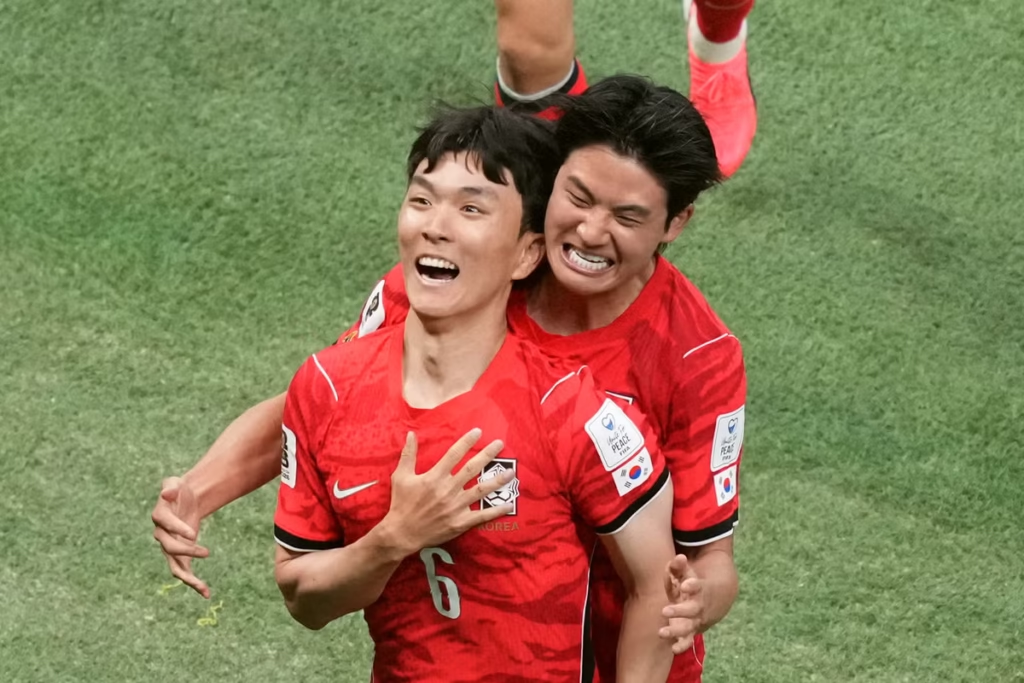
Oh Hyeon-gyu and Hwang In-beom both scored to complete a dramatic comeback and secure a 2-1 victory.
Contrasting Styles Highlight South Korea’s Strength
The match also showcased two very different football philosophies.
Although both teams lined up in a 3-4-3 formation, their execution could hardly have been more different.
South Korea favored a possession-oriented approach built on movement, quick passing, and technical creativity. Czechia, meanwhile, leaned heavily on direct play, physical battles, and set-piece opportunities.
The European side initially found success through its straightforward approach, but South Korea gradually took control through superior possession and attacking fluidity.
Backed by enthusiastic support from many local Mexican fans, the Koreans eventually imposed their style and earned a valuable opening victory.
A Tournament Off To A Fiery Start
If day one is any indication, World Cup 2026 could become one of the most dramatic editions in recent memory.
The tournament has already delivered controversial officiating decisions, heated debates over new regulations, emotional comebacks, and a flood of disciplinary action. With more than a month of football still to come, the opening day offered a clear message: expect the unexpected.