

Botox for Migraines: How It Works, Benefits, and Side Effects
Health & Medical Desk | Updated: July 2026
Quick Answer: Botox for migraines is an FDA-approved preventive treatment for chronic migraine, defined as 15 or more headache days a month. A doctor injects 155 units of onabotulinumtoxinA across 31 sites in the head and neck every 12 weeks. Clinical trials show it cuts headache days by roughly 8–9 per month compared to placebo, with effects building over several treatment cycles.
Key Takeaways
- Botox for migraines was FDA-approved in 2010 based on the PREEMPT trials, which studied 1,384 adults with chronic migraine at 122 sites across North America and Europe.
- The standard protocol uses 155–195 units of onabotulinumtoxinA injected across 31–39 fixed sites in seven head and neck muscle areas, repeated every 12 weeks.
- Nearly half of patients see a 50% or greater reduction in headache days after two treatment cycles, according to data cited by neurology providers referencing the PREEMPT program.
- Botox is approved only for chronic migraine (15+ headache days a month), not episodic migraine (14 or fewer days a month) — the FDA has not established its safety or effectiveness for the less frequent form.
- Common side effects include neck pain, headache, and eyelid drooping; the FDA carries a boxed warning about rare distant spread of toxin effect.
Botox for Migraines: What It Is and Who It’s For
As of July 2026, Botox for migraines remains the only botulinum toxin treatment specifically approved to prevent chronic migraine before it starts. Chronic migraine is a distinct medical diagnosis: headaches on 15 or more days a month, with at least 8 of those days showing migraine features such as throbbing pain, sensitivity to light or sound, nausea, or visual aura, sustained over at least three months. This affects an estimated 3.2 million Americans, and women are roughly three times more likely than men to be diagnosed, according to data reported by Managed Healthcare Executive citing Allergan’s original FDA submission.
Botox is not for everyone with headaches. If you have 14 or fewer headache days a month — classified as episodic migraine — the FDA has not established that Botox is safe or effective for you, and most insurers won’t cover it for that diagnosis. Before approving Botox, most insurance plans require “step therapy,” meaning patients must first try and fail oral preventive medications such as topiramate, propranolol, or amitriptyline.
How Does Botox for Migraines Work?
Botox for migraines works differently than most people expect. It is a migraine prevention tool, not a rescue medication — it will not stop a migraine that has already started. Instead, onabotulinumtoxinA binds to sensory nerve endings and blocks the release of pain-signaling chemicals, including CGRP (calcitonin gene-related peptide) and substance P, before they can trigger the migraine pain cascade. This differs fundamentally from triptans or over-the-counter painkillers, which act on pain that is already underway.
The treatment also relaxes pericranial muscles — the muscles surrounding the skull — which is believed to reduce the muscular tension component that contributes to headache frequency in some patients. Because the mechanism works on the nerve pathways that generate migraines rather than on active pain, the benefit is cumulative. Most doctors and headache specialists tell patients not to expect full results after a single session; the effect typically builds over two to three treatment cycles, or roughly 6 to 9 months.
What Does the Botox Injection Protocol Look Like?
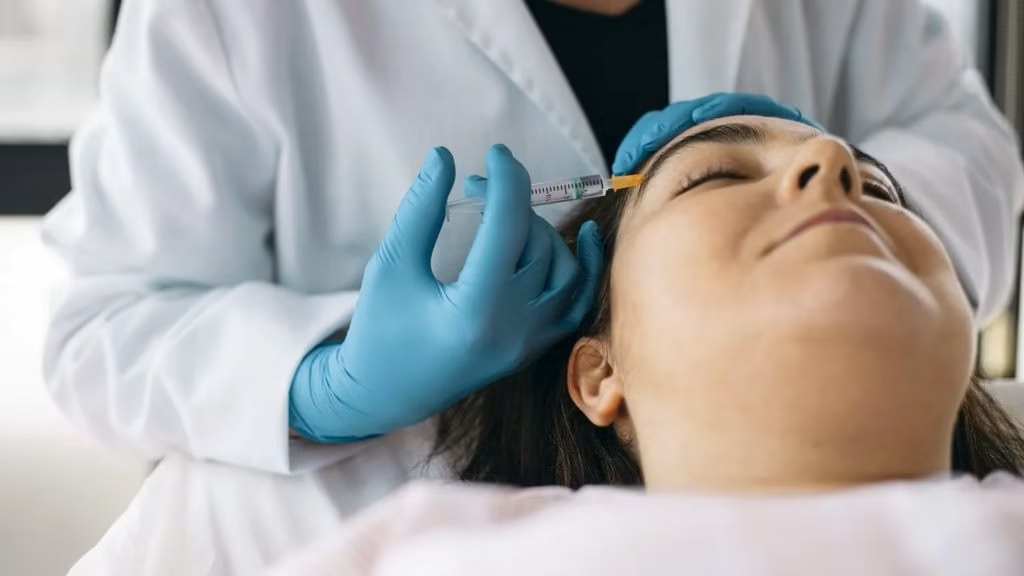
The Botox injections used for chronic migraine follow a standardized approach called the PREEMPT protocol (Phase III REsearch Evaluating Migraine Prophylaxis Therapy). This is not the same injection pattern used for cosmetic Botox — it targets specific muscle groups tied to headache generation.
- Confirm the diagnosis. A neurologist or headache specialist confirms chronic migraine using a headache diary tracking frequency and symptoms over at least three months.
- Rule out episodic migraine. Patients with fewer than 15 headache days a month are not candidates under the FDA label.
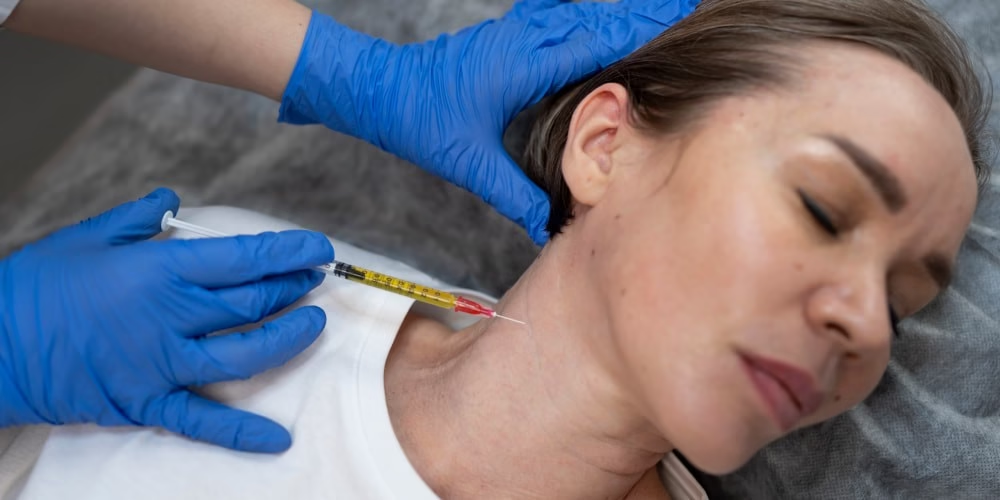
- Administer 155 units total, divided across 31 fixed injection sites in seven head and neck muscle areas: the frontalis, corrugator, procerus, occipitalis, temporalis, trapezius, and cervical paraspinal muscles.
- Add up to 40 additional units (for a total of up to 195 units across up to 39 sites) in a “follow-the-pain” pattern for patients with concentrated pain in specific areas, per prescribing guidance.
- Repeat every 12 weeks. The full session takes about 10–15 minutes in a clinical setting and is billed under CPT code 64615 for the procedure and HCPCS code J0585 for the drug itself.
- Track headache days for at least two cycles (roughly 6 months) before judging whether the treatment is working, since benefits typically increase with repeated sessions.
Botox for Migraines vs. Other Chronic Migraine Treatments
Patients considering chronic migraine treatment options often compare Botox with oral preventives and the newer CGRP-inhibitor injections. Here’s how they generally stack up:
| Treatment | How It Works | Frequency | Best For |
|---|---|---|---|
| Botox (onabotulinumtoxinA) | Blocks pain-signaling chemicals at nerve endings; relaxes head/neck muscles | Every 12 weeks | Chronic migraine (15+ days/month) after failing oral medications |
| Oral preventives (topiramate, propranolol, amitriptyline) | Alter neurotransmitter or vascular activity systemically | Daily | First-line therapy; often tried before Botox is approved |
| CGRP inhibitors (e.g., injectable monoclonal antibodies) | Block CGRP receptor activity directly | Monthly or quarterly, depending on drug | Patients who haven’t responded to Botox or oral preventives |
| Triptans / NSAIDs | Treat an active migraine attack | As needed, during an attack | Acute relief, not prevention |
Botox and CGRP inhibitors are both prevention-focused and are sometimes used together under a specialist’s care, while triptans and NSAIDs remain necessary for breakthrough migraines even in patients on a preventive regimen.
What Are the Side Effects of Botox for Migraines?
Botox side effects in the chronic migraine protocol are generally localized and temporary, but patients should understand the full picture before starting treatment. The most commonly reported side effects include:
- Neck pain
- Headache (particularly after the first session, as the body adjusts)
- Muscle weakness near injection sites
- Eyelid drooping (ptosis)
- Injection-site pain or bruising
The FDA prescribing information for Botox carries a boxed warning about distant spread of toxin effect — a rare but serious risk where the toxin spreads beyond the injection site, causing symptoms like swallowing or breathing difficulties. This risk is highest in children treated for other conditions but is included on the label for all uses, including chronic migraine. Anyone experiencing difficulty swallowing, speaking, or breathing after treatment should seek medical attention immediately.
How Much Does Botox for Migraines Cost, and Is It Covered?
Cost is one of the most-searched questions among migraine patients. Because Botox for chronic migraine is billed as a medical procedure (CPT 64615) rather than a cosmetic one, most major insurers, including Medicare, cover it once step therapy requirements are met and chronic migraine is documented. AbbVie’s manufacturer savings program allows eligible, commercially insured patients to pay as little as $0 per treatment, with potential savings up to $4,000 a year and up to $1,300 off the first treatment each calendar year, according to information published on the Botox manufacturer’s patient site. Patients without insurance coverage typically pay out of pocket per unit, and total costs vary significantly depending on the clinic, region, and number of units used.
Finding Botox for Migraines Near You
Migraine patients searching for treatment don’t need to travel far — headache specialists offering the PREEMPT protocol are now available in most major metro areas worldwide. When looking for Botox injections near me, patients in large healthcare hubs such as New York City, Los Angeles, London, Toronto, and Sydney typically have access to board-certified neurologists or headache medicine specialists at academic medical centers, which tend to have the most experience administering the full 31-site protocol correctly. Smaller cities and suburban areas often have access through affiliated satellite clinics tied to regional hospital systems. When searching locally, look specifically for a “headache specialist” or “board-certified neurologist” rather than a general cosmetic injector, since the chronic migraine protocol requires different training than cosmetic Botox application.
Frequently Asked Questions
1. How long does it take for Botox to work for migraines? Most patients begin noticing a reduction in headache days within 2–4 weeks after the first session, but full results typically build over two to three treatment cycles, or about 6–9 months of consistent 12-week dosing.
2. Does Botox stop a migraine once it starts? No. Botox for migraines is a preventive treatment, not a rescue medication. It reduces how often migraines occur over time but will not stop pain from an active migraine attack.
3. Who qualifies for Botox for chronic migraine? Adults with 15 or more headache days a month, with at least 8 showing migraine features, sustained for three months or longer, typically qualify after first trying oral preventive medications.
4. Is Botox for migraines covered by insurance? Usually yes, once chronic migraine is documented and step therapy requirements are met, since it’s billed as a medical treatment (CPT 64615) rather than cosmetic. Manufacturer savings programs can also reduce out-of-pocket costs for eligible patients.
5. What are the most common Botox side effects for migraine patients? Neck pain, headache, muscle weakness, and eyelid drooping are the most frequently reported side effects. Serious reactions, such as difficulty breathing or swallowing from toxin spread, are rare but require immediate medical attention.
6. How is Botox for migraines different from cosmetic Botox? Both use the same drug, onabotulinumtoxinA, but the migraine protocol uses a fixed 31-site injection pattern across seven head and neck muscle areas at therapeutic doses, while cosmetic Botox targets different muscles at different doses purely for wrinkle reduction.
Conclusion
Botox for migraines has more than a decade of clinical evidence behind it as a preventive option for people living with chronic migraine, and as of July 2026 it remains a standard part of headache specialists’ treatment toolkits alongside oral preventives and newer CGRP-targeting therapies. It isn’t a quick fix — patients typically need two to three treatment cycles before seeing the full benefit — but for those managing 15 or more headache days a month, the PREEMPT protocol offers a well-studied path toward fewer, less severe migraines. If you’re dealing with frequent headaches, talk to a board-certified neurologist or headache specialist about whether you meet the criteria for chronic migraine and whether Botox for migraines could fit into your treatment plan.