

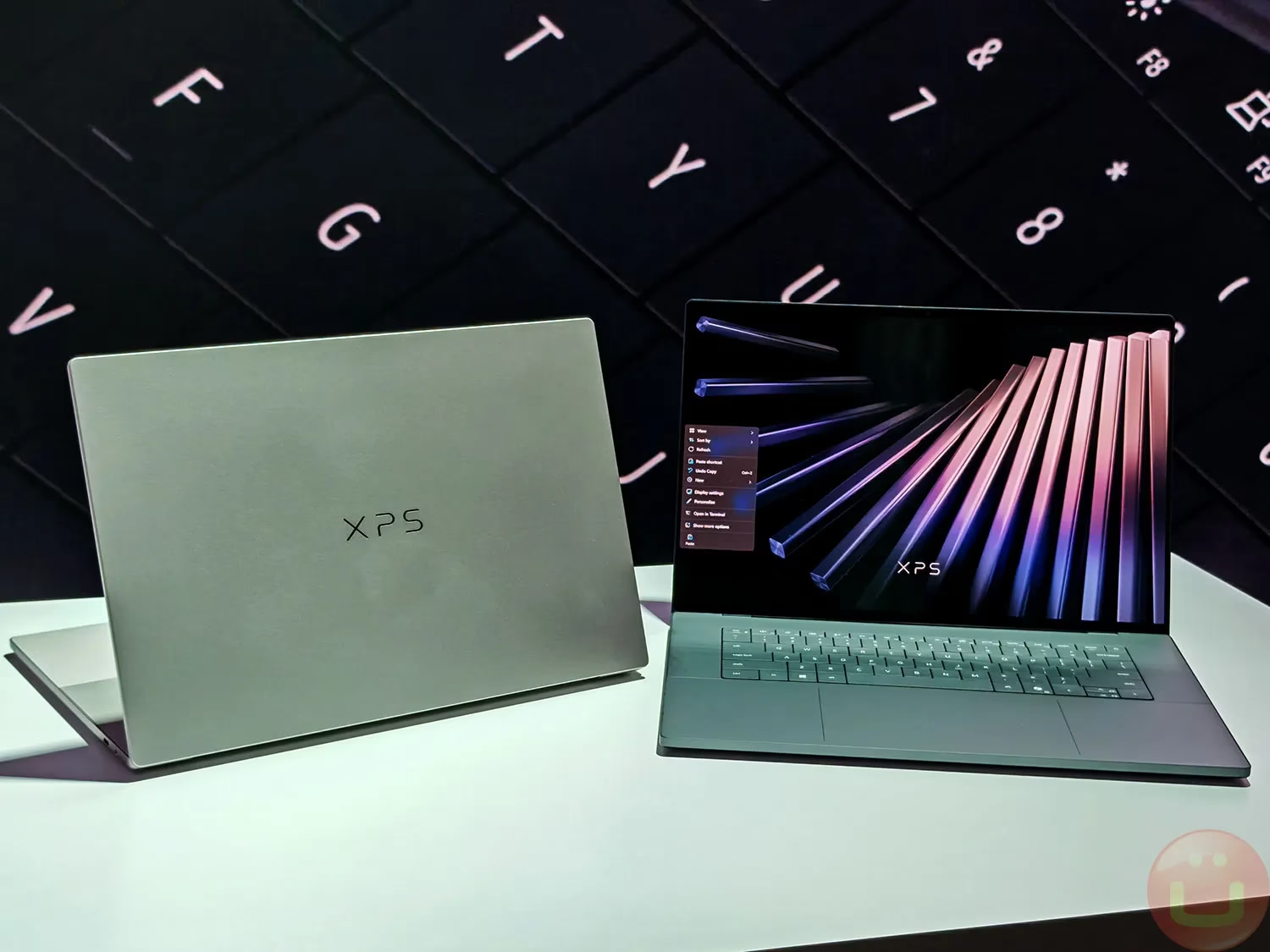
The phrase “AI laptop” is everywhere right now. It’s splashed across ads, product pages, and tech conversations. But here’s the real question: are these machines truly built for AI, or just riding the trend?
Dell’s latest XPS 14 and XPS 16 aim to answer that directly. These refreshed models don’t just carry the label, they try to justify it with real hardware and practical features. So, what actually makes them different?
What Defines A True AI Laptop?
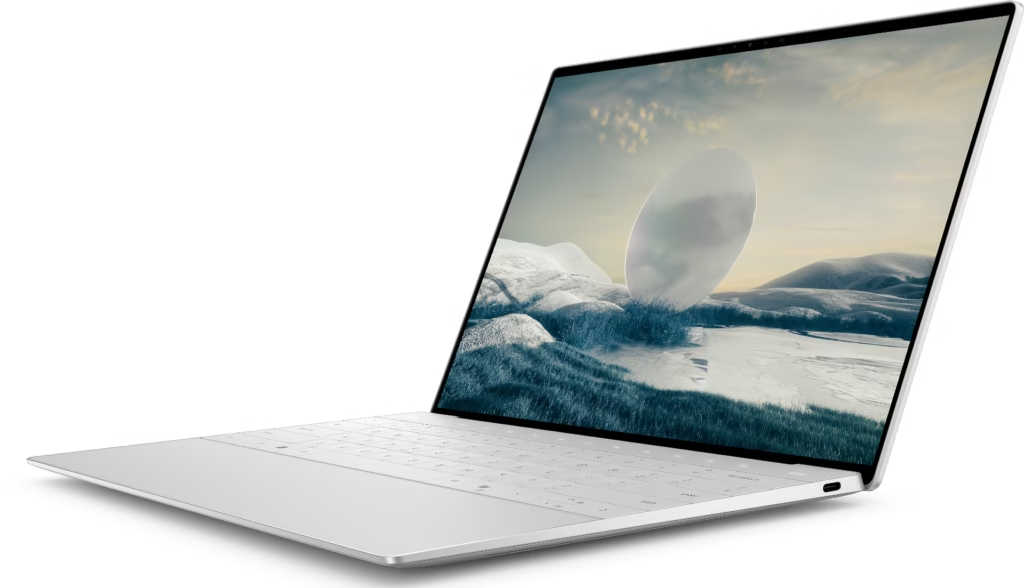
Not every laptop branded as “AI” deserves the title. The key difference lies in whether the machine can run AI tasks locally, without relying on cloud servers or constant internet access.
That’s where things get interesting.
Local AI processing means faster results, better privacy, and no ongoing costs for cloud usage. You’re using your own hardware, on your own terms. However, this requires specific components working together.
The three main players are the CPU, GPU, and NPU.
Inside The Hardware That Powers AI
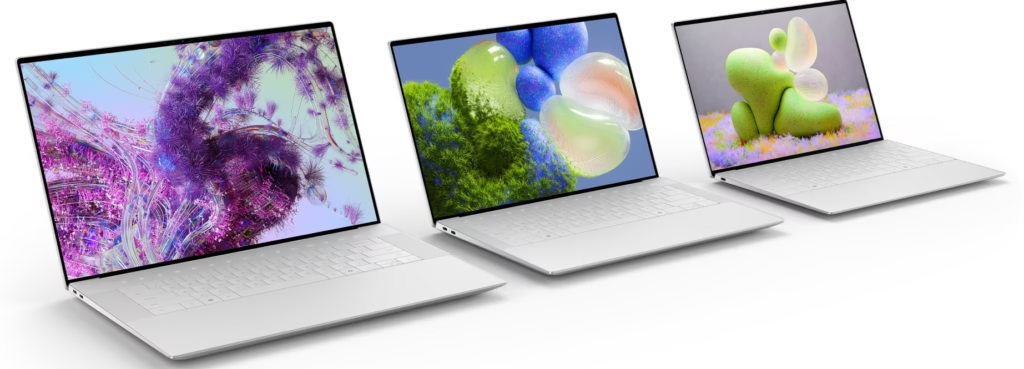
Dell’s XPS 14 and 16 come equipped with Intel Series 3 Core Ultra processors, starting from the Core Ultra 7 355 and scaling up to the Core X9 388H. These chips balance efficiency with performance, which is critical in thin and lightweight laptops.
Meanwhile, the GPU plays a supporting role. The built-in Arc GPU, featuring 12 execution cores, can handle smaller AI models that fit within its memory limits.
But the real star here is the NPU, or Neural Processing Unit.
Unlike CPUs and GPUs, the NPU is designed specifically for AI workloads. It handles the mathematical operations behind neural networks more efficiently and with far less power consumption.
How AI Actually Works On These Laptops
So, what does all that hardware translate to in real-world use?
Quite a lot.
The NPU allows the XPS laptops to run AI-powered features directly on the device, including:
- Real-time video call enhancements
- Background noise reduction
- AI-assisted photo editing
- Live captions and transcription
- Generative AI tools in creative software
At the same time, modern operating systems are increasingly optimized to take advantage of NPUs. As more apps adopt this technology, the list of AI-driven features continues to grow.
And importantly, the NPU does all this while consuming less power than a GPU, which matters a lot for battery life on portable devices.
Premium Design Meets AI Performance
Of course, raw AI capability isn’t the only thing that matters. Dell has paired these features with high-end hardware across the board.
The XPS 14 and 16 retain their signature sleek design but come with notable upgrades. OLED displays with high resolution and refresh rates are now standard. Wi-Fi 7 support improves connectivity, and storage can go up to 4TB.
RAM is also expandable up to 64GB, which is especially useful for running larger AI models locally.
However, what stands out is how Dell has responded to user feedback. The return of physical function keys replaces the previous capacitive touch bar, bringing back a feature many users missed.
It’s a blend of modern innovation and familiar usability.
Can The XPS Handle Advanced AI Workloads?
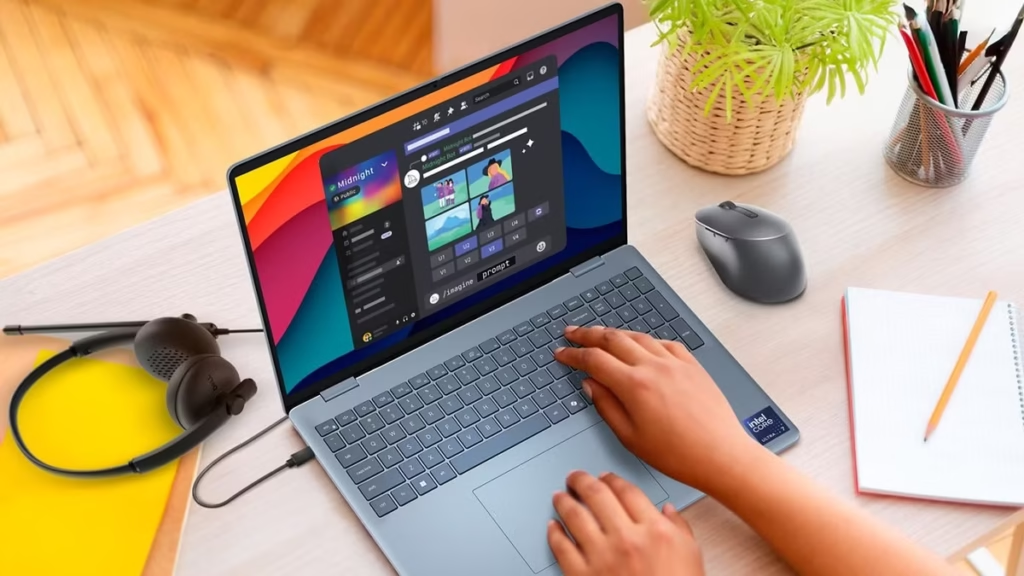
For everyday AI tasks, these laptops are more than capable. But what if you want to push further?
That’s where flexibility comes in.
With Thunderbolt 4 support, users can connect an external GPU when docked. This allows the system to handle larger, more complex AI models that go beyond the limits of a thin-and-light device.
In other words, the XPS lineup isn’t just built for basic AI features, it scales with your needs.
So, Is The Dell XPS Truly An AI Laptop?
Yes, and not just in name.
These machines combine local AI processing, dedicated NPU hardware, and high-end supporting components to deliver real AI functionality. They don’t rely solely on cloud-based tools or marketing buzz.
Instead, they offer a practical, on-device AI experience that works across everyday tasks and advanced workflows.
And that’s what sets them apart.