
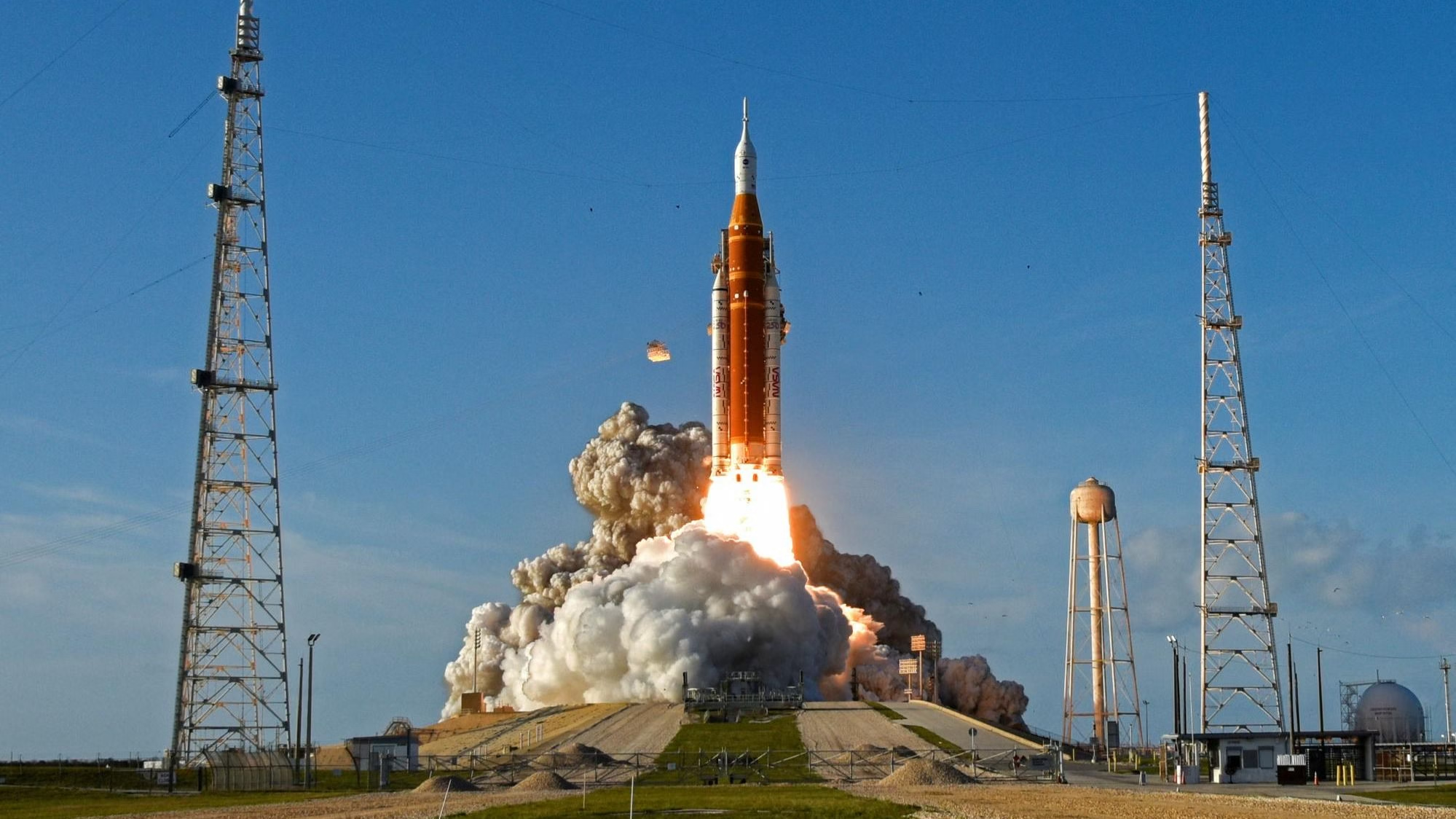
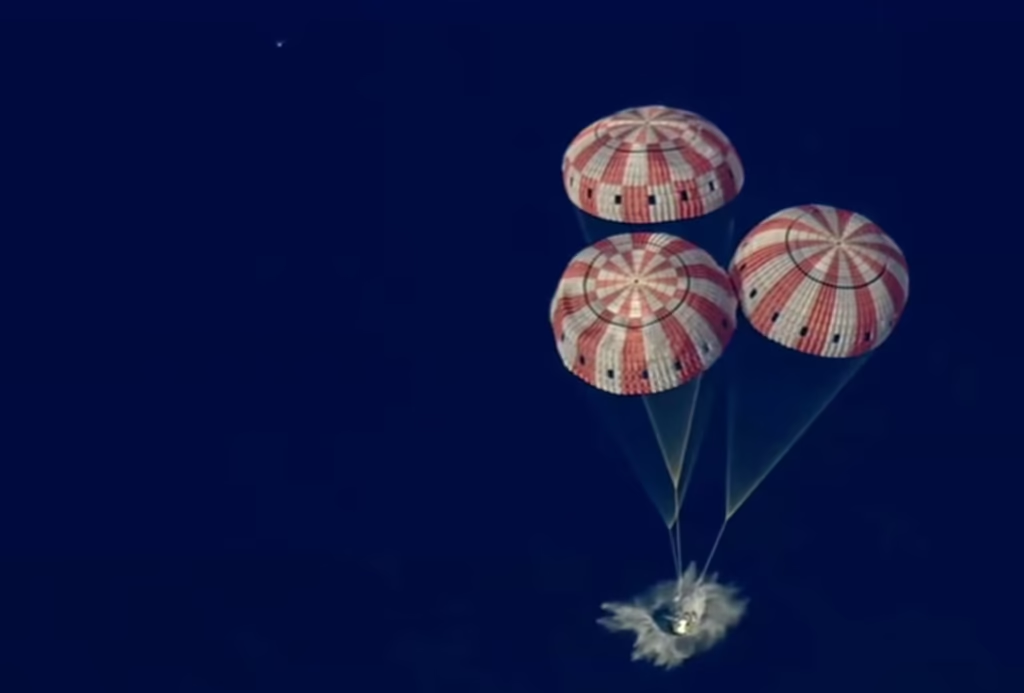
After months of buildup and global anticipation, NASA’s Artemis II mission has finally wrapped up, and what a journey it has been. The 10-day flight sent four astronauts farther into space than any human has traveled in decades, circling the moon and returning safely in a dramatic Pacific Ocean splashdown.
“It’s a ‘mission well accomplished,’” said NASA Administrator Jared Isaacman just after splashdown.
The Orion capsule carried Reid Wiseman, Victor Glover, Christina Koch, and Jeremy Hansen on a historic voyage that blended cutting-edge science with very human moments. From technical hiccups to emotional reflections, the mission delivered lessons that will shape the future of lunar exploration.
Here are the five biggest takeaways from this landmark mission.
Orion Still Needs Fine-Tuning
Even a successful mission can reveal cracks beneath the surface. Artemis II did exactly that.
Some of the issues were minor, even a bit humorous. Others were more serious and demand attention before the next flight.
Take the onboard toilet. It became an unexpected trouble spot. Wastewater did not vent properly, and at times the system became unusable. The backup plan? Plastic bags. Not exactly the future of space luxury.
Meanwhile, warning alerts triggered by faulty sensors popped up throughout the mission. Controllers downplayed the concern, but they still need investigation.
More pressing, however, was a propulsion leak in Orion’s service module. This component is critical, supplying oxygen, power, and thrust.
NASA had anticipated minor leaks. Still, the problem intensified during a key engine burn.
According to Amit Kshatriya, the leak grew by “an order of magnitude” beyond expectations.
Fixing it will not be simple. Engineers are now looking at what could be an “extensive redesign” of the valve system before Artemis III.
Life in Space Still Fascinates the World
If there’s one thing Artemis II proved beyond doubt, it’s this: people cannot get enough of space life.
Thanks to 32 cameras, viewers got an unfiltered look inside Orion. The result? A mix of science, humor, and viral moments.
Victor Glover sparked a social media frenzy after wiping himself down post-workout. No showers in space, just wipes and no-rinse shampoo. Initially, the feed cut out. Then it came back.
And yes, it stayed on.
Technology struggles also hit close to home. Even in deep space, IT problems persist.
“I have two Microsoft Outlooks and neither one is working,” Wiseman said.
Later, Koch ran into her own issue:
“No joy seeing the device in the list of available devices when I attempt to repair it after doing the Bluetooth forget,” she said.
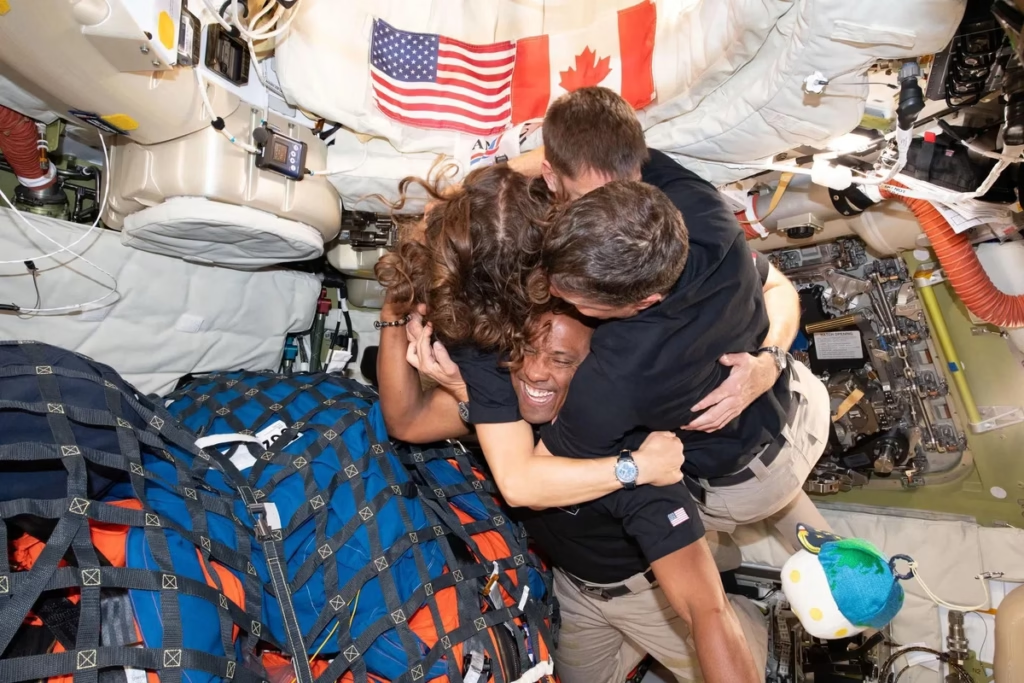
Despite Orion being 60% larger than Apollo capsules, space was still tight. The crew bumped into each other often, slept in floating bags, and adapted to a world with no up or down.
“Christina has been sleeping heads down in the middle of the vehicle, kind of like a bat suspended from our docking tunnel,” Wiseman said on April 2. “Victor has a nice little nook wedged in there. And then Jeremy has been stretched out on seat one, and I’ve been sleeping under the displays, just in case anything goes wrong. Every time I was dozing off last night, I had that image that I was tripping off a curb and I was waking myself up. So my body is getting reacclimated.”
Even food became a highlight. A floating jar of Nutella stole the show at one point.
And then there was music.
“We hope that piece of our song ‘Free’ helps start your day with the right kind of lift,” Brown said. “We just want to say how proud we are of you. It takes courage, grit and freedom to chase the unknown. It’s the purest kind of American spirit. Millions back home are looking up and feeling more inspired because of you. Keep flying strong. Keep flying safe. We can’t wait to welcome you home. Come see us on the road.”
The Moon Still Holds Deep Mysteries
Despite decades of study, the moon continues to surprise.
During a seven-hour flyby, the Artemis II crew witnessed regions never seen before by human eyes. The far side of the moon, in particular, remains a scientific puzzle.
The astronauts captured stunning images, observed impacts from space rocks, and even experienced a rare solar eclipse from space.
Scientists were thrilled.
“Getting the data back was unreal,” said Amber Alexis Turner. “The first image I saw was the famous eclipse image, and that blew me away, especially at three in the morning.”
Turner also highlighted the crew’s dedication:
“Something that I want people to know about this crew is they go above and beyond with the science,” Turner said. “We definitely will learn more about how the human eye perceives color. We’ve learned a lot about how the crew reads our science plan and executes it.”
Their work is already shaping how future missions will train and operate.
Seeing Earth Changes Everything
There is a moment astronauts often describe, one that changes how they see everything.
It happened again on Artemis II.
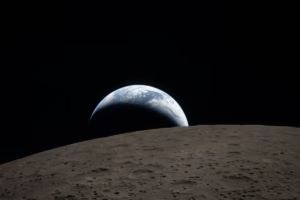
Looking back at Earth from deep space triggered what is known as the “overview effect.” A profound realization of how small, fragile, and unified our planet truly is.
“The perspective I launched with was that we live on a fragile planet in the vacuum and the void of space,” Hansen said. “We know this from science, we’re very fortunate to live on planet Earth. And the other perspective that I’ve sort of learned from others through life is that our purpose on the planet as humans is to find joy, to find the joy and lifting each other up by creating solutions together instead of destroying. And when you see it from out here, it doesn’t change it. It just absolutely reaffirms that.”
Glover echoed that sense of unity:
“The first thing I would say is, trust us, you look amazing. You look beautiful,” Glover said of Earth on April 2. “And from up here, you also look like one thing. Homo sapiens is all of us, no matter where you’re from or what you look like. We’re all one people.”
No borders. No divisions. Just one planet.
Funding the Future Remains Uncertain
For all its success, Artemis II leaves one big question hanging in orbit: money.
The Artemis program is a priority in the ongoing space race. However, funding tells a more complicated story.
The latest budget proposal suggests cutting NASA’s overall funding by 23%, including nearly a 50% reduction in its science budget.
Critics are raising alarms. Can NASA push forward with ambitious lunar goals while cutting critical programs?
One nonprofit official called the proposal “embarassing” and “a budget of surrender.”
Isaacman pushed back:
“NASA’s science budget is greater than every other space agency combined across the world.”
“NASA doesn’t have a top-line problem,” Isaacman said.
Still, uncertainty remains. Artemis III is planned for next year, followed by a moon landing mission in 2028.
Whether those timelines hold may depend less on technology and more on political will.