
Four days into a historic lunar journey, a bold question is once again taking center stage: are we truly alone in the universe? For NASA, that question is not just philosophical, it is shaping how missions are designed, executed, and expanded.
Alien Life Search Drives NASA Missions
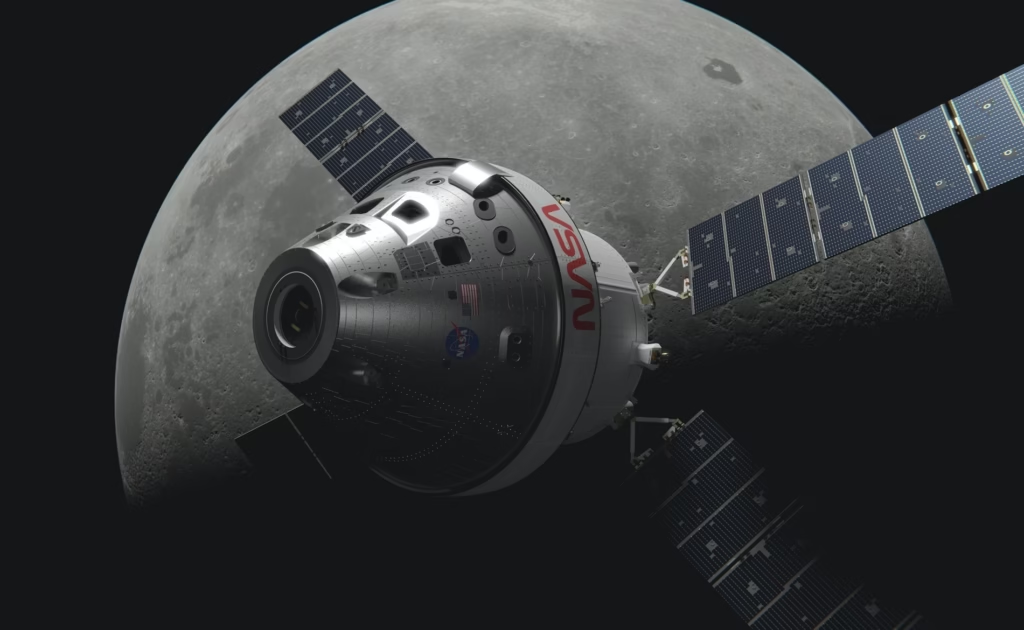
Speaking Sunday, NASA administrator Jared Isaacman made it clear that the search for extraterrestrial life is deeply embedded in the agency’s work.
Investigating alien existence, he said, “goes to the heart of many things that we do at Nasa”, adding: “Our job here is to go out and try and unlock the secrets of the universe.”
That mission, he explained, is fueled by one of humanity’s oldest questions. “One of the questions,” he said, was “are we alone? So I would say that is inherent in every one of our scientific endeavors, our exploration endeavors.”
Meanwhile, NASA is already thinking ahead. Isaacman pointed to future plans for a moon base near the lunar south pole, where advanced telescopes could play a critical role in the ongoing search. These instruments, he suggested, “will help us continue this great search”.
A Personal Perspective From Space
Despite his optimism, Isaacman offered a grounded reality check. Having traveled to space twice himself, he admitted there has been no direct evidence so far.
“I didn’t encounter any aliens up there. I have not seen anything to suggest that we have been visited by any intelligent life forms out there.”
Still, the vast scale of the universe keeps the possibility alive. “When you think about it, we got 2tn galaxies out there. Who knows how many star systems within each of it? I would say the odds that we will find something at some point to suggest that we are not alone are pretty high.”
Artemis II Reaches Critical Phase
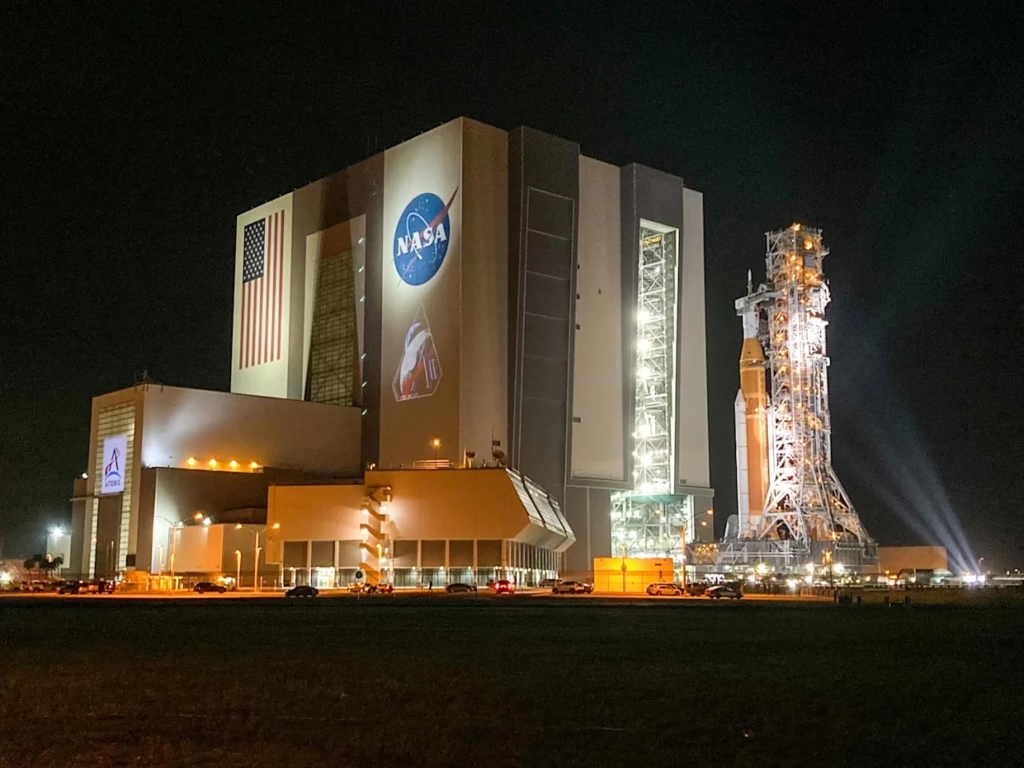
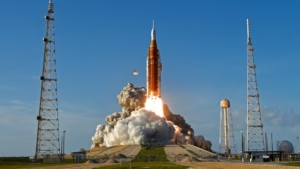
At the same time, NASA’s Artemis II mission continues to break new ground. The Orion spacecraft, carrying four astronauts, is currently circling the moon, marking the first crewed lunar mission in more than five decades.
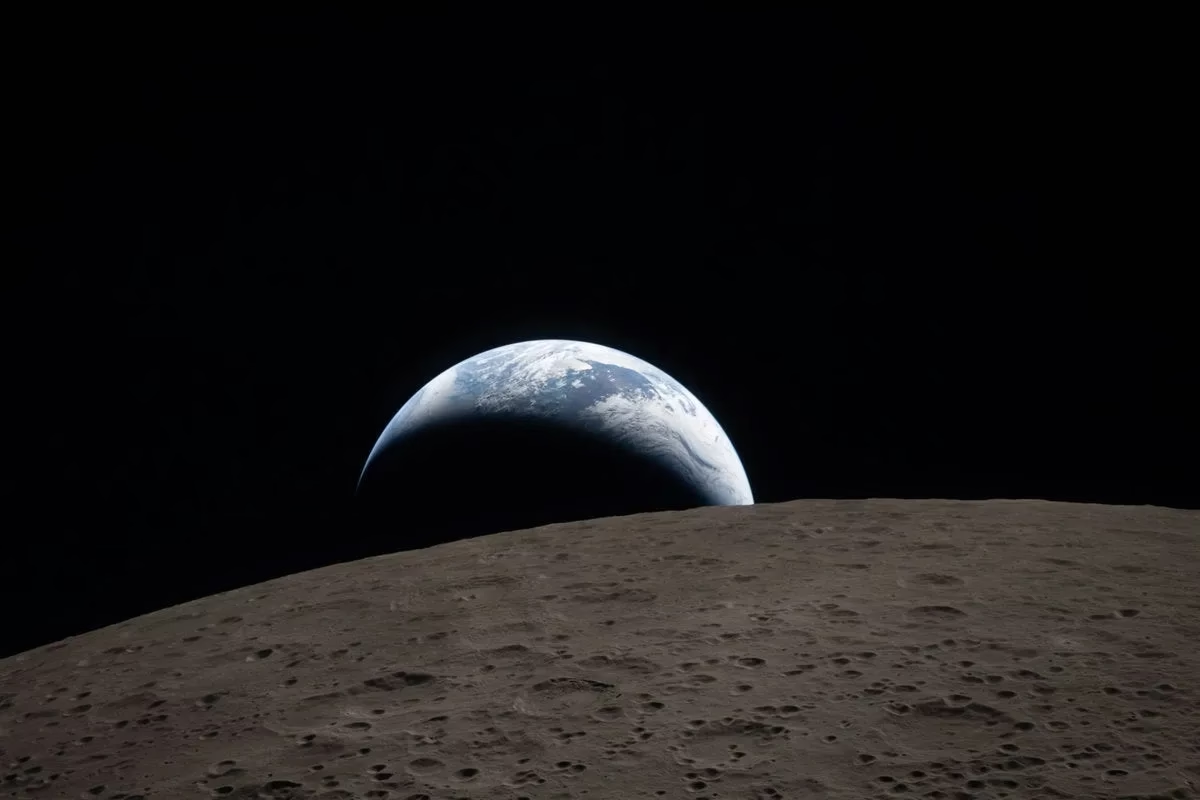
On Saturday, the crew found themselves in a striking position, closer to the moon than to Earth. By Monday evening, the spacecraft is expected to loop around the moon’s far side before beginning its return journey.
However, this phase of the mission comes with challenges. A temporary communication blackout is expected as the spacecraft moves behind the moon. Isaacman reassured that the crew is fully prepared.
“Astronauts are used to that going through training.”
Data Collection Remains Top Priority
While the mission captures global attention, NASA’s primary focus remains scientific.
“This is the first time we’ve ever had humans on board the Orion spacecraft,” Isaacman said. “We want to gather as much data as we possibly can for that … Learning as much as we can about Orion is critically important.”
That data will play a key role in shaping future missions, including Artemis III and Artemis IV, which aim to return astronauts to the lunar surface and establish long-term exploration capabilities.
The Surprisingly Tricky Problem Of Space Toilets
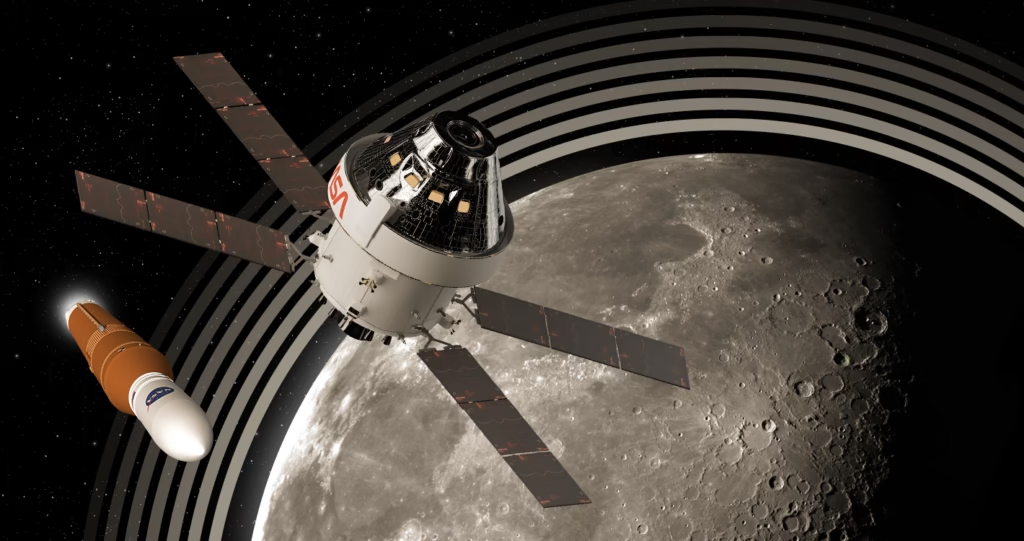
Not everything in space is as smooth as it looks. Even basic human needs can become complex challenges in zero gravity.
NASA recently addressed an issue with Orion’s $30 million onboard toilet system, which had triggered a fault alert. The system has since been restored, but Isaacman used the moment to highlight a long-standing issue in spaceflight.
“Throughout the history of human spaceflight, so going from the Mercury, Gemini, Apollo program, to shuttle, to Mir and International Space Station to Dragon, which I flew on, and, of course, Orion, the toilet working is almost a bonus capability.”
He added that even today, it remains one of the more difficult systems to perfect. “Nailing this capability is one that we need to certainly work on I will say we build in a lot of backups.”
Despite the hiccup, NASA has built redundancies into the system. “Even when we have an issue with some freezing on the primary, the secondary has been working. So, believe me, the astronauts, they’re OK right now, and they were well prepared for the situation,” he said.
A Mission That Raises Bigger Questions
As Artemis II pushes further into deep space, it is doing more than testing technology. It is reigniting one of humanity’s most profound questions.
If the odds are “pretty high,” as Isaacman suggests, then perhaps the real question is not if we will find evidence of alien life, but when.