


A high school volleyball decision in California has ignited a wave of reactions, drawing in athletes, activists, and policymakers as tensions around fairness and safety in girls’ sports continue to intensify.
The moment came when a girls’ team chose not to take the court. What followed has quickly become part of a much larger national conversation.
Team Forfeit Draws Immediate Attention
Players from Riverside Polytechnic High School made headlines after forfeiting a match against Jurupa Valley High School, a team that includes transgender athlete AB Hernandez.
The school did not publicly detail its reasoning. However, multiple parents and a school board member indicated the decision was tied to the presence of the trans athlete on the opposing roster.
As the story spread, voices from across the volleyball world began weighing in, many of them shaped by personal experience.
Injury Survivor Speaks Out
 Among the first to respond was Payton McNabb, a former high school player whose life changed after a 2022 match left her with permanent brain damage.
“I applaud these girls! They were put in a situation no young athlete should ever face – choosing between their safety and their sport. I’ve been there. I still live with the consequences of being injured by a male athlete on the court. There’s a reason the boys’ net is seven inches higher – because the game is different,” McNabb told Fox News Digital.
Her support did not stop there.
“What these girls did took real courage, and it’s devastating that they’re the ones paying the price for decisions made by adults.”
Her words added a deeply personal dimension to an already emotional issue.
College Athletes Echo Support
Meanwhile, former collegiate players who faced similar situations also stepped forward.
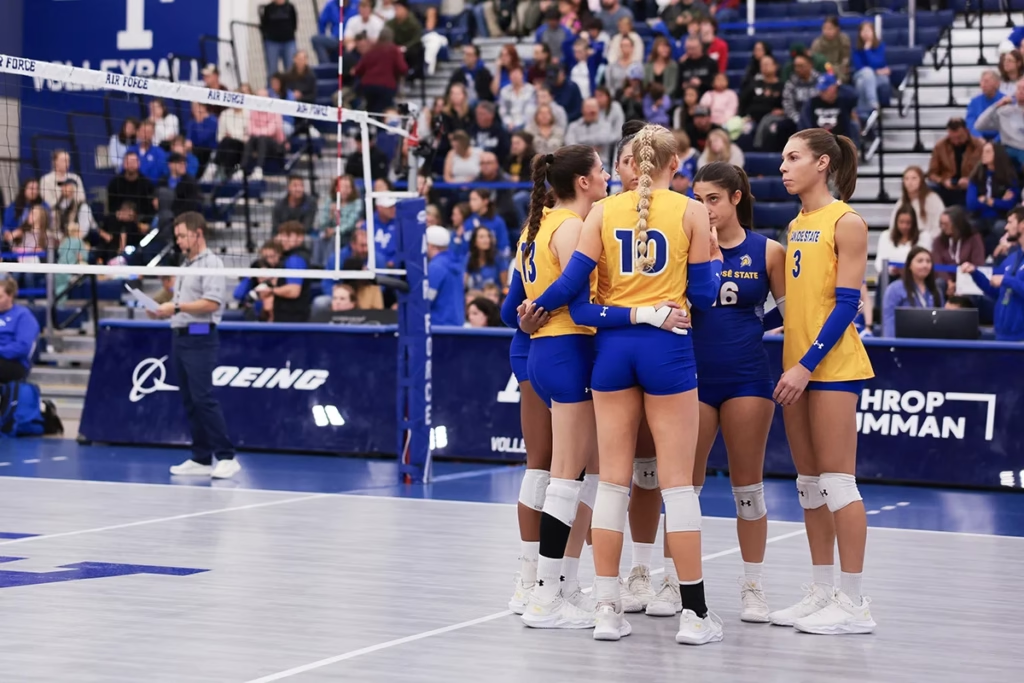
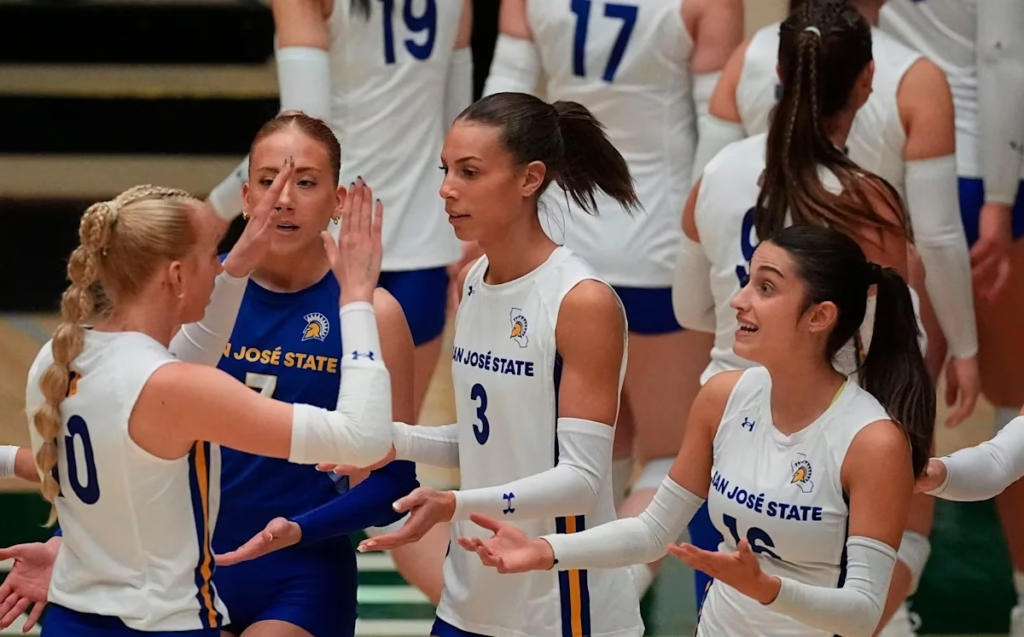
At San Jose State University, controversy surrounded trans athlete Blaire Fleming during a turbulent season in which multiple opponents forfeited matches.
One of those teams was University of Wyoming. Former player Macey Boggs reflected on that experience as she voiced support for the high school athletes.
“It takes courage to stand up. I’m so proud of them for doing what is right. Women fought for us in the past and it’s time for this generation to step up and fight for the women to come. It is refreshing to see this and very encouraging. I look up to these women. And I will continue to stand unapologetically for the truth with them,” Boggs said.
Her remarks underscored a growing movement among athletes who believe they are carrying forward a broader fight.
Nevada Team’s Battle Behind The Scenes
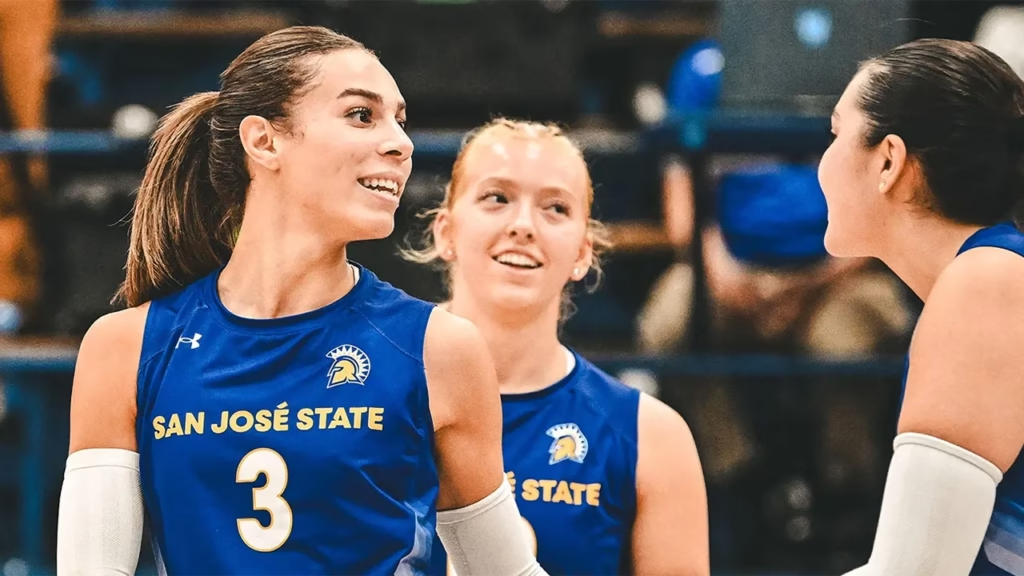 In contrast, the situation at University of Nevada, Reno revealed a more complex internal struggle.
Players there pushed privately to forfeit a match against San Jose State. Initially, the university declined and instead prepared to move forward with the game, citing potential legal complications.
Eventually, the match was forfeited just one day before it was scheduled, reportedly due to a lack of available players. Still, the episode highlighted tensions between athletes and institutions navigating an evolving legal landscape.
At the center of that effort was team captain Sia Liilii, who became a prominent voice during the dispute.
“I would like to applaud the Riverside Poly Volleyball team for standing up for themselves by sacrificing a loss for the future of girls’ and women’s sports. I would also like to commend its school administration for prioritizing the rights and safety of their female student athletes, something I was not afforded by my university when faced with this situation. I am proud to say I stand with the Riverside Poly Volleyball team!” Liilii told Fox News Digital.
Her statement captured both support and frustration, reflecting the complexity of decisions athletes face.
Wider Fallout Across Sports
The issue has not been confined to volleyball. Earlier this year, AB Hernandez also became a focal point during track and field competitions, where protests emerged from athletes and families.
In the lead-up to a state championship, Donald Trump weighed in publicly, urging officials to reconsider policies allowing transgender participation, though he did not mention Hernandez by name.
Soon after, the California Interscholastic Federation adjusted its rules. The changes ensured that any female athlete finishing behind a transgender competitor would move up one placement.
Even so, the policy shift did little to quiet the broader debate.
Legal Battle Intensifies
 However, the controversy has now moved beyond school gyms and into the courtroom.
In July, the U.S. Department of Justice filed a lawsuit against the California Department of Education and the California Interscholastic Federation.
The case challenges policies that allow biological males to compete in girls’ sports, despite a federal executive order issued earlier in the year.
As legal arguments unfold, the voices of athletes remain at the center of the conversation, raising questions that go far beyond a single match.