

A breakthrough in cancer research is raising cautious optimism among scientists and patients alike. An experimental cancer vaccine is showing early signs of helping prevent certain cancers from returning, offering hope where relapse has long been a major concern.
In a phase 1 clinical trial, researchers explored whether this new approach could train the immune system to recognize and fight cancer before it resurfaces. The results, while still early, are turning heads in the medical community.
Early Trial Shows Encouraging Results
The study, led in part by the UCLA Health Jonsson Comprehensive Cancer Center, tested the vaccine known as ELI-002 2P in 25 patients previously treated for pancreatic and colorectal cancer.
All participants had undergone surgery to remove tumors. However, they still showed “signs of minimal residual disease” or traces of DNA, placing them at a high risk of recurrence, according to a UCLA press release.
That risk is not small. More than 80% of pancreatic cancer patients experience recurrence after surgery, with 40% to 50% relapsing within the first year. Meanwhile, colorectal cancer returns in 30% to 50% of cases, most often within two years.
How The Vaccine Targets Cancer
 At the center of this innovation lies the KRAS gene, a known driver of many cancers. Mutations in this gene are responsible for half of colorectal cancers and more than 90% of pancreatic cancers.
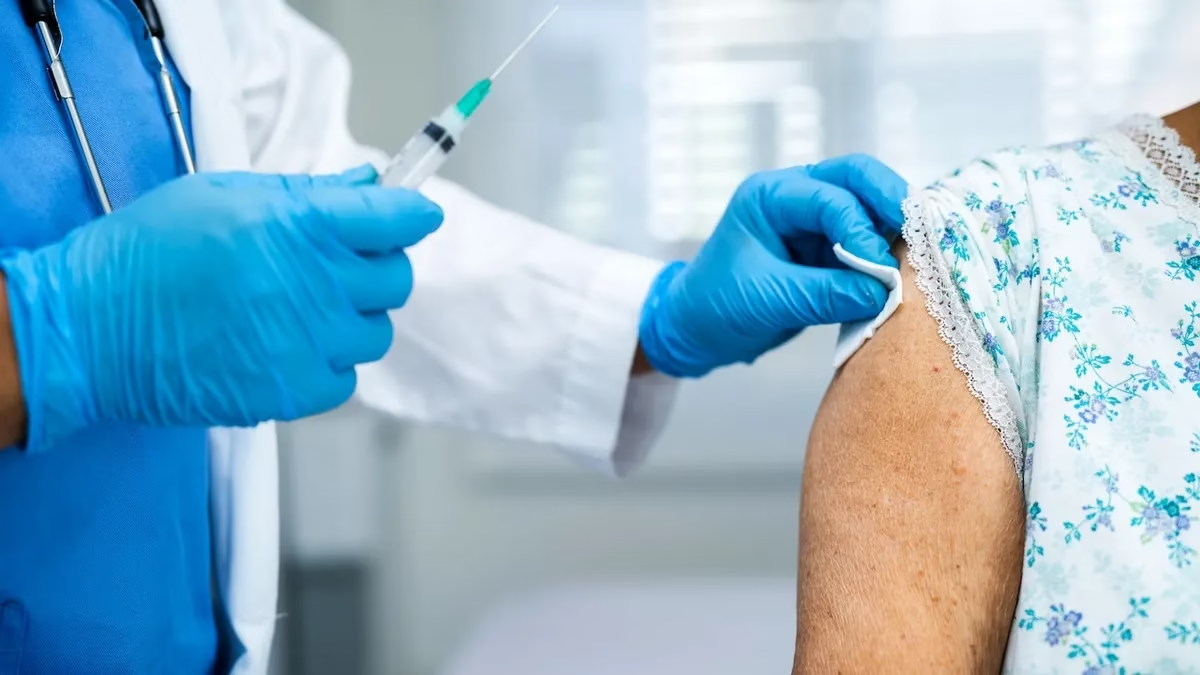
The vaccine is designed to target these mutations directly. Delivered through a series of injections, it activates the immune system within lymph nodes, essentially teaching the body to recognize and attack cancer cells.
The results were striking. A majority of patients, 21 out of 25, generated “KRAS-specific T cells,” signaling a stronger immune response. Those with higher levels of these T cells experienced longer relapse-free survival.
Some Patients Show No Detectable Disease
In a particularly notable outcome, three colorectal cancer patients and three pancreatic cancer patients showed no detectable disease biomarkers after receiving the vaccine.
Even more promising, many patients with the strongest immune responses remained cancer-free nearly 20 months after treatment.
The findings were published in Nature Medicine, adding credibility to the early success.
Experts Call It A Significant Step Forward
 Researchers involved in the trial are optimistic about what this could mean for future cancer treatment.
“This is an exciting advance for patients with KRAS-driven cancers, particularly pancreatic cancer, where recurrence after standard treatment is almost a given and effective therapies are limited,” said first author of the study, Zev Wainberg, M.D., professor of medicine at the David Geffen School of Medicine at UCLA and researcher in the UCLA Health Jonsson Comprehensive Cancer Center, in the release.
“We observed that patients who developed strong immune responses to the vaccine remained disease-free and survived for much longer than expected.”
Meanwhile, another key takeaway emerged during the trial. About 67% of patients also showed immune responses to “additional tumor-associated mutations,” suggesting the vaccine could support broader anti-tumor activity.
A More Accessible Cancer Vaccine Approach
One of the standout features of ELI-002 2P is its accessibility. Unlike many cutting-edge cancer therapies that require personalization, this vaccine is considered “off-the-shelf.”
That means it can be mass-produced and administered without tailoring it to each individual patient.
“This study shows that the ELI-002 2P vaccine can safely and effectively train the immune system to recognize and fight cancer-driving mutations,” Wainberg said.
“It offers a promising approach to generating precise and durable immune responses without the complexity or cost of fully personalized vaccines.”
What Comes Next In Research
 The research team has already completed enrollment for a phase 2 trial, which will test an updated version called ELI-002 7P. This new iteration is designed to target a broader set of KRAS mutations, potentially improving effectiveness across more patients.
The study was sponsored and funded by Elicio Therapeutics, the Massachusetts-based company behind the vaccine, and conducted alongside MD Anderson Cancer Center and Memorial Sloan Kettering Cancer Center.
Outside Experts Weigh In
While the results are promising, experts not involved in the study emphasize the need for continued research.
Dr. Marc Siegel, who reviewed the findings independently, highlighted the challenges of treating solid tumors.
“Solid tumors, especially pancreatic, can be difficult to treat because they are not as mutagenic (capable of inducing or causing mutations) as hematological malignancies (blood cancers) or melanoma, for example, so they don’t have as many ready targets for immunotherapy,” he told Fox News Digital.
Still, he acknowledged the potential impact of this new approach.
“The new cancer vaccine from UCLA is very promising as a major tool against these cancers, as it ‘programs’ the immune system to target these mutations and has been shown in the NATURE study to elicit a strong clinical response.”
A Promising Step, But More Work Ahead
So, is this the future of cancer prevention after treatment? It may be too early to say definitively. However, the results point to a powerful possibility, one where the immune system becomes the frontline defense against recurrence.
As larger trials unfold, researchers hope to confirm these findings and determine how widely this vaccine can be used. For now, the early data offers something that has long been rare in aggressive cancers like pancreatic cancer, a meaningful glimpse of hope.