
The nation’s top disease-tracking agency has quietly halted dozens of lab tests, raising questions about capacity, timing, and public health readiness.
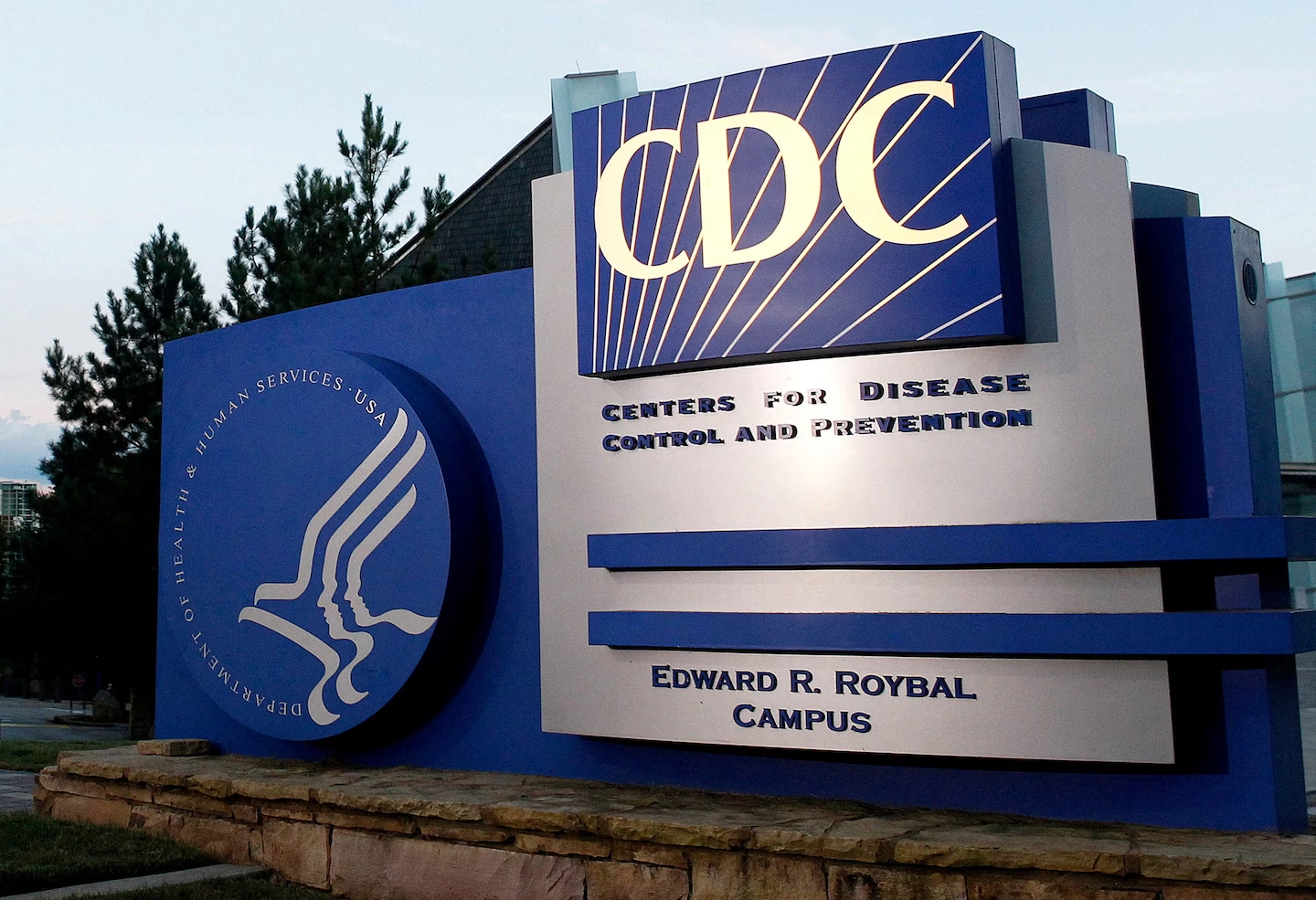
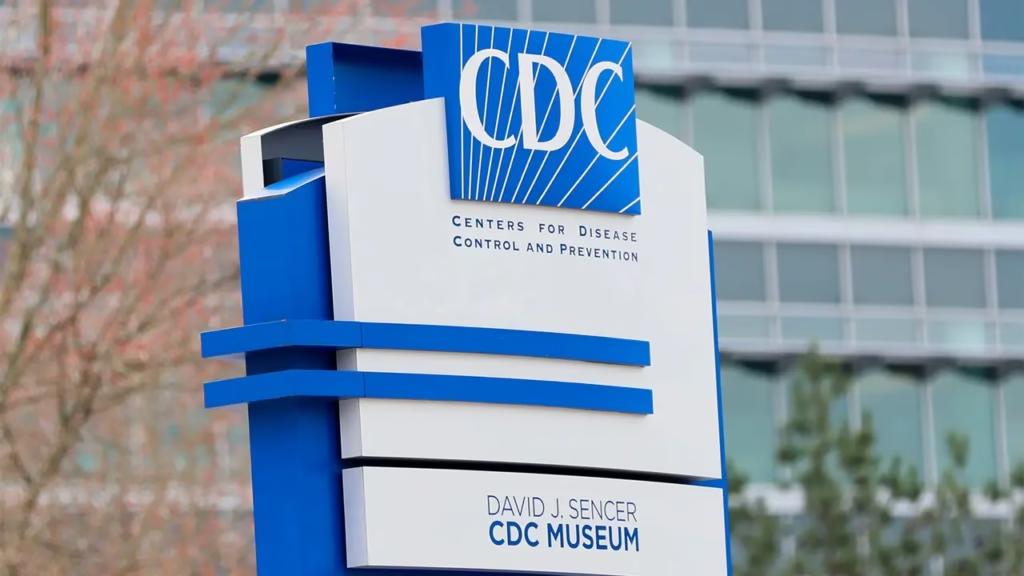
The Centers for Disease Control and Prevention has suspended diagnostic testing for rabies, monkeypox, and a wide range of other infectious diseases, according to a newly released internal update. The move comes as the agency navigates internal evaluations and the aftermath of significant workforce reductions.
Testing Halt Expands Beyond Previous Limits
This week, the CDC published a list showing that more than two dozen types of lab testing are currently unavailable. While temporary pauses are not entirely new, experts say the scale of this disruption stands out.
“This is not the first time the CDC has paused some of its lab testing. But it is pausing more kinds of tests than ever before, and it is not totally clear why,” said Scott Becker, chief executive officer of the Association of Public Health Laboratories.
Meanwhile, officials insist the situation is under control and part of standard procedures.
“A routine review to uphold our commitment to high quality laboratory testing,” a government spokesman said, describing the reason behind the suspension.
Officials Promise Testing Will Resume Soon
Federal health leaders are attempting to reassure state and local partners that the pause will not leave them stranded. According to officials, the interruption is expected to be short-lived.
“We anticipate some of these tests will be available through CDC labs again in the coming weeks. In the meantime, CDC stands ready to support our state and local partners to access the public health testing they need,” said Andrew Nixon of the U.S. Department of Health and Human Services, which oversees the CDC.
Still, the lack of clarity around which tests will return first, and when, has left some public health professionals uneasy.
Staffing Cuts Cast A Long Shadow
However, the timing of the pause has drawn attention. Over the past year, the CDC has undergone a major downsizing, driven by layoffs, retirements, resignations, and expiring contracts.
Estimates suggest staffing levels have dropped by as much as 20% to 25%, affecting nearly every division, including laboratory operations. In some units, the impact has been especially severe.
According to the National Public Health Coalition, the poxvirus and rabies labs have lost about half of their workforce. The malaria branch, meanwhile, has been reduced even further.
Becker noted that staffing shortages can often play a role when testing services are taken offline, even if not officially cited.
Common And Rare Diseases Both Affected
The paused testing spans a wide spectrum of diseases. On one end are common infections such as Epstein-Barr virus and the varicella zoster virus, which causes chickenpox and shingles. In many of these cases, commercial labs can step in to fill the gap.
On the other end are far less common threats, including parasitic infections like those responsible for “snail fever” and viral illnesses such as “sloth fever.” These specialized tests are not always widely available outside federal labs.
That contrast highlights a key concern. While routine testing may continue elsewhere, rare and complex cases could face delays or limited access.
States Step In To Bridge The Gap
Meanwhile, some state laboratories are stepping up to compensate for the temporary shutdown. Facilities in states such as New York and California already have advanced capabilities and may be able to handle additional demand.
However, not every state has the same level of resources or infrastructure. That uneven capacity could lead to delays in certain regions, particularly for specialized or uncommon tests.
As the CDC works through its internal review, public health experts are watching closely. The agency’s ability to restore full testing capacity quickly could prove critical, especially if new outbreaks emerge.