

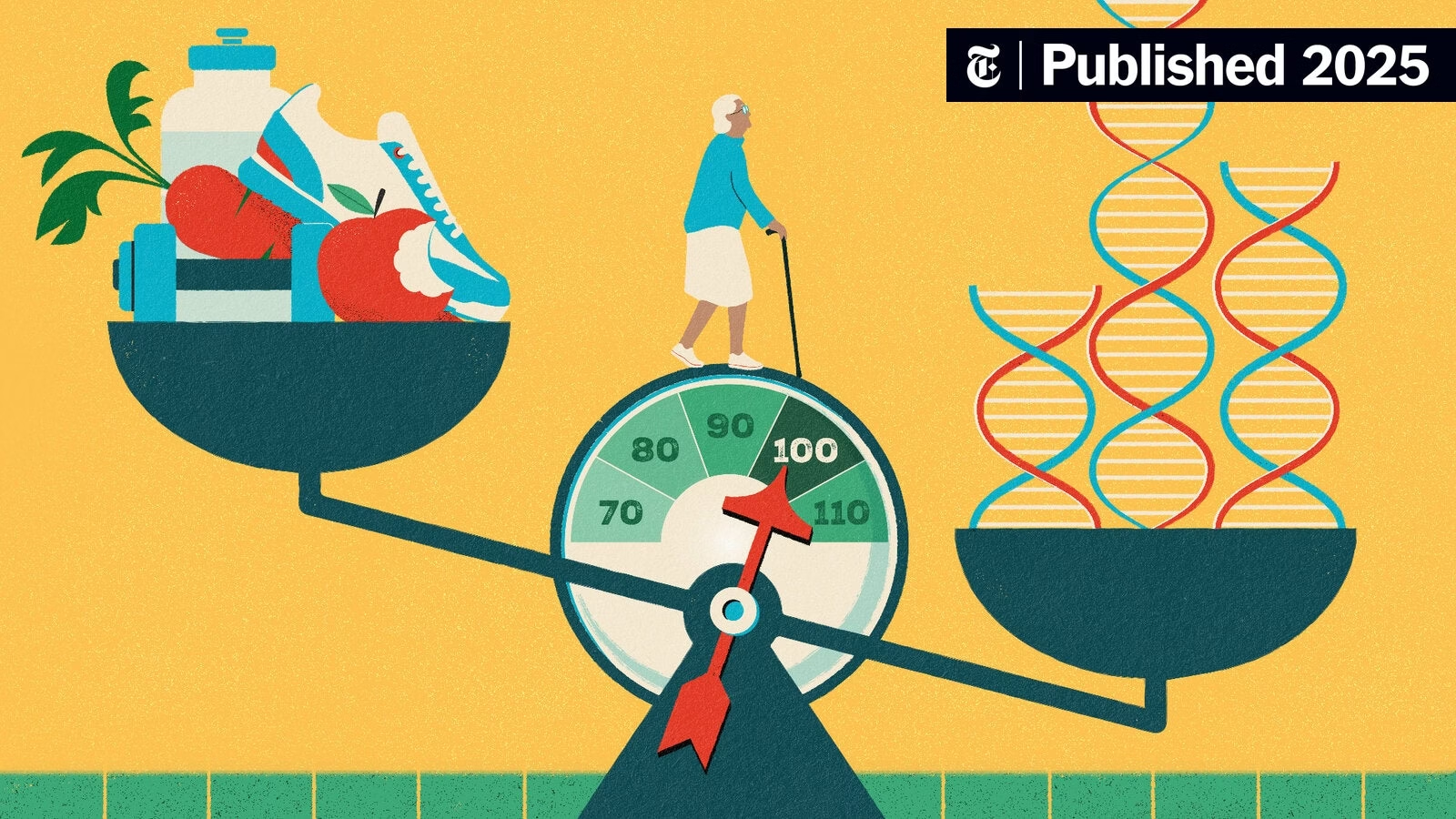
Efforts to help humans live longer are gaining ground. However, a growing body of research suggests the outcome may not be as predictable or fair as once hoped. Instead of delivering equal benefits, life-extending treatments may be creating a scenario where some individuals gain far more than others.
Scientists Rethink Longevity Goals

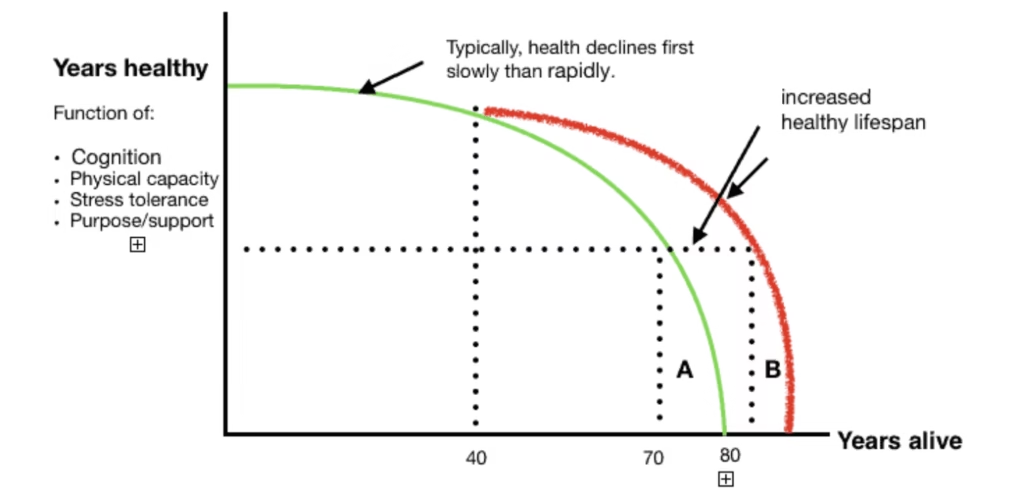
For decades, aging research has aimed for more than just longer lives. The real goal has been to help people live healthier for longer, with most individuals reaching old age and dying within a similar timeframe.
This concept is often described as “squaring the survival curve.” In simple terms, it means reducing the gap between early and late deaths, pushing most mortality into a narrow window late in life.
However, new findings suggest reality may not align with that ideal.
Key Treatments Under The Microscope
Researchers at the University of Sydney revisited a major meta-analysis focusing on three widely studied interventions: dietary restriction, rapamycin, and metformin.
Dietary restriction involves reducing calorie intake without causing malnutrition. It has been studied for over a century and is known to extend lifespan in animals. Scientists believe it works partly by slowing a cellular pathway called mTORC1, which plays a role in metabolism and aging.
Meanwhile, rapamycin directly blocks this pathway. In contrast, metformin, a commonly used diabetes drug, influences the same system indirectly by changing how cells detect energy levels.
Because strict diets are difficult to maintain, researchers have long searched for drugs that can replicate similar effects. These treatments appeared promising, at least on the surface.
The Hidden Tradeoff Emerging

While the treatments did increase average lifespan, they also introduced an unexpected complication.
Instead of making outcomes more uniform, all three interventions widened the gap in ages at death. On average, variation increased by around 17 percent.
In practical terms, this means some individuals benefited significantly, while others saw little to no improvement.
Rather than tightening the survival curve, the treatments stretched it.
Why Results Are So Uneven
So what is driving this unpredictability?
Researchers believe these treatments may simultaneously reduce baseline mortality risk while slowing how quickly that risk rises with age. While this boosts average lifespan, it also increases variation.
At the same time, other factors likely play a role. Genetics, dosage levels, and environmental conditions can all influence how individuals respond.
As a result, outcomes become far less consistent.
A “Biological Lottery” In Aging Science
Dr. Tahlia Fulton highlighted the broader implication
s of the findings: “These approaches can make animals live
longer, but the benefits aren’t shared equally. Without more information, the outcome looks like a biological lottery. We’re working to understand why, so future longevity science helps everyone.”
Her comments underscore a key challenge for the future of aging research. While extending life remains possible, ensuring those benefits are distributed fairly is proving far more complex.
What This Means Going Forward
The findings raise an important question. Is living longer enough if the results are unpredictable?
Scientists now face the challenge of refining these treatments so they not only extend life but do so consistently across populations.
Until then, longevity may remain less of a guarantee and more of a gamble.