

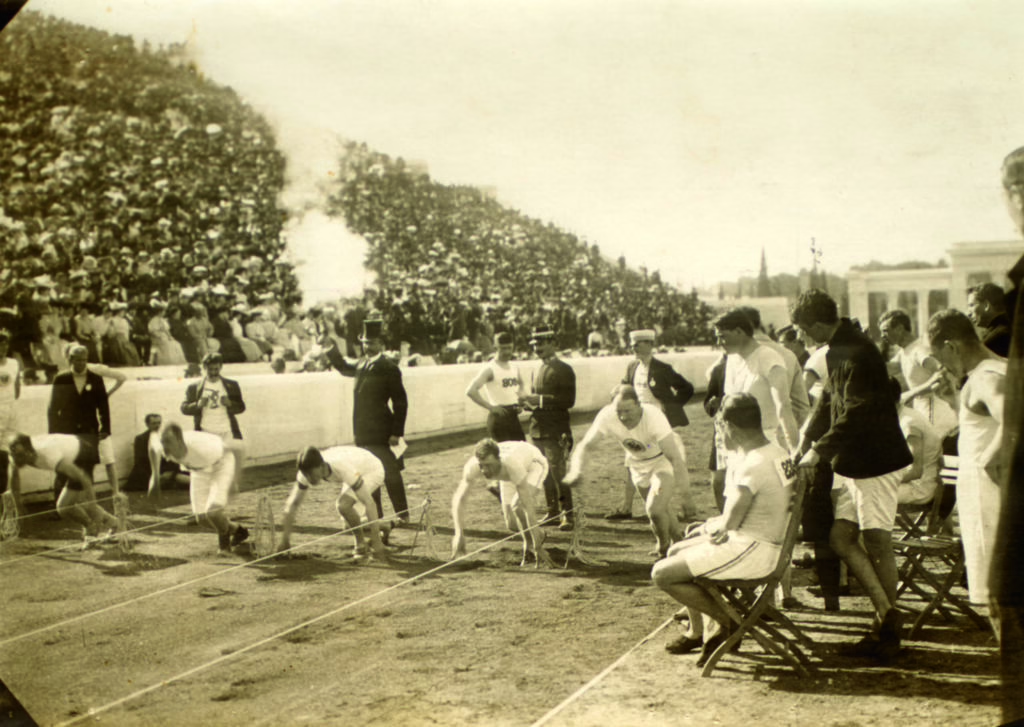
The Olympic Games are more than a sports event. They are a story of culture, tradition, competition, and change that has lasted for centuries. The history of the Olympics begins in ancient Greece, where athletes competed not just for victory, but for honor and pride. Over time, the games disappeared, returned in a modern form, and grew into one of the biggest global events.
Today, billions of people watch the Olympics. Athletes from nearly every country take part, and each edition reflects the spirit of its time. To understand why the event still matters, it is important to look closely at the history of the Olympics and how it moved from sacred ancient contests to the international spectacle people know today.
History of the Olympics in Ancient Greece
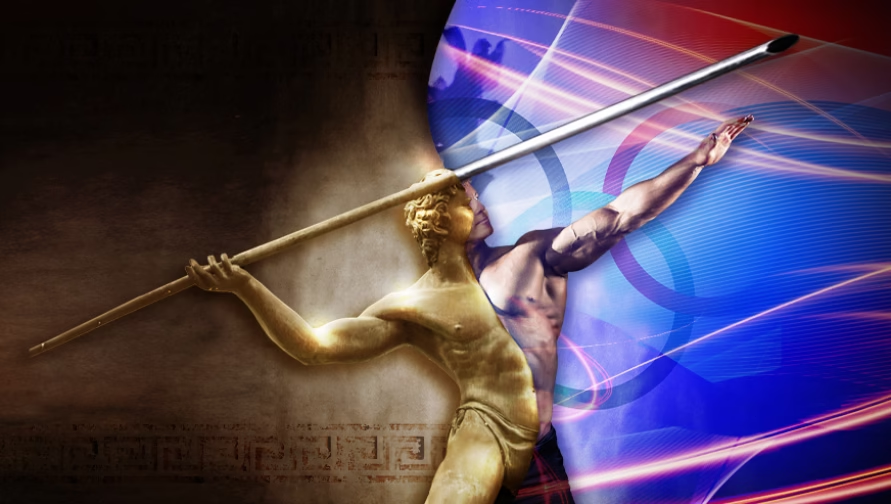
The earliest chapter in the history of the Olympics began in Olympia, Greece, around 776 BCE. These ancient games were held in honor of Zeus, the king of the Greek gods. They were not only athletic contests but also religious and cultural gatherings.
At first, the event included only one race, a short footrace called the stadion. As time passed, more competitions were added, including wrestling, boxing, chariot racing, and the pentathlon. Athletes came from different Greek city-states and competed for olive wreaths rather than money.
The ancient Olympics had a few defining features:
- They were held every four years
- Only free Greek men could compete
- The games were tied closely to religion
- Victors gained fame in their home cities
This early period shaped the foundation of the history of the Olympics by linking sport with identity, honor, and public celebration.
The Role of Olympia
Olympia was not a regular city. It was a sacred site filled with temples, statues, and places of worship. During the games, even rival city-states agreed to pause conflicts so athletes and visitors could travel safely.
This tradition showed that sport could create a rare moment of unity. That idea remains one of the strongest themes in the history of the Olympics, even today.
Events in the Ancient Games
The list of events expanded over time. Some of the best-known ancient contests included running, discus, javelin, long jump, wrestling, and pankration, a fierce combat sport that mixed boxing and wrestling.
These events celebrated strength, speed, discipline, and endurance. They also showed how seriously the Greeks viewed athletic excellence.
Why the Ancient Olympics Ended
The ancient games lasted for more than a thousand years, but they did not continue forever. As the Roman Empire grew and Christianity spread, many old pagan traditions lost official support. In 393 CE, Emperor Theodosius I is widely believed to have banned pagan festivals, which included the Olympic Games.
This ended the first long chapter in the history of the Olympics. For centuries after that, the games no longer existed in the form people once knew. Olympia itself fell into ruin, and the event became part of history rather than living tradition.
Even so, the memory of the games survived in literature, records, and ruins. That memory would later inspire their return.
The Revival of the Modern Olympics
The modern era of the history of the olympics began in the late 19th century. A French educator named Pierre de Coubertin believed that international sport could build stronger youth, encourage peace, and connect nations.
His idea led to the creation of the International Olympic Committee, or IOC, in 1894. Two years later, the first modern Olympic Games were held in Athens in 1896. This choice was symbolic because it linked the new movement to its Greek roots.
The 1896 Games were small compared with today’s standards, but they were historic. Athletes from 14 countries competed in events such as athletics, gymnastics, swimming, weightlifting, wrestling, and cycling.
This revival was a turning point in the history of the Olympics because it changed the games from a local ancient tradition into a modern international event.
Pierre de Coubertin’s Vision
Coubertin did not want the Olympics to be only about winning medals. He believed the games should promote education, discipline, respect, and global friendship.
That vision helped shape many Olympic ideals, including:
- Fair play
- International participation
- Respect between nations
- The value of effort and excellence
These ideas remain central to the Olympic movement.
How the Olympics Grew Over Time
After 1896, the Olympic Games became larger and more organized. More countries joined, more sports were added, and the event gained worldwide attention. The history of the Olympics in the 20th century is filled with growth, but also with major challenges.
The games were canceled during World War I and World War II. Political tensions sometimes affected participation, and boycotts changed several editions. Yet the Olympics continued to survive and expand.
Important developments included:
- The introduction of the Winter Olympics in 1924
- Greater participation from women over time
- The rise of new sports and team competitions
- The spread of television coverage across the world
The growing scale of the event turned the Olympics into one of the most watched and discussed competitions on Earth.
Women in Olympic History
Women were not allowed to compete in the ancient Olympics, and their role in the modern games started very slowly. In 1900, women first competed in the Olympics, mainly in sports such as tennis and golf.
Since then, female participation has grown dramatically. Women now compete in nearly every major sport, and many nations send balanced teams. This shift is one of the most important changes in the history of the Olympics, showing how the games have adapted to broader social progress.
The Birth of the Winter Games
The Winter Olympics brought another major change. Introduced in 1924, they gave ice and snow sports their own global stage. Events like skiing, skating, and ice hockey expanded the Olympic brand and attracted new audiences.
Together, the Summer and Winter Games helped strengthen the Olympic movement across different climates, cultures, and sporting traditions.
Memorable Moments That Shaped the Games
The history of the Olympics is not only about dates and structures. It is also about unforgettable moments that captured the world’s attention. These moments often reflected much more than sport.
Jesse Owens won four gold medals at the 1936 Berlin Olympics, challenging racist ideas promoted by Nazi Germany. Nadia Comaneci scored the first perfect 10 in Olympic gymnastics in 1976. Usain Bolt became the face of modern sprinting with his speed and charisma. Michael Phelps set new standards in swimming with his record medal count.
These athletes did more than win. They gave the Olympics emotional power and lasting meaning.
Other memorable Olympic moments include:
- The symbolic unity of nations marching together
- Emotional comeback stories after injury or hardship
- Host cities use the games to present themselves to the world
- Athletes speaking through performance rather than politics
Such moments helped turn the Olympics into a living global story.
The Olympics in the Modern World
Today, the history of the Olympics continues to evolve. The games are now shaped by technology, media, business, and international politics. Hosting the Olympics has become a major national project, often involving years of planning and huge investment.
At the same time, public expectations have changed. People now pay closer attention to issues such as cost, sustainability, athlete welfare, fairness, and inclusion. The Olympic movement has had to respond to these concerns while preserving tradition.
Several modern trends have influenced the games:
- Digital broadcasting and social media coverage
- Stronger anti-doping systems
- New sports aimed at younger audiences
- Greater focus on gender equality
- Debate over hosting costs and long-term value
These changes prove that the history of the Olympics is still being written.
New Sports and New Audiences
To stay relevant, the Olympics have added sports that appeal to younger viewers, including skateboarding, surfing, and sport climbing. This shows a willingness to change without losing the event’s core identity.
The Olympics still value tradition, but they also understand that each generation connects with sport in different ways.
Challenges Facing the Olympic Movement
Despite its prestige, the Olympics face real pressure. Some host cities worry about high expenses. Others question whether the benefits last after the games end. Athletes and fans also expect better transparency and stronger protection of sporting integrity.
These issues are now part of the broader history of the Olympics, reminding the world that even great institutions must adapt.
Why the Olympics Still Matter
The long history of the Olympics explains why the event still carries such emotional and cultural weight. It connects the ancient world to the present. It brings together people from different nations, languages, and backgrounds in a shared moment of competition.
The games also continue to represent something larger than medals. They highlight discipline, sacrifice, national pride, and human potential. For many athletes, simply reaching the Olympics is the result of years of struggle and commitment.
Even in a divided world, the Olympics offer a rare space where attention shifts toward talent, effort, and common experience. That is why the event remains important century after century.
Why This Legacy Still Endures
The history of the Olympics is a story of survival, reinvention, and global connection. What began in ancient Greece as a sacred athletic festival has become a worldwide event followed by millions. Along the way, the Olympics have reflected political change, social progress, and the endless appeal of competition.
Their meaning has changed over time, but the core idea remains powerful. People still gather to witness excellence, support their countries, and celebrate the human spirit. From Olympia to the modern stadium, the Olympic story continues to connect the past with the present in a way few events ever have.