
A fragile regional ceasefire is facing renewed strain as escalating tensions between Iran, Lebanon and Israel threaten to unravel months of diplomatic efforts.
What began as a growing dispute between Beirut and Tehran over Lebanon’s future has now become intertwined with a broader confrontation involving Israel, raising fears that the region could once again slide toward a wider conflict.
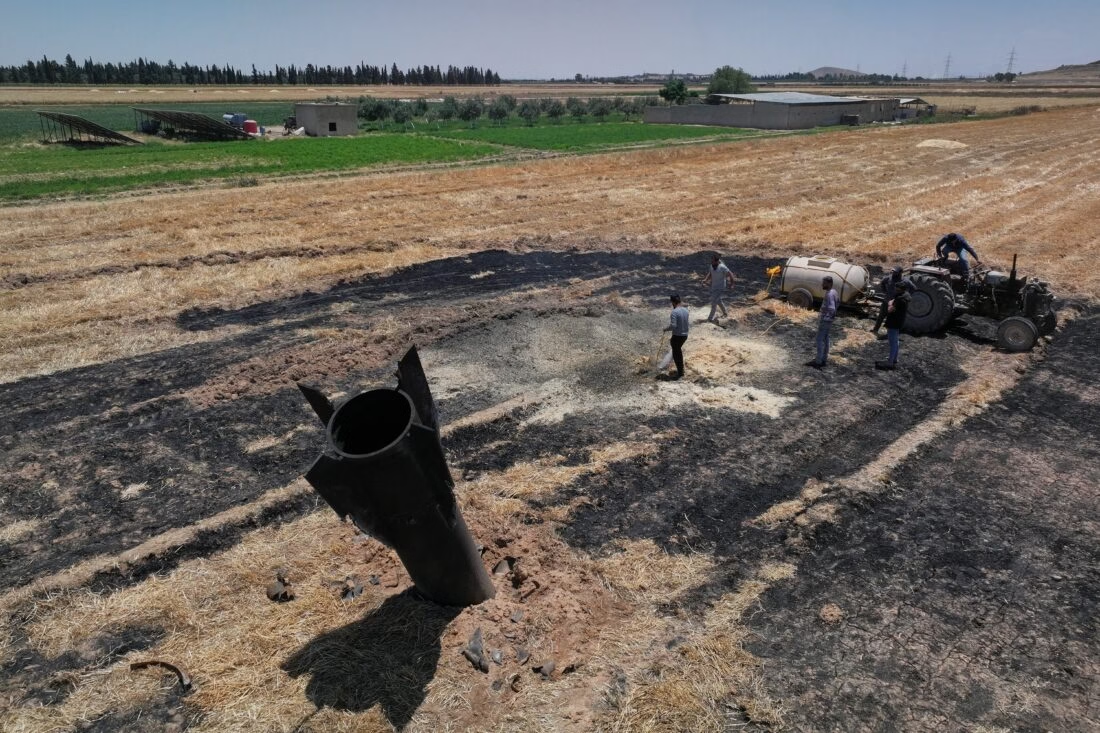
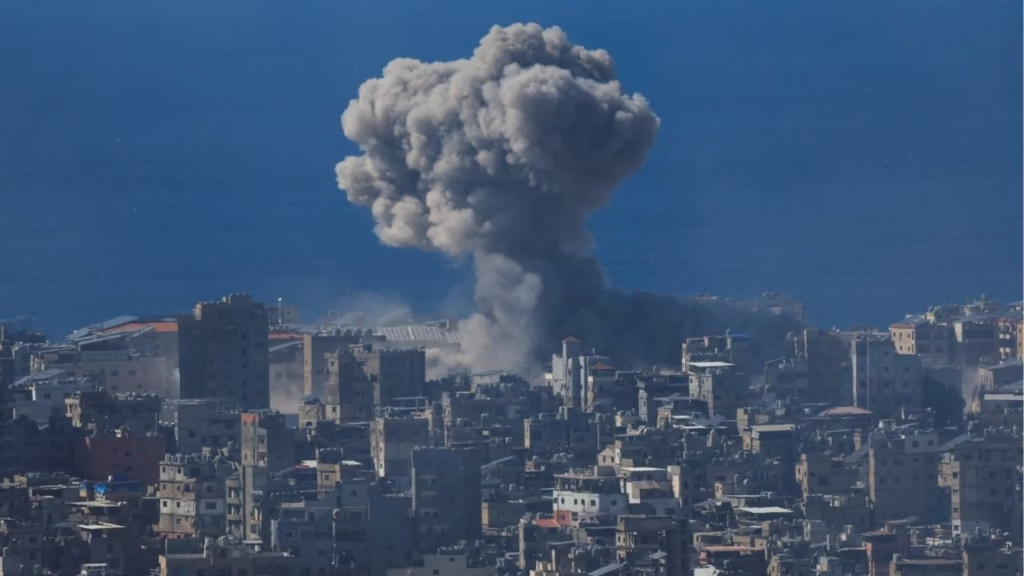
Iran responded on Sunday after Israel struck what it described as a Hezbollah-linked site in southern Beirut, an area Tehran has long considered highly sensitive. The missile barrage launched by Iran was followed by Israeli strikes on Tehran and several other Iranian cities on Monday, putting a two-month ceasefire between Iran and the United States under significant pressure.
The latest developments underscore how Lebanon has become a key factor in negotiations and security calculations stretching far beyond its borders.
Lebanon Becomes A Flashpoint
Tensions had already been rising after Israeli forces crossed the Litani River last month. Israel had previously designated the area as a buffer zone that should be cleared of Hezbollah fighters, while Lebanese officials protested what they viewed as continued foreign interference.
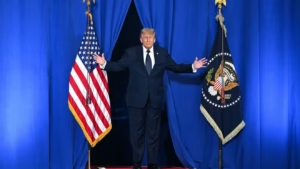
Reports last week suggested that US President Donald Trump persuaded Israeli Prime Minister Benjamin Netanyahu to avoid targeting Beirut directly, fearing such a move could jeopardize a broader regional ceasefire that has largely held since April.
At the center of the dispute is Lebanon’s effort to consolidate state authority and bring all weapons under government control. Iran, meanwhile, continues to support Hezbollah, creating friction between Tehran and Beirut.
The situation intensified after Iran’s Islamic Revolutionary Guard Corps warned on Thursday that “there will be no calm in the region” if Israel maintained its presence in southern Lebanon.
Beirut And Tehran Exchange Sharp Criticism
Lebanese President Joseph Aoun argued that the conflict cannot be resolved militarily.
“There is no way to end the war in the country except through negotiation and diplomacy,” he said, while accusing Tehran of “using Lebanon as a bargaining chip in their negotiations” with the US.
Aoun also emphasized the need for dialogue, saying, “Hezbollah must understand that [there is] no other way but to sit and talk”.
Iranian Foreign Minister Abbas Araghchi fired back on social media, criticizing the Lebanese president.
“Had Lebanon been a bargaining chip for Iran, we’d have a deal long ago. Save Lebanon from your real foe, Mr. President,” he posted on X on Saturday.
His comments reflected the widening divide between Lebanese officials seeking direct diplomacy and Iranian leaders who view the conflict through a broader regional lens.
Hezbollah’s Role Remains Central
 Hezbollah continues to reject direct negotiations with Israel and has pushed for a larger Iranian role in any mediated settlement.
A ceasefire arrangement currently in place between Israel and the Lebanese government, brokered with US involvement and without Hezbollah participation, requires armed groups to withdraw from areas south of the Litani River.
The agreement also envisions the creation of pilot security zones where the Lebanese army would exercise sole authority, strengthening state control over southern Lebanon.
However, the absence of Hezbollah from the arrangement has complicated implementation and fueled further disagreements between Beirut and Tehran.
Concerns Over Escalation
Regional analysts warn that attacks extending into Beirut’s southern suburbs could dramatically alter the current balance.
Negar Mortazavi, a senior fellow at the Washington-based Center for International Policy, said the limits of Iranian restraint remain unclear.
“Where exactly is the red line? So far, it seems that Tehran has tolerated attacks in southern Lebanon to some extent as part of a messy ceasefire, and instead allowed Hezbollah to engage with Israel.”
She added: “I think the stalemate cannot continue for too long, so it will be going back to an escalated conflict, or heading for an actual peace deal.”
Iran has repeatedly indicated that any durable understanding with Washington depends on ending hostilities in Lebanon as well.
“Hezbollah entered the war with them and helped them, so they want to help them by making them an extension of the peace deal,” Mortazavi said.
Hardliners Push For Stronger Action
Within Iran, frustration has been mounting among hardline voices who argue that Israeli operations in southern Lebanon have gone largely unanswered.
Speaking to supporters gathered near Tehran’s Revolution Square, state television analyst Abbas Abdi criticized what he described as symbolic displays of support for Hezbollah.
“Now that I’m speaking with you, it’s correct that [Israel] has stopped attacking Dahiyeh, but except for that, it is hitting wherever it wills,” he said.
Abdi argued that Iran should demonstrate greater resolve.
“We are still releasing statements and saying we will do such if they do such, but we are not doing anything. Our dear people have gone to the [missile] launchers numerous times to respond, but they have been stopped,” he said.
Meanwhile, Hezbollah flags have become a common sight at pro-government rallies across Iran. On Friday, a large Hezbollah flag was displayed over Tehran’s iconic Azadi Tower in a symbolic gesture of support.
Abdi dismissed such moves as insufficient and suggested Iran may need to “show the enemy that negotiations are not important for us”.
Strategic Stakes Extend Beyond Lebanon
Iranian political commentators increasingly view developments in Lebanon as directly linked to broader efforts to pressure Tehran.
State television analyst Mostafa Najafi argued that Israeli military operations and US pressure campaigns are part of a larger strategy.
“The aim of the ring of pressure created in Lebanon is not just Hezbollah, it is against our levers and to weaken our regional activities,” he said.
Najafi emphasized the close relationship between Tehran and Hezbollah.
“You cannot separate the file of Hezbollah and Lebanon from the file of Iran, because they have a meaningful ideological and geopolitical link together, they are in a geopolitical cluster together,” Najafi said.
Others have gone even further. Iranian lawmaker Amirhossein Sabeti accused Washington of delaying a larger confrontation.
“The US will start a more intense war with the US once the World Cup is over. They will turn the country into a second Gaza, where everything is destroyed,” he said.
He also called for a more aggressive strategy.
“We must be prepared to deal stronger blows than before, and we can do this. We must not wait for them to hit before hitting back; we must strike even when they talk of striking, that’s deterrence.”
Uncertain Road Ahead
As Israeli operations continue, Hezbollah remains entrenched, and diplomatic efforts struggle to gain traction, Lebanon has emerged as a critical arena in the broader contest between Iran, Israel and the United States.
Whether the current ceasefire framework survives may depend on events unfolding not only in Tehran and Jerusalem, but increasingly in Beirut as well.