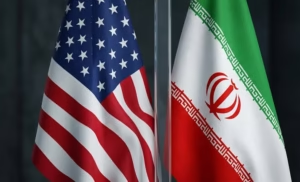

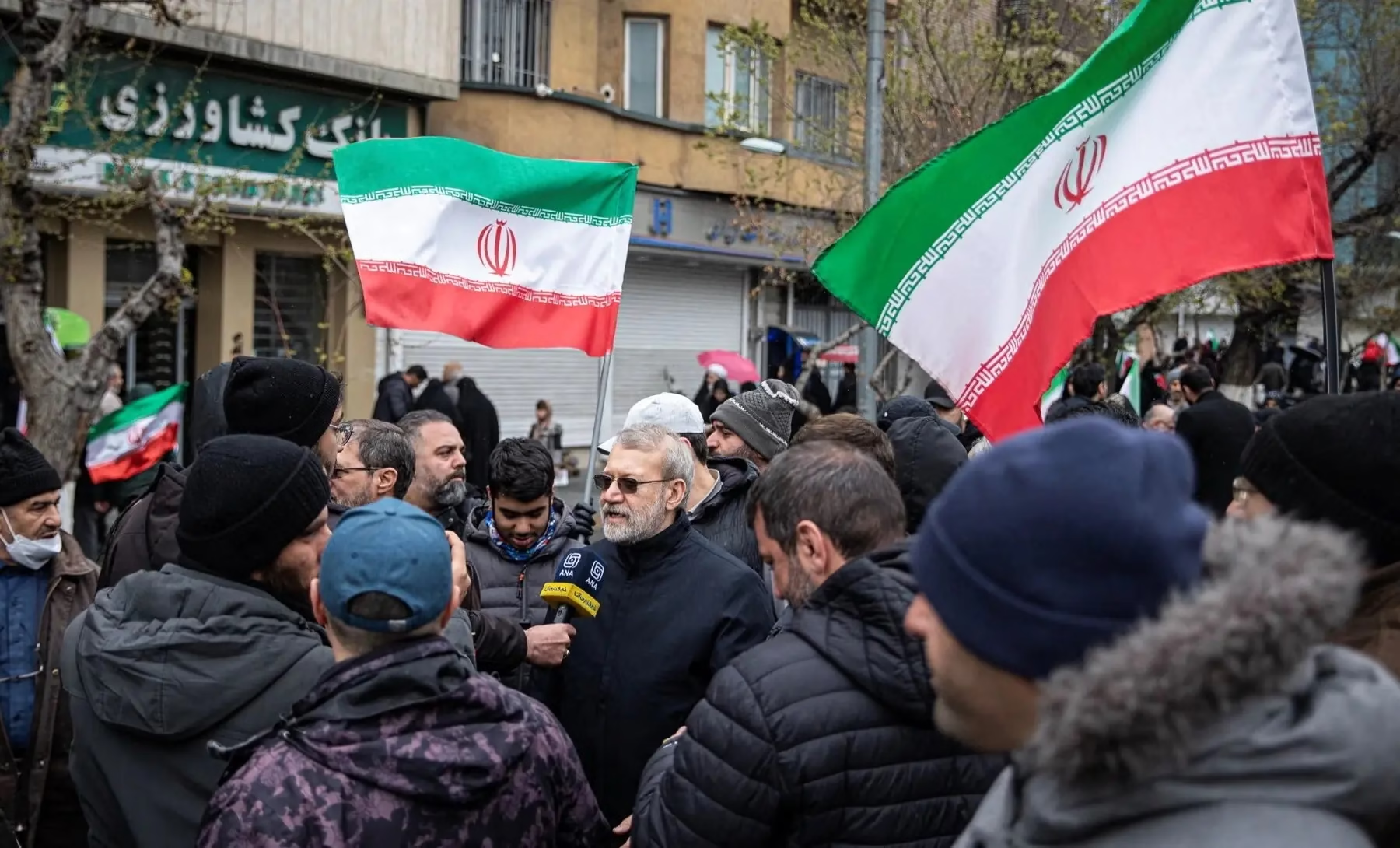
Eighteen days into the escalating US-Israel war with Iran, the battlefield continues to shift, but the political endgame looks increasingly distant. A dramatic new claim, the alleged killing of Iran’s top security figure Ali Larijani, could reshape the conflict in ways that go far beyond the immediate tactical impact.
A Critical Blow To Iran’s Inner Circle
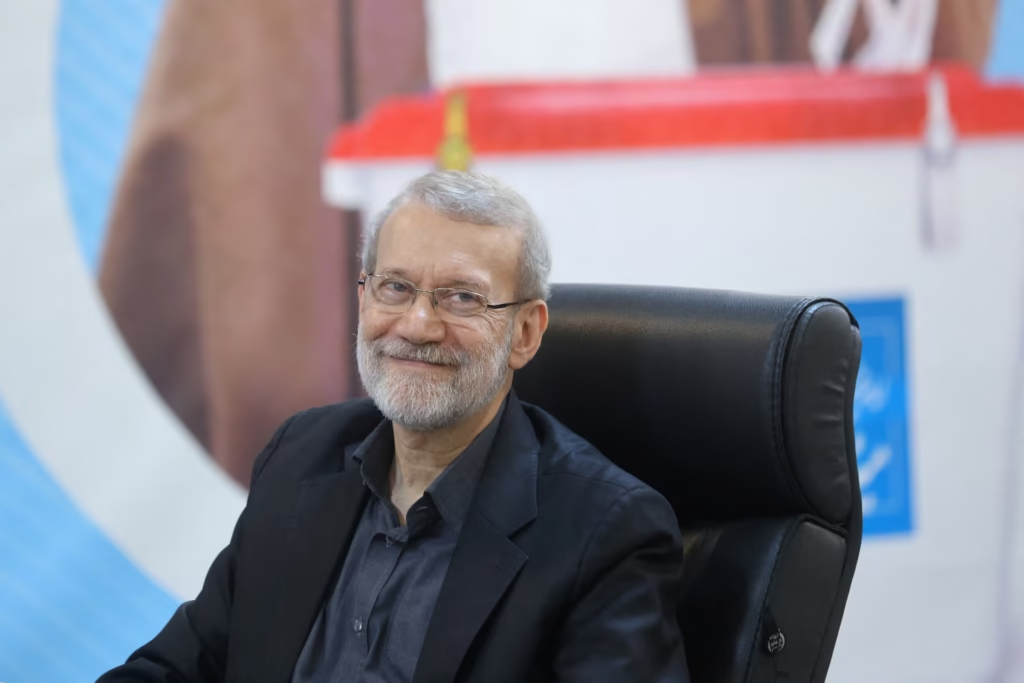
The Israeli claim of killing Iran’s top security official Ali Larijani, if confirmed, would mark the most consequential setback for Iran since the assassination of Supreme Leader Ayatollah Khamenei at the start of the US-Israel war on the Islamic republic, which is now in its 18th day.
Larijani stood apart from many within Iran’s leadership. He bridged political authority, security oversight, and diplomatic engagement, making him one of the few figures capable of aligning competing power centers during wartime. More importantly, he played a quiet but essential role in maintaining external communication channels that could have supported de-escalation if the opportunity arose.
His potential loss does not shatter the system. However, it tightens the space for strategic thinking, pushing Iran further toward a rigid, security-first posture while reducing room for political maneuvering.
Strategy Over Symbolism
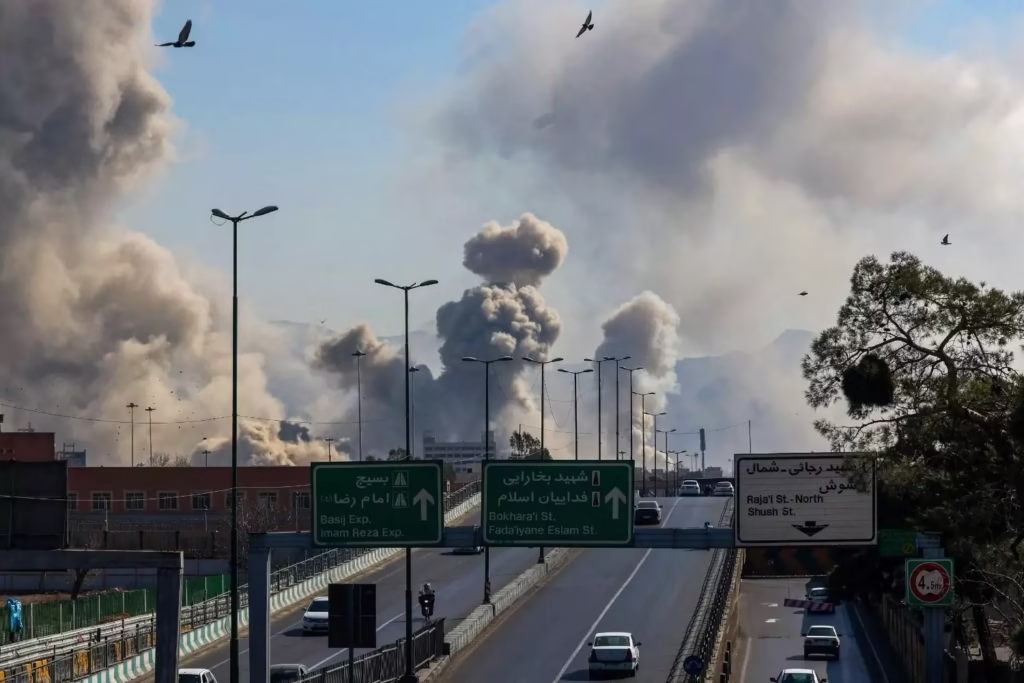
There is a growing view that the strike targeting Larijani carried a wider strategic logic. At a stage when the war has not produced a decisive shift on the battlefield, eliminating figures capable of shaping political outcomes may be aimed as much at constraining diplomacy as at degrading command structures.
For Israel, the concern is clear. Having drawn the United States into direct confrontation, an early negotiated settlement could undermine the broader campaign. Removing key intermediaries reduces the chances of such an outcome.
At the same time, this approach reflects a continued reliance on leadership targeting. Yet past results suggest limitations. The earlier martyrdom of Ayatollah Khamenei did not trigger collapse; instead, it strengthened internal cohesion.
Power Consolidates In Tehran
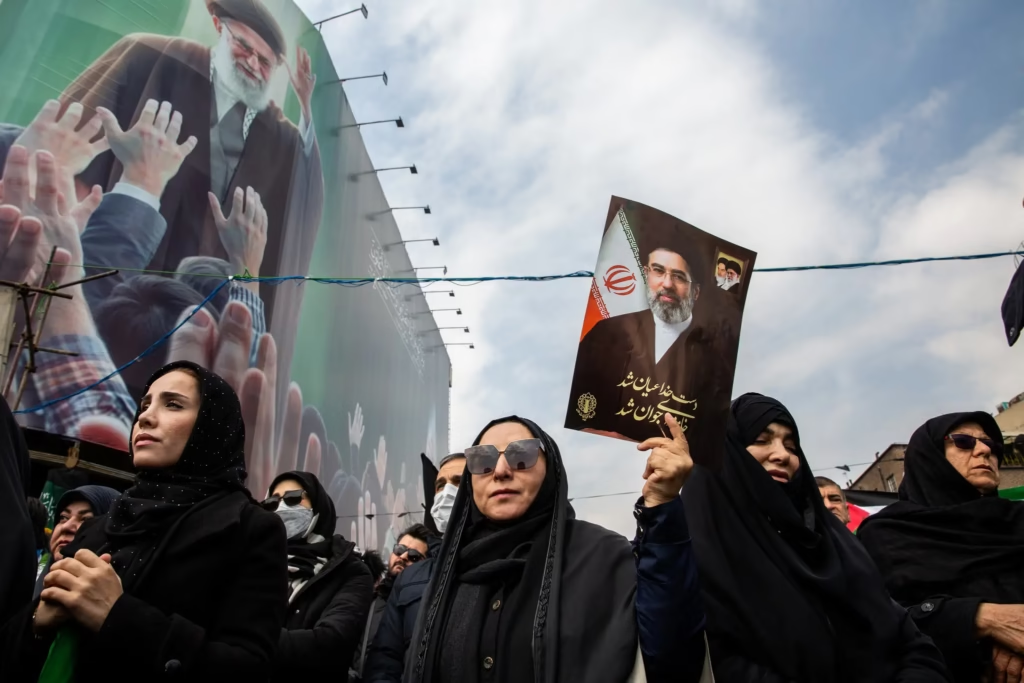
Early signals indicate that Iran’s system is responding predictably. Power is consolidating around the new Supreme Leader Ayatollah Mojtaba Khamenei, with the Revolutionary Guards and allied political factions absorbing the shock.
Such losses rarely produce restraint. In fact, they tend to harden resolve. The targeting of Larijani is likely to reinforce the perception in Tehran that the conflict is existential, making compromise appear risky and even dangerous.
Over time, this could reshape Iran’s leadership into a narrower, more rigid structure, one far less open to negotiation.
A War Across Multiple Fronts
Meanwhile, the conflict continues to expand across multiple theatres. Iranian missile and drone operations have persisted over the past 24 hours, targeting Israeli command nodes and Gulf energy infrastructure. Proxy activity has intensified from Iraq to the Red Sea.
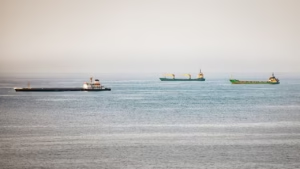
The Strait of Hormuz remains effectively closed to most global shipping. Iran is enforcing a selective passage system, allowing limited traffic under its own terms, turning the waterway into both a military and economic lever.
On the opposing side, US and Israeli forces have broadened their campaign. Air strikes continue against Iranian military assets, including renewed pressure near Kharg Island. In southern Lebanon, Israeli ground operations are evolving into a slow and costly attempt to establish a buffer zone.
Hezbollah forces, however, are avoiding direct positional battles, instead using tactics designed to increase the cost of holding territory.
Coalition Strains Begin To Show
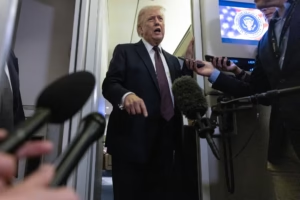
At the strategic level, Washington is increasingly framing the reopening of the Strait of Hormuz as a central objective. US President Donald Trump has urged international partners to join efforts to secure maritime routes.
However, the response has been cautious. European and Asian allies remain reluctant to deepen their involvement, even as they absorb economic fallout. Gulf states, while quietly aligned against Iran, are facing sustained attacks on their own infrastructure.
This has created a widening gap between US ambitions and coalition willingness, leading to visible operational constraints.
Military Pressure Meets Operational Limits
Meanwhile, strain is emerging within the US military posture in the region. The USS Gerald Ford is set to withdraw from the northern Red Sea for refueling and to investigate a prolonged onboard fire, while the USS Abraham Lincoln has already pulled back from the Arabian Sea.
These moves mark a shift away from the aggressive forward positioning that defined earlier phases of the conflict.
The gap is not decisive, but it reduces flexibility. With the USS Tripoli yet to arrive, rapid response options remain limited.
Compounding the issue, key radar systems in the region have been degraded following sustained Iranian strikes. The US is relying on airborne warning systems as a temporary solution, but these lack the continuous coverage of fixed installations.
Growing Tensions Beyond The Battlefield
Beyond military developments, political strain is surfacing in Washington. Reports of dissent within the national security establishment, including the resignation of senior counterterrorism official Joe Kent, highlight an intensifying debate over the war’s direction.
Inside Iran, authorities are tightening internal security, particularly ahead of the Nowruz period. Despite growing pressures, officials continue to project confidence that time remains on their side.
No Clear End In Sight
Eighteen days into the conflict, the trajectory remains largely unchanged. The US-Israel coalition is accumulating tactical gains, yet these have not translated into strategic collapse.
The Israeli claim of assassinating Larijani underscores this paradox. It demonstrates reach and capability, but also complicates the path to resolution.
In the end, the war appears to be shifting toward a test of endurance. Economic leverage, internal cohesion, and long-term resilience may ultimately matter more than individual battlefield victories.