


Italy has become one of the most attractive countries for remote workers who want history, culture, food, and a slower European lifestyle. The italy nomad visa gives eligible non-EU professionals a legal path to live in Italy while working remotely for clients or employers. It is designed for skilled workers, freelancers, consultants, and employees who can perform their work online.
This guide explains the italy nomad visa in simple terms, including who can apply, how much income is needed, what documents are required, and what steps applicants should follow before moving.
italy nomad visa Rules and Purpose
The italy nomad visa is for non-EU citizens who want to live in Italy while working remotely. It is not a tourist visa, and it is not for people planning to search for a local job after arrival.
Italy separates applicants into two main groups:
- Digital nomads: freelancers, consultants, and self-employed remote professionals
- Remote workers: employees working remotely for a company
The visa usually allows a stay of up to one year and may be renewed if the applicant continues to meet the conditions. After entering Italy, the applicant must apply for a residence permit, called a Permesso di Soggiorno.
Who Can Apply for This Visa
The italy nomad visa is mainly for highly skilled professionals. Applicants must show that their work can be done remotely using digital tools.
Eligible applicants may include:
- Software developers
- Designers
- Marketing specialists
- Writers and editors
- Consultants
- Online business owners
- Remote company employees
- IT specialists
- Professional freelancers
The key point is that the applicant must have a real remote income source. Passive income alone is usually not enough because the visa is connected to active remote work.
Main Eligibility Requirements
Applicants must meet several conditions before applying. These rules are important because Italian consulates review the application carefully.
Common eligibility requirements include:
- A valid passport
- Proof of remote work
- Proof of professional qualification or experience
- Proof of income
- Health insurance
- Proof of accommodation in Italy
- Clean criminal record
- At least six months of prior work experience in the same field
The italy nomad visa is not based only on income. The applicant must also prove that they are qualified and already working in a remote profession.
Income Rules for Applicants
Income is one of the most important parts of the italy nomad visa application. Applicants generally need to show income of at least three times the minimum level required for exemption from Italian healthcare cost participation.
In practical terms, many consulates describe this as around €24,789 per year or more, depending on the applicant’s situation and family members. Some guidance also mentions higher practical income expectations, especially for remote employees.
Acceptable income proof may include:
- Recent bank statements
- Employment contract
- Client contracts
- Tax returns
- Pay slips
- Invoices
- Business income records
The income should come from the work the applicant will continue doing while living in Italy. Rental income, investments, pensions, or other passive income may not be enough by themselves.
Professional Qualification Requirements
The italy nomad visa is for highly qualified workers. This means applicants may need to prove education, training, or professional experience.
A person may qualify through:
- A university degree
- A post-secondary professional qualification
- A regulated professional license
- At least five years of relevant professional experience
- In some ICT roles, at least three years of experience in the previous seven years
Freelancers should prepare strong proof of their work history. Remote employees should provide contracts, employer letters, and pay records that show their role is suitable for remote work.
Required Documents Checklist
Applicants should prepare documents before booking a visa appointment. Requirements can vary by consulate, so checking the local Italian embassy or consulate page is important.
A typical document checklist includes:
- Completed visa application form
- Valid passport
- Passport-size photo
- Proof of remote work
- Employment or client contract
- Proof of income
- Bank statements
- Tax documents
- Health insurance
- Accommodation proof in Italy
- Criminal record certificate
- Professional qualification proof
- Visa fee payment proof
For remote employees, the employer may also need to provide a signed declaration confirming certain legal conditions. This can include confirmation about the absence of relevant criminal convictions.
Health Insurance and Accommodation Rules
Health insurance is required for the italy nomad visa. It should cover medical treatment and hospitalization in Italy for the full stay. Some consulates also require minimum medical coverage, so the policy must be clear and detailed.
Accommodation proof is also important. Applicants may need to show a lease, rental contract, or property document in their own name. A hotel booking or casual invitation may not be accepted by some consulates.
This part often causes problems because applicants sometimes book temporary stays only. A stronger application usually includes stable housing proof for the visa period.
Application Steps to Follow
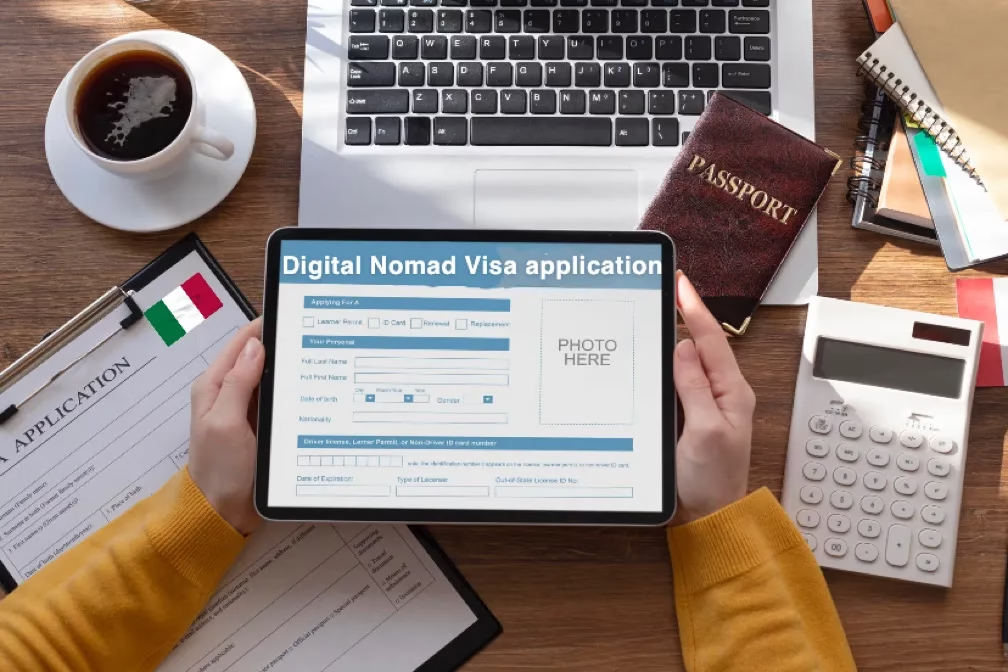
The italy nomad visa application starts outside Italy. Applicants must usually apply through the Italian consulate or embassy in their country of residence.
Main steps include:
- Check the local consulate requirements
- Confirm eligibility and income level
- Collect documents
- Book a visa appointment
- Submit the application in person
- Pay the visa fee
- Wait for processing
- Enter Italy after approval
- Apply for the residence permit within eight working days
The residence permit step is very important. The visa allows entry, but the Permesso di Soggiorno allows legal residence in Italy.
Family Members and Dependents
The italy nomad visa may allow eligible family members to join the main applicant, but the process is not always automatic. Family approval may involve local Italian immigration offices.
Common family members may include:
- Spouse
- Minor children
Applicants with family members should expect higher income expectations and more paperwork. They may need to show larger accommodation, family relationship documents, and additional financial proof.
Taxes and Local Obligations
Living in Italy for a longer period may create tax obligations. A person who spends enough time in Italy may become an Italian tax resident. This can affect income tax, social security, and reporting duties.
Remote workers should speak with a qualified tax adviser before moving. This is especially important for freelancers, business owners, and employees whose companies are based outside Italy.
The italy nomad visa gives a legal residence route, but it does not remove normal tax responsibilities.
Common Reasons Applications Fail
Many visa applications fail because the documents are weak, unclear, or incomplete. Italy’s rules are detailed, and consulates may request extra proof.
Common issues include:
- Income is too low
- Income is passive instead of work-based
- No strong remote work proof
- Weak accommodation documents
- Insurance does not meet requirements
- Missing criminal record certificate
- Professional experience is not well proven
- Employer documents are incomplete
Applicants should prepare a clean, organized file. Every document should clearly support the same story: the applicant is skilled, employed or self-employed, financially stable, insured, and ready to live legally in Italy.
Best Preparation Before Applying
The strongest applications are planned early. Applicants should not wait until the appointment date to collect records.
Before applying, prepare:
- Six to twelve months of bank records
- Clear client or employment contracts
- Updated tax documents
- Proof of qualifications
- Translated or legalized documents if required
- Proper insurance
- Strong housing proof
The italy nomad visa is not impossible, but it rewards organized applicants. Clean paperwork can make the process smoother and reduce delays.
Smart Move for Remote Workers

The italy nomad visa can be a strong option for skilled remote workers who want to live in Italy legally while keeping foreign clients or employment. It offers a clearer route than staying on short tourist visits.
Applicants should focus on income proof, professional qualification, health insurance, and accommodation first. These are the areas consulates check closely. With careful preparation, the italy nomad visa can open a practical path to remote work life in Italy.