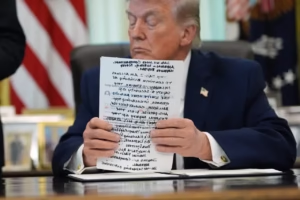

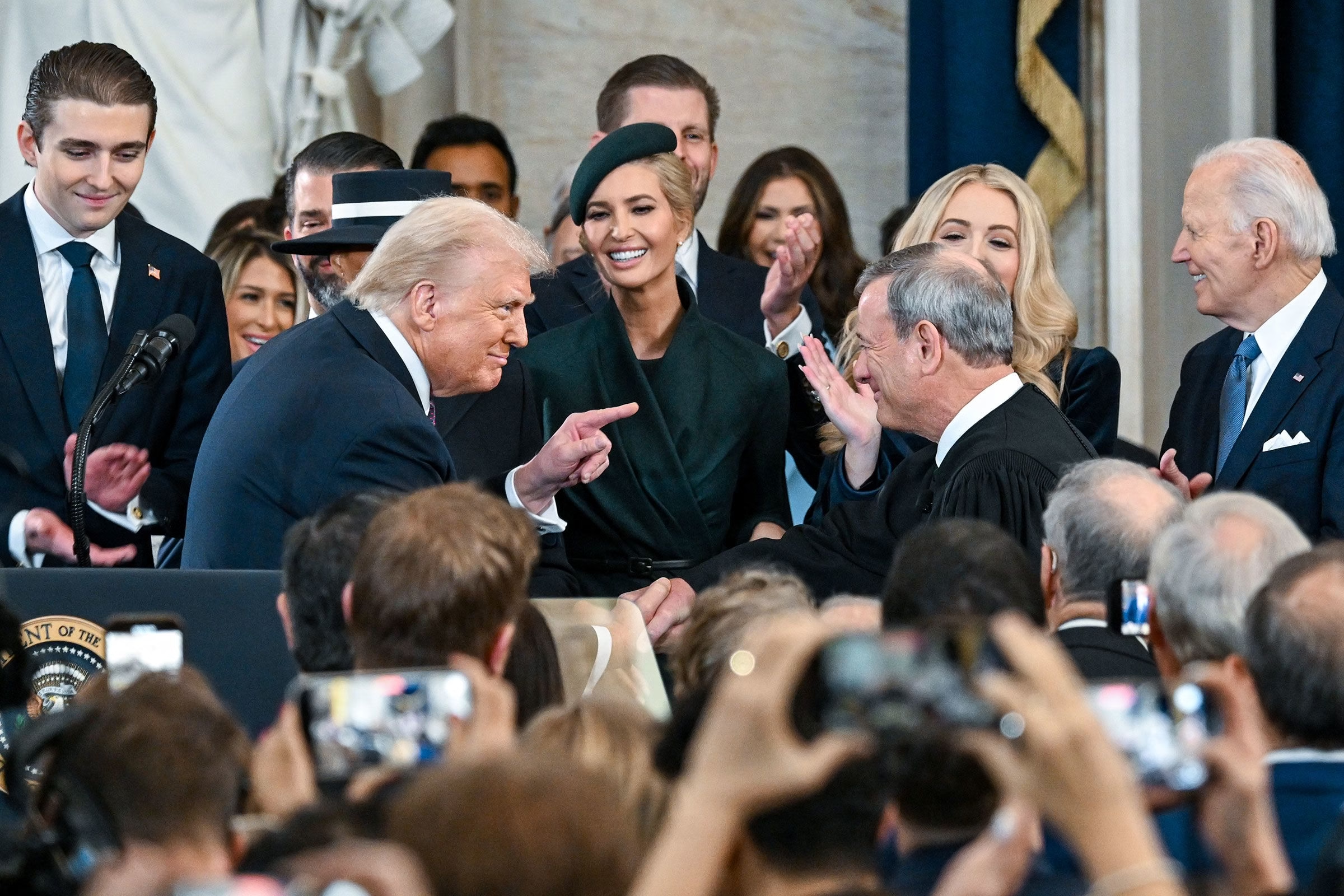
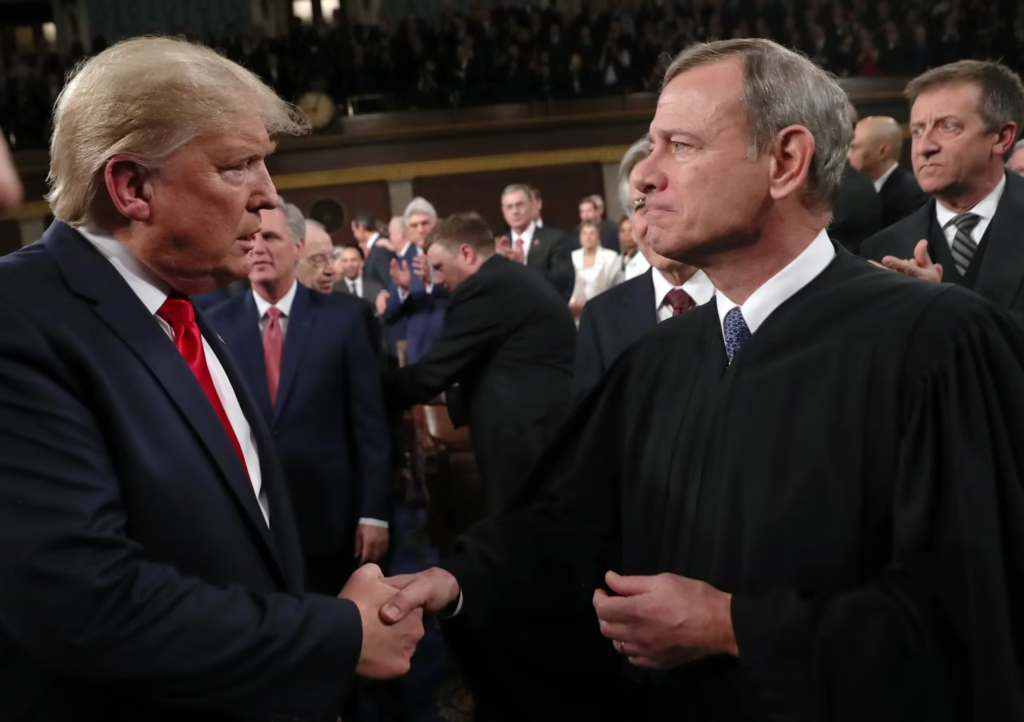
Inside a packed Supreme Court chamber on Wednesday, an extraordinary scene unfolded. President Donald Trump sat quietly among spectators, not as commander-in-chief, but as a litigant watching his own policy face intense scrutiny. The stakes were enormous, and so was the tension.
For the first time in modern history, a sitting US president attended oral arguments. Yet, despite his presence, the justices did not acknowledge him. Instead, they focused on a constitutional question that cuts to the heart of American identity: birthright citizenship.
Roberts Signals Skepticism From The Bench
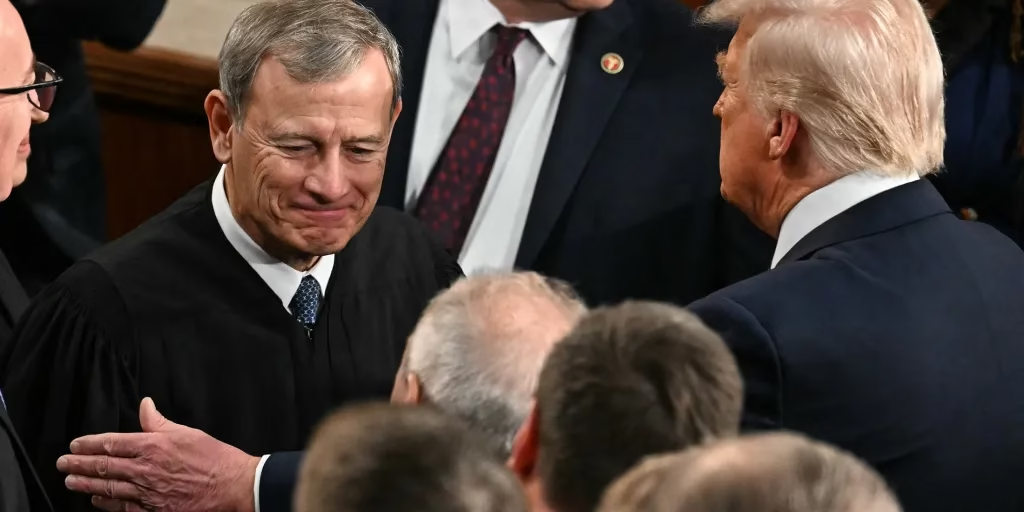
Chief Justice John Roberts is known for his careful and often ambiguous approach during arguments. However, this time, he was unusually direct.
As the Trump administration pushed its case to reinterpret the 14th Amendment, Roberts made clear he was not convinced. When US Solicitor General John Sauer argued that modern immigration challenges justify a new interpretation, Roberts pushed back sharply.
“We’re in a new world now,” Sauer told Roberts, “where 8 billion people are one plane ride away from having a child who’s a US citizen.”
“Well, it’s a new world,” Roberts rejoined. “It’s the same Constitution.”
That brief exchange carried weight. It suggested that Roberts may not be willing to abandon long-standing constitutional principles, even in the face of changing global realities.
A Courtroom Filled With Attention And Tension
The hearing drew intense interest. Every seat in the courtroom was filled, and additional chairs lined the alcoves. Among the attendees was actor Robert De Niro, a vocal critic of Trump.
Meanwhile, television and radio networks broadcast the arguments live, reflecting the national importance of the case.
Despite the spectacle, the justices appeared focused and disciplined. Over more than two hours, they questioned both sides rigorously. At no point did there appear to be a clear majority willing to overturn more than a century of constitutional interpretation.
The Core Debate Over The 14th Amendment
At the center of the case is the 14th Amendment, which states that all persons born in the United States and subject to its jurisdiction are citizens.
Historically, only narrow exceptions have applied, such as children of foreign diplomats or invading forces.
However, Sauer argued that the phrase “subject to the jurisdiction” should exclude children born to undocumented immigrants or temporary residents. He suggested that modern immigration patterns require a rethinking of this principle.
The justices, however, raised serious concerns.
Justice Amy Coney Barrett pointed to the practical difficulties of such a shift. “What would you do with what the common law called ‘foundlings,’” she asked. “The thing about this is then you have to adjudicate, if you’re looking at parents and if you’re looking at parents’ domicile, then you have to adjudicate both residence and intent to stay. What if you don’t know who the parents are?”
“I think there are marginal cases,” Sauer said, as Barrett posed a series of difficult hypothetical scenarios.
Trump Watches, Then Walks Out
Trump’s presence added another layer of drama, but it did not influence the court’s tone. He was seated in the public section, alongside Attorney General Pam Bondi and Commerce Secretary Howard Lutnick.
Spectators whispered as he entered. He shifted seats, scanned the ornate courtroom, and took in the surroundings. Yet, as arguments progressed, he remained silent.
He stayed through Sauer’s presentation and the early moments of the challengers’ argument. Then, unexpectedly, he stood up and left the courtroom after just a few minutes.
The justices continued without pause, showing no visible reaction to his departure.
Revisiting A Landmark Precedent
Before Trump exited, Roberts raised a key question about United States v. Wong Kim Ark, an 1898 case that affirmed birthright citizenship for children born to foreign parents living in the US.
Roberts pressed the challengers’ lawyer, Cecillia Wang, on the importance of the concept of “domicile” in that ruling.
“We’ve heard a lot of talk about Wong Kim Ark, and you dismiss the use of the word ‘domicile’ in it,” Roberts began. “It appears in the opinion 20 different times and including in the question presented and in the actual legal holding. … Isn’t it at least something to be concerned about to say that since it’s discussed 20 different times and has that significant role in the opinion that you can just dismiss it as irrelevant?”
Wang responded by emphasizing the broader historical context. She explained that the decision was rooted in English common law principles.
She said the Wong Kim Ark decision “starts with a premise that in construing the 14th Amendment Citizenship Clause, we look to the English common law. … Under English common law, if you are born in the dominions of the sovereign, you owe natural allegiance, and those who are present in the dominions of the sovereign owe temporary allegiance for as long as they’re present.”
She added, “The purpose of the 14th Amendment was to embrace that universal rule of birthright citizenship.”
Roberts Challenges The Administration’s Logic
As Sauer attempted to expand the categories of people excluded from citizenship, Roberts again expressed doubt.
“You obviously put a lot of weight on ‘subject to the jurisdiction thereof,’ but the examples you give to support that strike me as very quirky,” Roberts told Sauer. “You know, children of ambassadors, children of enemies during a hostile invasion, children on warships. And then you expand it to a whole class of illegal aliens are here in the country.”
He continued, “I’m not quite sure how you can get to that big group from such tiny and sort of idiosyncratic examples.”
The exchange highlighted a key concern among the justices. Expanding narrow historical exceptions into a broad exclusion could fundamentally reshape the meaning of citizenship in the United States.
Trump Responds After Leaving
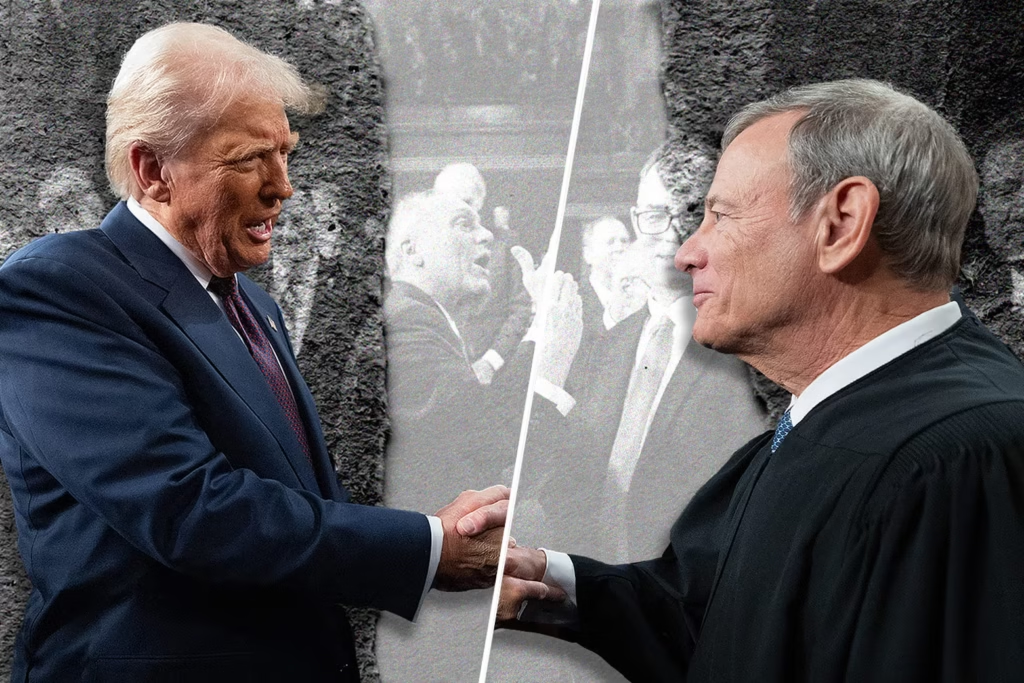
While Trump remained silent inside the courtroom, he later voiced his frustration online.
About an hour after leaving, he posted, “We are the only Country in the World STUPID enough to allow ‘Birthright’ Citizenship!”
However, that claim is incorrect. Dozens of countries, particularly across the Americas, recognize birthright citizenship.
Still, the case represents one of the most ambitious efforts yet to redefine immigration policy and national identity. Trump signed the executive order at issue on his first day back in office, signaling its importance to his broader agenda.
A Decision That Could Reshape America
The outcome of this case could have lasting consequences. It touches not only immigration policy but also the fundamental definition of who qualifies as an American citizen.
For now, the justices appear cautious. Their questions suggest hesitation to overturn long-standing precedent without clear constitutional grounds.
That said, the final decision remains uncertain. What is clear, however, is that the courtroom moment between Roberts and Trump’s legal team may define how this historic debate unfolds.