
Two Republican election officials are sounding the alarm over President Donald Trump’s sweeping move to restrict mail-in voting, warning it is unlikely to survive in court.
The officials say the legal challenges already mounting against the executive order are not just symbolic. They believe the courts will strike it down.
GOP Officials Break Ranks On Voting Order
Speaking in a televised interview, Pennsylvania Secretary of the Commonwealth Al Schmidt and former Maricopa County Recorder Stephen Richer made clear they expect the order to fail under legal scrutiny.
“We want voters to know that the election is going to be free, fair, safe and secure, and that everyone knows what the rules are prior to going into this,” Schmidt said. “So confusion is never a positive thing unless you are seeking to sow distrust in the outcome of an election.”
His remarks cut straight to the concern shared by many election administrators. Stability and clarity matter. Without them, public trust erodes quickly.
Meanwhile, Richer echoed that concern, pointing to both legal and practical issues with the order.
A Sweeping Order Sparks Legal Firestorm
The executive order aims to tighten control over mail-in voting nationwide. It calls for a national list of approved absentee voters and directs the attorney general to investigate improper ballot distribution.
However, critics argue the move crosses constitutional lines.
At least four lawsuits have already been filed. One comes from top Democratic leaders, including Senate Minority Leader Chuck Schumer and House Minority Leader Hakeem Jeffries. Another involves 23 states, with Arizona and Pennsylvania among them, arguing the order violates Article 1, Section 4 of the Constitution.
That section gives states, not the federal government, primary authority over election procedures.
Democrats Call Order Unlawful
Jeffries did not hold back when describing the administration’s intentions.
He said the order was “designed to try to suppress the electorate” and “alter the landscape” to help Republicans keep control of Congress.
Still, he expressed confidence the courts will intervene.
“We’re going to work as hard as we can to make sure that this is a free and fair election,” Jeffries told Stephanopoulos.
“That executive order is unlawful and unconstitutional. We’ve already filed litigation, and we expect that it will be declared so in short order by the courts.”
Renewed Focus On 2020 Election Raises Questions
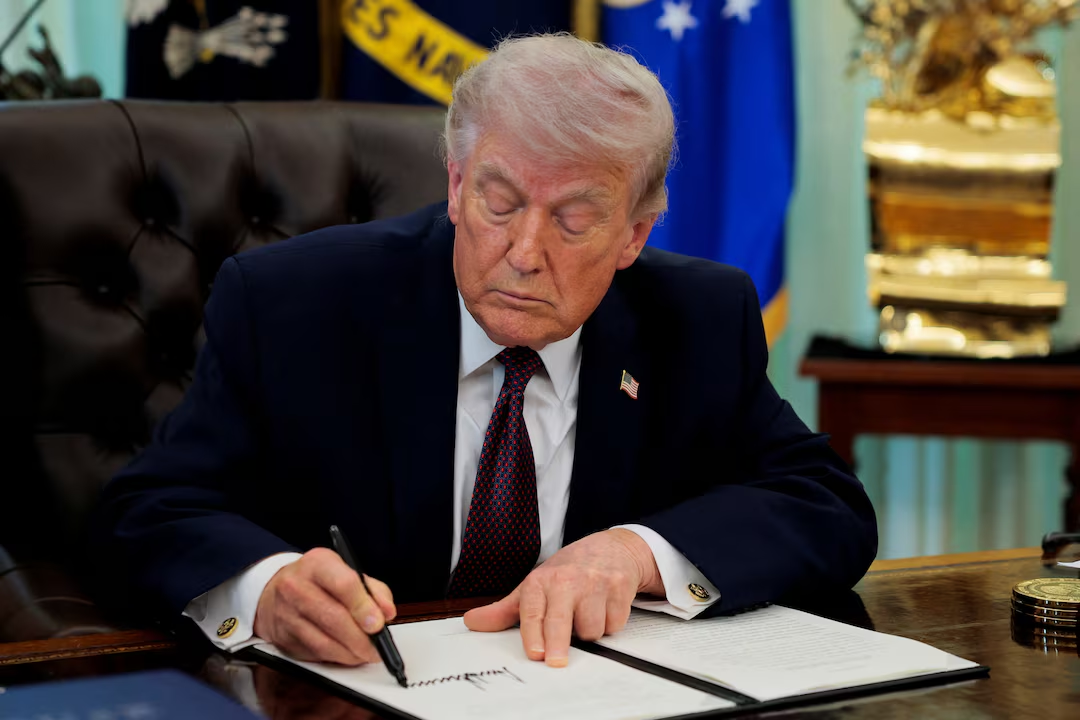
The controversy comes as the Trump administration revisits claims tied to the 2020 presidential election.
Federal authorities have recently seized voter records from counties in Georgia and Arizona, both previously linked to widely disputed fraud allegations. Multiple audits and independent reviews have consistently found no credible evidence of widespread voter fraud.
That backdrop adds another layer of tension. Critics say the latest move risks reopening old wounds without new justification.
Arizona Example Highlights Existing Safeguards
Richer pointed out that states like Arizona already have systems in place that address many of the concerns raised by the executive order.
Arizona includes proof-of-citizenship requirements and ballot-tracking technology, features often cited as benchmarks for election integrity.
“While I agree with some of the elements in the executive order and some of the aspirations, the form does matter,” he said.
In other words, the goal may not be the issue. The method is.
Growing Doubts Inside Republican Ranks
Perhaps most striking is the skepticism coming from within Republican circles.
Richer urged fellow party members to resist political pressure and focus on facts.
“The attorney general of Arizona previously spent over 10,000 man hours investigating Arizona, but this seems to be a trend,” he said, adding that the order was likely “to sow further doubt in the election process.”
That sentiment reflects a broader concern. Even within the party, some officials worry the push could undermine confidence rather than strengthen it.
What Comes Next
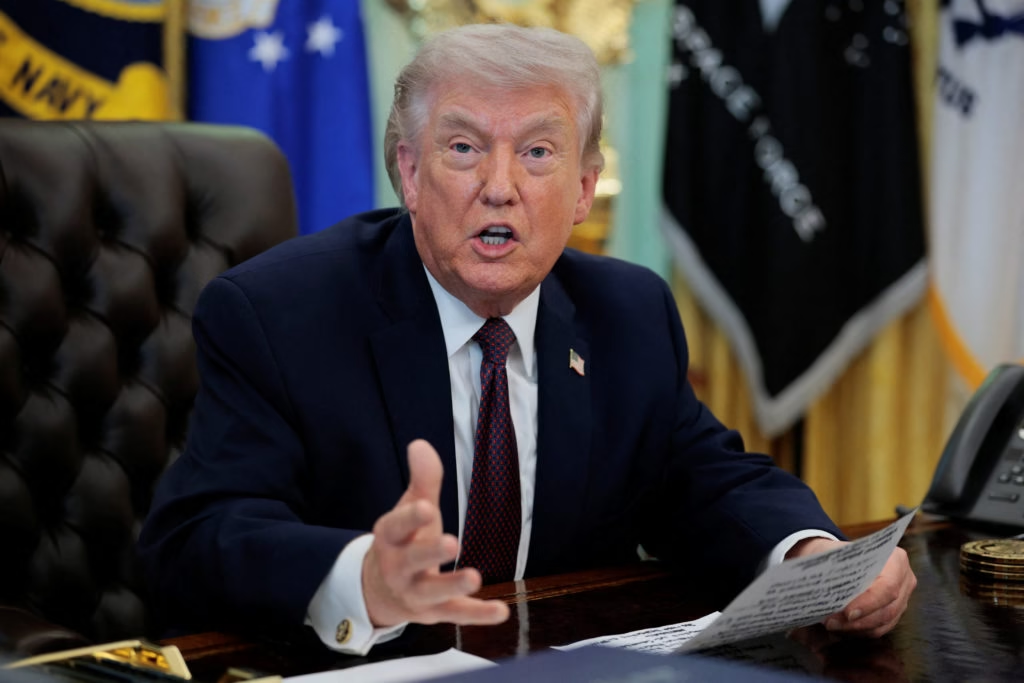
Legal battles are now underway, and the outcome could reshape how much authority the federal government holds over elections.
For now, one thing is clear. The courts will have the final say.
And according to both current and former Republican election officials, that verdict may not favor the White House.