

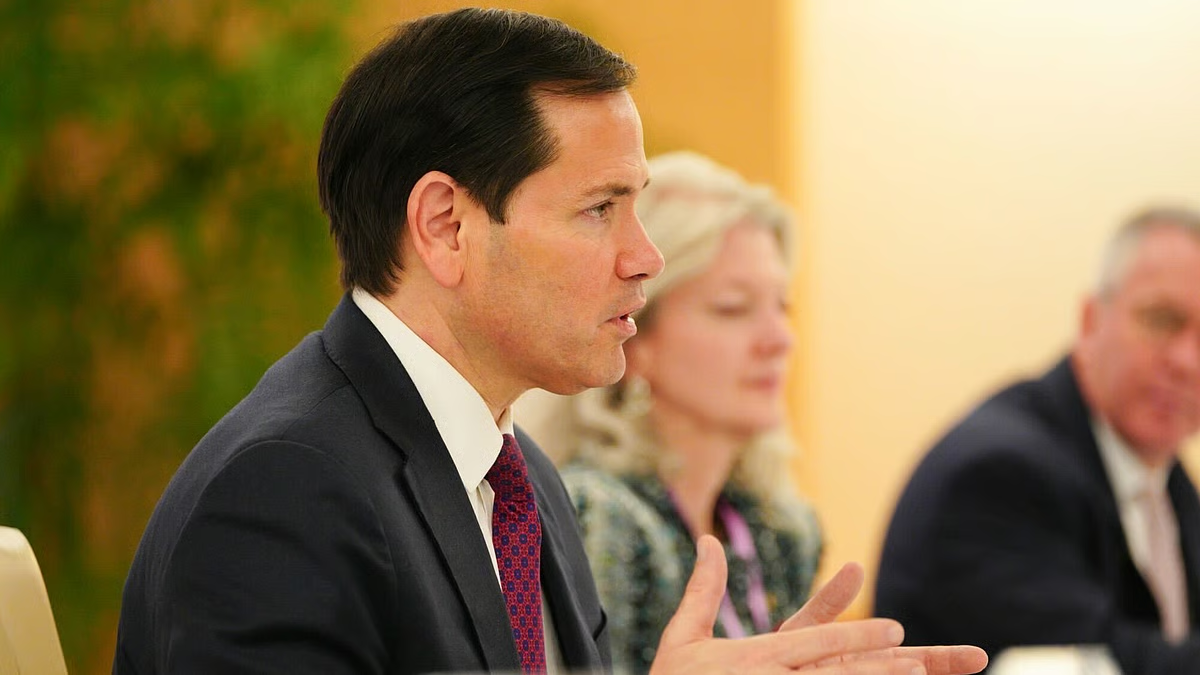
The future of NATO is no longer a settled question. What was once seen as a permanent pillar of global security is now under scrutiny, with growing frustration inside the United States. At the center of that debate is a blunt message: Europe is not doing enough, and Washington is losing patience.
That message, amplified by Secretary of State Marco Rubio, signals a possible shift in U.S. foreign policy, one that could reshape alliances for years to come.
Mounting Pressure On European Allies
The core issue is simple, yet deeply consequential. The United States believes its European partners are falling short of their commitments, particularly when it comes to defense spending and shared responsibility.
For decades, America has carried the bulk of NATO’s financial and military weight. Billions have been spent annually, and over time, that number climbs into the trillions. Meanwhile, critics argue that Europe has grown too comfortable relying on U.S. protection.
Rubio, while historically supportive of NATO, now suggests the balance is shifting. Circumstances have changed, and with them, expectations.
America First Meets Global Reality
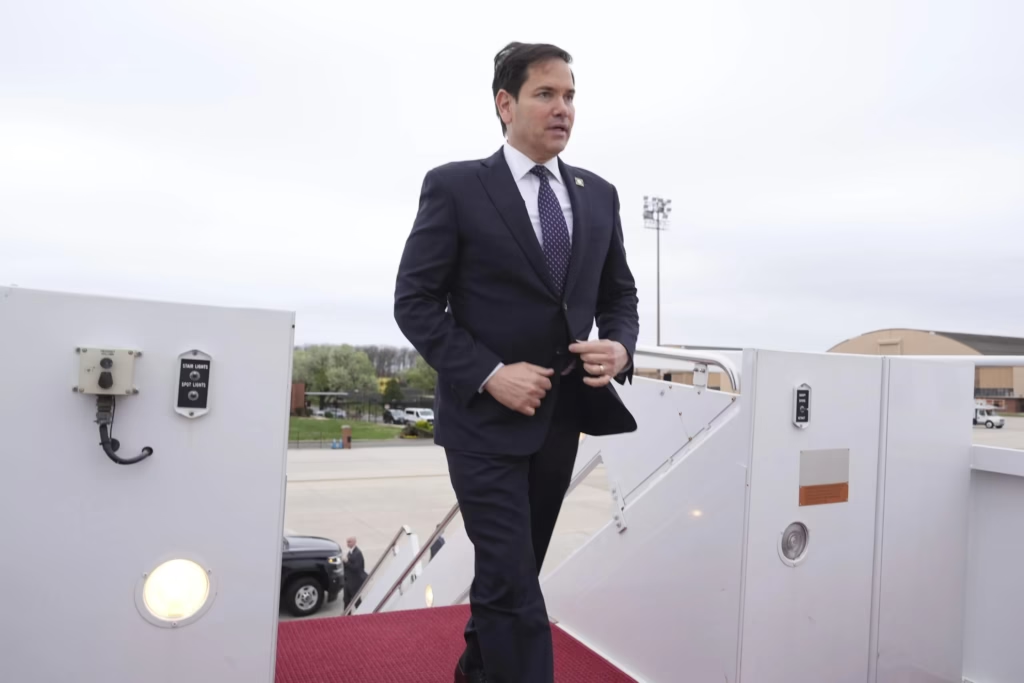 This evolving stance aligns closely with President Trump’s “America First” approach. The idea is not about abandoning allies entirely. Instead, it is about redefining the terms of engagement.
The U.S. no longer wants to provide unlimited support without reciprocity. The expectation is clear: alliances must be mutual, not one-sided.
That sentiment resonates with many Americans. Voters increasingly want leadership to prioritize domestic issues, from economic pressures to infrastructure challenges. Still, that does not mean retreating from the world stage.
Instead, it points to a more calculated strategy, one where military involvement is selective and purposeful.
A Warning Rooted In History
Interestingly, this debate echoes a much older concern. America’s first president, George Washington, famously cautioned against becoming too entangled in foreign alliances.
While today’s global landscape makes total isolation impossible, the underlying principle still carries weight. There is growing interest in limiting commitments that do not clearly benefit the United States.
In that sense, the current conversation is not entirely new. It is a modern version of a long-standing tension between global leadership and national interest.
Europe Faces A Defining Moment
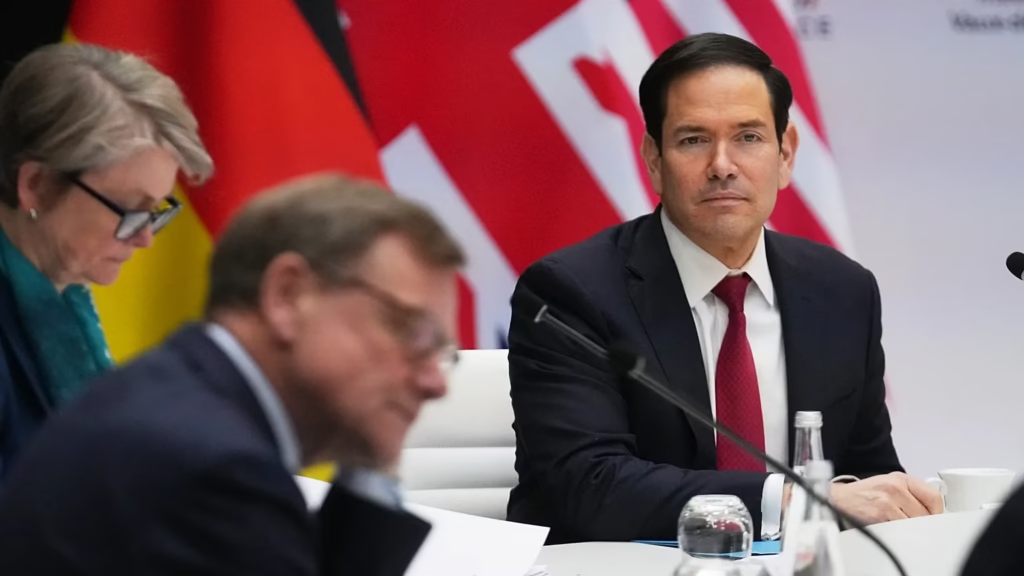
So where does this leave Europe?
According to Rubio’s framing, the responsibility now shifts to European nations. The expectation is not vague. It is direct and urgent.
Support U.S. initiatives when called upon. Contribute meaningfully to shared defense efforts. Step up, or risk weakening the alliance.
This includes participation in key geopolitical flashpoints, such as tensions involving Iran or strategic concerns around the Strait of Hormuz. The message is clear: partnership requires action.
At the same time, there is a warning attached. If Europe hesitates, it cannot expect the U.S. to automatically step in against threats like Russia’s expansionism.
You cannot have it both ways.
Growing Frustration In The U.S.
Back home, the frustration is becoming more visible. Many Americans feel that the current arrangement allows other nations to benefit without carrying their fair share of the burden.
That perception, whether entirely fair or not, is shaping political discourse. It is also influencing how leaders approach international commitments.
The phrase “free-riders” is increasingly used to describe allies who rely heavily on U.S. support. For many voters, that is no longer acceptable.
A Turning Point For NATO
All of this points to a critical moment. NATO is not collapsing overnight, but the foundation is clearly under strain.
What happens next depends largely on Europe’s response. Will allies adjust and meet expectations, or will divisions deepen?
One thing is certain. The status quo is no longer guaranteed.
The coming months could determine whether NATO remains a unified force or begins to fracture under pressure.