

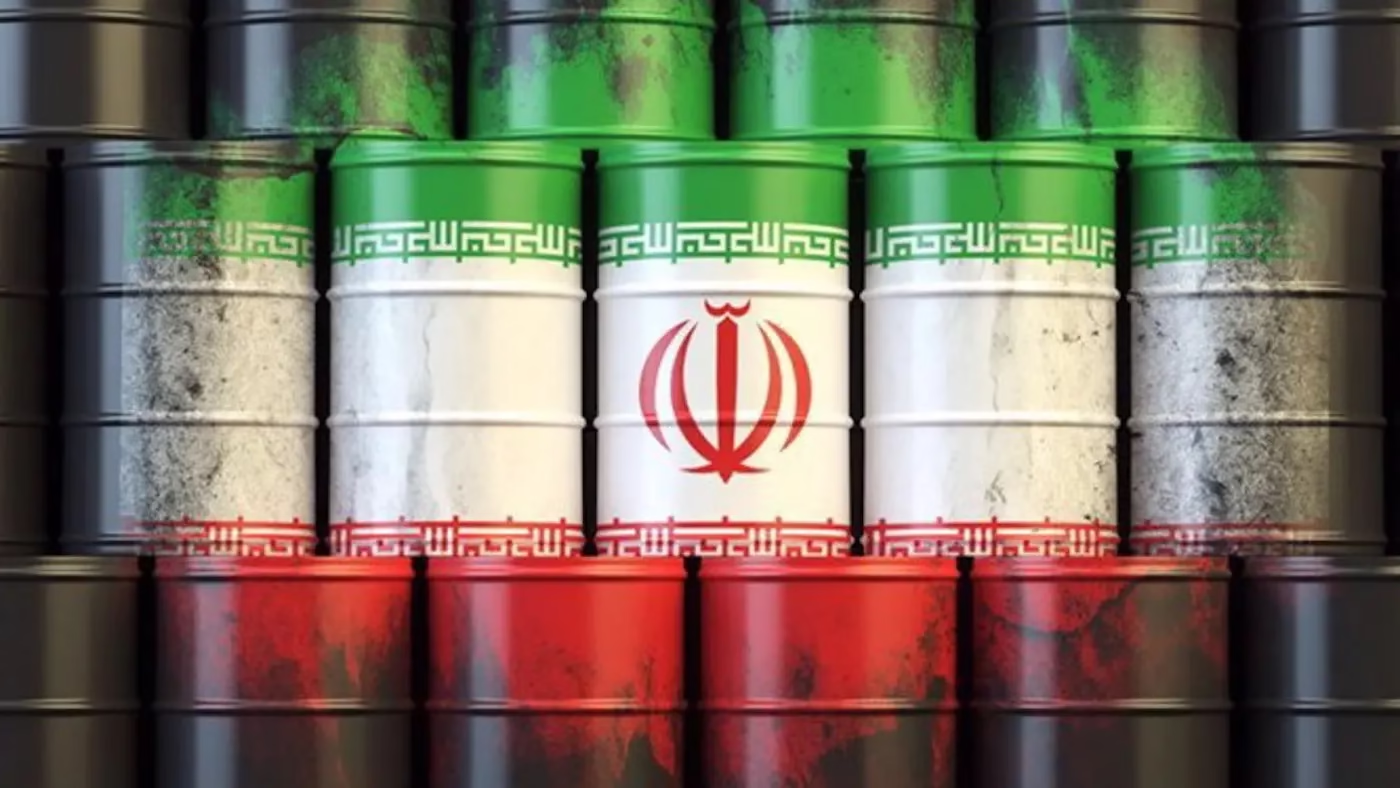
Global oil markets are on edge, and all eyes are now on OPEC+ as the group weighs a production increase that, for now, may exist more in theory than reality.
Despite discussions of boosting output, the ongoing conflict involving Iran has tightened supply lines so severely that any increase could struggle to materialize in practical terms.
War Disrupts Critical Oil Artery
The situation escalated rapidly after the Strait of Hormuz, the world’s most vital oil transit route, effectively shut down at the end of February. This single chokepoint handles a massive share of global crude flows, and its closure has sent shockwaves across energy markets.
As a result, exports from key OPEC+ producers including Saudi Arabia, the UAE, Kuwait, and Iraq have been significantly curtailed. These nations were among the few capable of ramping up production before the conflict, yet now find themselves constrained by the very infrastructure damage and logistical breakdown caused by the war.
Meanwhile, the broader ripple effects are impossible to ignore. Inside the Gulf, missile and drone strikes have inflicted heavy damage on oil facilities. Several officials have warned that even if hostilities ended today, restoring normal output could take months.
Production Increase Faces Reality Check
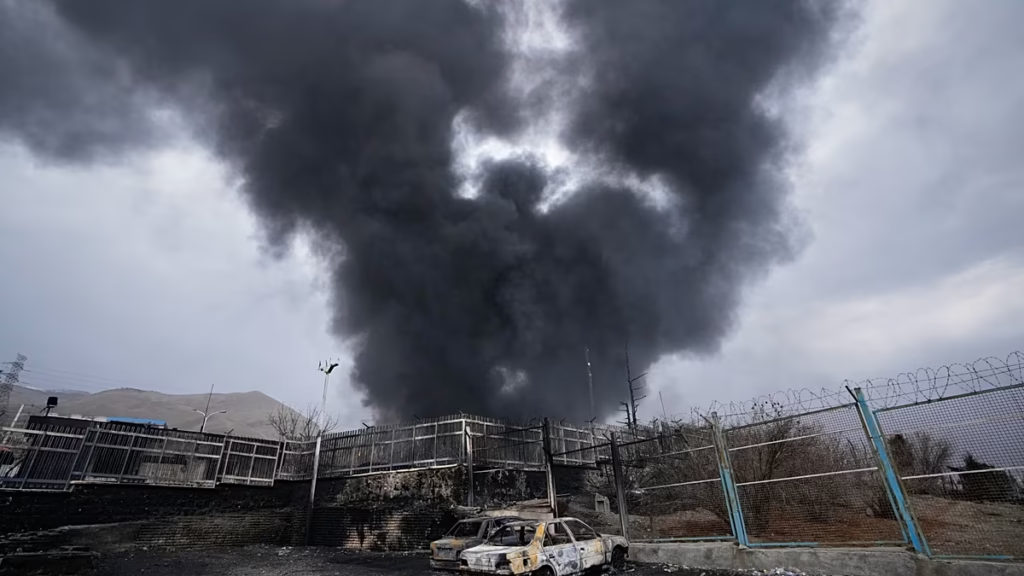
OPEC+ may approve an oil output increase on Sunday, four sources from the group said, a rise that will largely exist on paper as its key members are unable to raise production due to the U.S.-Israeli war with Iran.
That raises a critical question: what does an output hike actually mean when producers physically cannot deliver more oil?
Even countries outside the Gulf face limitations. Russia, for instance, remains constrained by Western sanctions and infrastructure damage tied to its ongoing war with Ukraine. In short, the group’s spare capacity looks far thinner than it appears on paper.
Still, the proposed increase carries symbolic weight. It signals intent. It tells markets that once conditions stabilize, supply could rebound quickly.
Supply Shock Sends Prices Soaring
The scale of disruption is staggering. Within just a month, the crisis has removed an estimated 12 to 15 million barrels per day from global supply. That amounts to as much as 15% of the world’s oil output.
Unsurprisingly, prices have surged.
Crude has already climbed to a four-year high, settling around $120 per barrel. However, the ceiling may be far higher if disruptions persist.
Oil prices could spike above $150 — an all-time high — if flows via Hormuz remain disrupted into mid-May, JPMorgan said on Thursday.
Recent market movements reflect that growing anxiety. U.S. crude futures jumped sharply, while Brent crude followed closely behind, underscoring just how sensitive markets are to supply shocks of this magnitude.
OPEC+ Strategy Under Pressure
At its previous meeting on March 1, OPEC+ had agreed to a relatively modest increase of 206,000 barrels per day for April. At the time, the full scale of the disruption had yet to unfold.
Now, the group faces a far more complex challenge.
Sunday’s meeting will discuss OPEC+ quotas for May, sources said.
However, analysts remain skeptical about the immediate impact of any decision. As long as the Strait of Hormuz remains disrupted, additional quotas may do little to ease supply constraints.
An increase will have little immediate impact on supply but would signal readiness to raise output once Hormuz reopens, OPEC+ sources have said. Consultancy Energy Aspects called the increase “academic” as long as disruptions in the strait persist.
Markets Brace For What Comes Next
So where does this leave global energy markets?
For now, uncertainty dominates. Traders are watching geopolitical developments as closely as they track supply data. Every update from the region has the potential to shift prices dramatically.
However, one thing is clear. Until the Strait of Hormuz reopens and damaged infrastructure is repaired, any talk of increased production will remain largely theoretical.
And in a market already stretched thin, even the hint of prolonged disruption is enough to keep prices elevated and volatility high.