

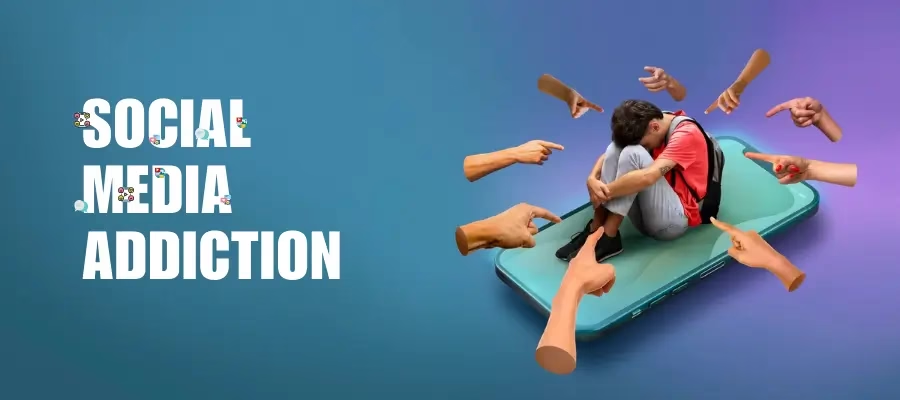
Social media feels harmless at first. A few minutes of scrolling can turn into an hour without much effort. One post leads to another, then another, until the brain starts craving the next update, like, or message. That pattern is now common across all age groups, especially among people who spend large parts of the day on their phones.
The real issue is not just screen time. It is how repeated exposure affects attention, mood, sleep, and even the brain’s reward system. The phrase social media addiction effects is often used to describe emotional and mental changes linked to heavy use. While social platforms help people connect, they can also shape habits in ways that are hard to notice until the effects start showing up in daily life.
Social Media Addiction Effects on Daily Brain Function
The biggest concern around social media addiction effects is that they often develop slowly. A person may not notice the change right away because scrolling becomes part of the routine. Over time, though, the brain starts adapting to constant stimulation, fast rewards, and endless information.
This can affect several areas of daily function:
- Focus becomes weaker
- Patience gets shorter
- Mood depends more on online feedback
- Quiet moments feel uncomfortable
- Real-life tasks seem less interesting
The brain likes rewards. Social media delivers them quickly through likes, comments, videos, alerts, and new content. Each of these can trigger a small burst of pleasure. When this happens again and again, the brain may begin to prefer digital stimulation over slower real-world activities like reading, studying, or having a long conversation.
Why quick rewards matter
Most social media platforms are built to keep users engaged. The brain responds strongly to unpredictability. When a person does not know what the next post will be, the curiosity grows. That uncertainty keeps people checking again and again.
This creates a loop. The user scrolls, gets something entertaining or emotionally exciting, then wants more. That cycle can become hard to break.
How Dopamine Shapes Scrolling Habits
One reason social media addiction effects are so powerful is dopamine. Dopamine is often called the brain’s reward chemical, though its role is more complex than simple pleasure. It also helps drive motivation, anticipation, and habit formation.
When someone gets a like, sees a funny video, or receives a message, dopamine activity can increase. This does not mean social media is identical to substance addiction, but it does mean the brain can build strong repetitive habits around it.
The problem is not dopamine alone. The problem is repeated exposure to small, fast rewards throughout the day. This can train the brain to seek constant stimulation.
The habit loop becomes stronger
A simple pattern often develops:
- A person feels bored, stressed, or lonely
- They open a social app
- The app provides distraction or reward
- The brain remembers that relief
- The cycle repeats the next time discomfort appears
This is why many people reach for their phones without even thinking. The action becomes automatic. The brain starts linking social media with comfort, escape, and quick emotional change.
Attention Span Often Gets Worse
One of the clearest social media addiction effects is reduced attention span. Social platforms train the brain to process short bursts of content at high speed. A person may watch a 10-second clip, read half a caption, swipe away, then repeat that pattern dozens or hundreds of times in one sitting.
That habit can make slower tasks feel difficult.
Reading a book, listening to a lecture, working on a report, or even watching a full movie can feel less satisfying because those activities do not deliver rewards as quickly. The brain starts expecting novelty all the time.
Common signs include:
- Trouble staying focused on one task
- Constant urge to check the phone
- Feeling restless during quiet work
- Difficulty reading long text
- Getting bored very quickly
Multitasking is not always productive
Many people think they are multitasking well when they switch between work and social media. In reality, frequent switching can hurt concentration. The brain needs time to settle into a task. Every interruption breaks that rhythm.
Even short checks can reduce mental efficiency. A person may return to work, but their mind often stays partly tied to the content they just saw.
Emotional Health Can Shift in Subtle Ways
Another major part of social media addiction effects involves emotional well-being. Social media can create excitement, but it can also increase anxiety, stress, insecurity, and emotional exhaustion.
This happens for several reasons. People compare their real lives to curated versions of other people’s lives. They see success, beauty, travel, money, popularity, and relationships presented in polished ways. Even when they know the content is filtered, the emotional impact can still be strong.
Comparison becomes a mental habit
Constant comparison can lead to thoughts like:
- Everyone else is doing better
- I am falling behind
- My life looks boring
- I do not look good enough
- I am missing out
These thoughts can slowly lower self-esteem. They can also increase feelings of sadness or dissatisfaction.
Online validation can affect mood
When mood starts depending on likes, comments, and views, emotional stability becomes weaker. A post that performs well may feel exciting. A post that gets ignored may feel personal, even when it is not.
This creates emotional ups and downs based on digital reactions. Over time, that can make self-worth feel less internal and more dependent on outside approval.
Sleep Problems Are Common
Sleep is another area where social media addiction effects show up clearly. Many people use their phones right before bed, and some continue scrolling long after they planned to sleep. This hurts rest in more than one way.
First, the content itself keeps the brain alert. Emotional posts, news, arguments, and fast videos make it harder to relax. Second, blue light from screens may interfere with the body’s sleep signals. Third, the habit of “just a few more minutes” often turns into lost sleep.
Poor sleep can lead to:
- Brain fog
- Irritability
- Weak concentration
- Low energy
- Poor memory
Late-night scrolling affects the next day
When sleep quality drops, the brain struggles the next morning. Focus becomes harder, mood becomes less stable, and stress feels stronger. Then many people turn to social media again for distraction or comfort, which keeps the cycle going.
That is one reason social media addiction effects can build over time. One problem feeds the next.
Memory and Learning May Suffer
Heavy social media use can also affect memory and learning. The brain remembers information better when it pays deep attention. But scrolling encourages shallow attention. Content is consumed fast, then replaced immediately by something new.
This weakens mental processing. A person may see a lot of information without truly absorbing much of it.
Too much input creates overload
The brain is constantly sorting what matters. Social media floods it with headlines, jokes, trends, opinions, videos, alerts, and emotional content. That volume can lead to mental overload.
As a result, people may notice:
- Forgetting what they just read
- Trouble recalling details
- Reduced ability to study deeply
- Weak retention after online learning
- Feeling mentally crowded all day
This does not mean social media permanently damages memory in every case. But frequent, distracted use can reduce the quality of attention needed for learning.
Stress and Anxiety Can Increase
Not all social media addiction effects are dramatic. Some are quiet but serious. Anxiety is one of them. A person may feel the need to check messages immediately, respond quickly, stay updated, or keep watching what others are doing.
That constant connection creates pressure.
Fear of missing out plays a role

Fear of missing out, often called FOMO, can make people feel they must stay online. They worry about missing news, trends, events, or social moments. Even when they are tired, busy, or mentally drained, they keep checking.
This can lead to:
- Inner restlessness
- Trouble relaxing
- Nervous checking habits
- Emotional fatigue
- Increased social pressure
The brain does not get enough downtime when it is always waiting for the next alert.
Young Brains May Be More Vulnerable
The effects can be stronger in teenagers and young adults because their brains are still developing. Areas linked to self-control, decision-making, and emotional regulation continue growing through adolescence and early adulthood.
That means younger users may have a harder time managing impulses, emotional reactions, and digital comparison. Social media can shape habits early, before strong boundaries are fully in place.
This does not mean adults are safe from the same issues. It only means younger brains may be more sensitive to repeated digital reward patterns.
Signs the Habit Is Becoming Harmful
Not every active user is addicted. But some warning signs suggest the pattern may be turning unhealthy.
Watch for these signs:
- Checking apps first thing in the morning
- Feeling anxious without the phone
- Losing track of time while scrolling
- Ignoring work, study, or relationships
- Using social media to escape every bad mood
- Struggling to cut back even when trying
- Feeling worse after using it, but still returning
When these signs become frequent, the habit may be affecting brain function, mood, and daily performance more than expected.
Small Changes That Help the Brain Recover
The good news is that the brain can adapt in positive ways too. If harmful habits can be learned, healthier ones can also be built. Reducing exposure and setting limits can improve focus, sleep, and emotional balance over time.
Helpful steps include:
- Turning off non-essential notifications
- Keeping the phone away during work
- Avoiding social media before bed
- Setting daily time limits
- Taking app-free breaks during the day
- Replacing scrolling with slower activities
- Spending more time in face-to-face conversation
Build intentional use
The goal does not always have to be complete removal. For many people, a better starting point is intentional use. That means opening apps for a reason, not from reflex. It means noticing how certain content affects mood. It also means protecting quiet time so the brain can rest.
Even small boundaries can make a noticeable difference.
What Healthy Digital Use Looks Like
Healthy use is not about fear. It is about awareness. Social media can be useful for communication, learning, work, and entertainment. The danger begins when it takes control of attention, mood, and daily behavior.
A healthier pattern usually looks like this:
- Use is limited, not constant
- Mood is not tied to online approval
- Sleep is protected
- Work and study come first
- Offline relationships stay strong
- Quiet moments do not feel unbearable
The brain works best when it has balance. It needs stimulation, but it also needs rest, depth, reflection, and real-world connection.
When the Scroll Starts Controlling You
The conversation around social media addiction effects is growing because the issue is no longer rare. More people are noticing that endless scrolling changes how they think, feel, sleep, and focus. The effects may start small, but they can grow into patterns that shape everyday life.
Understanding the problem is the first step. Once people see how digital habits influence the brain, they are in a stronger position to make better choices. Social media is not going away, but the way people use it can change. And that change can help the brain feel calmer, sharper, and more in control again.