

Global markets wobbled Thursday as fresh uncertainty over a fragile Middle East ceasefire rattled investor confidence, pushing oil prices higher and reigniting fears of prolonged inflation.
After a brief sense of calm earlier in the week, tensions quickly resurfaced. As a result, traders shifted back into cautious mode, watching every headline for signals of what could come next.
Oil Jumps As Strait Of Hormuz Concerns Grow

At the center of the anxiety lies the Strait of Hormuz, a critical artery for global oil supply. However, there were few signs it had reopened in any meaningful way. Iran appeared to be asserting control, even demanding tolls for safe passage.
That uncertainty sent oil prices climbing again. Brent crude rose 2.5% to $97.28 per barrel, while U.S. WTI jumped 3.3% to $97.55. Notably, this rebound came just a day after a sharp drop, highlighting how volatile the energy market has become.
Meanwhile, the geopolitical rhetoric intensified. President Donald Trump warned that U.S. forces would remain in the Gulf until an agreement was honored, stating the “‘Shootin’ Starts,’ bigger, and better, and stronger than anyone has ever seen before.”
Stock Markets Retreat After Brief Rally
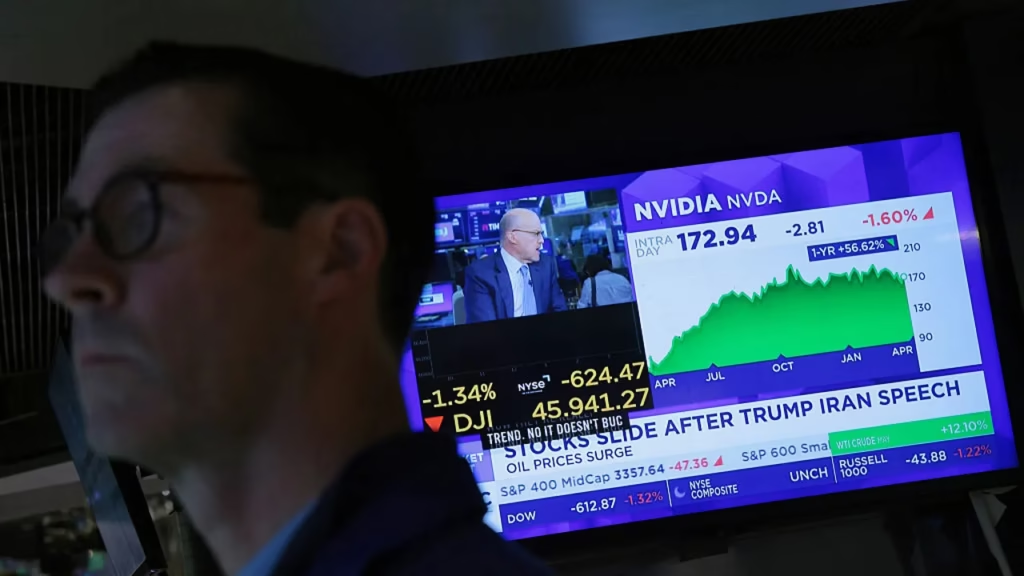
Equity markets struggled to hold onto recent gains. European shares edged lower, with the STOXX 600 slipping 0.2% after posting its strongest rally in four years just a day earlier.
In Asia, the mood was similarly cautious. Japan’s Nikkei fell 0.7% after a sharp surge in the previous session. South Korea’s market dropped 1.6%, reversing part of its earlier jump. Chinese blue chips also declined 0.6%, while a broader Asia-Pacific index lost 0.7%.
On Wall Street, futures pointed lower as well. Both the S&P 500 and Nasdaq were down around 0.4% ahead of trading.
Still, currency markets remained relatively stable. According to UBP’s Peter Kinsella, investors are grappling with an unusually unpredictable situation.
“It is very difficult for investors as they are dealing with a conflict where the protagonists don’t even know what they want,” Kinsella said.
Europe Faces Economic Pressure
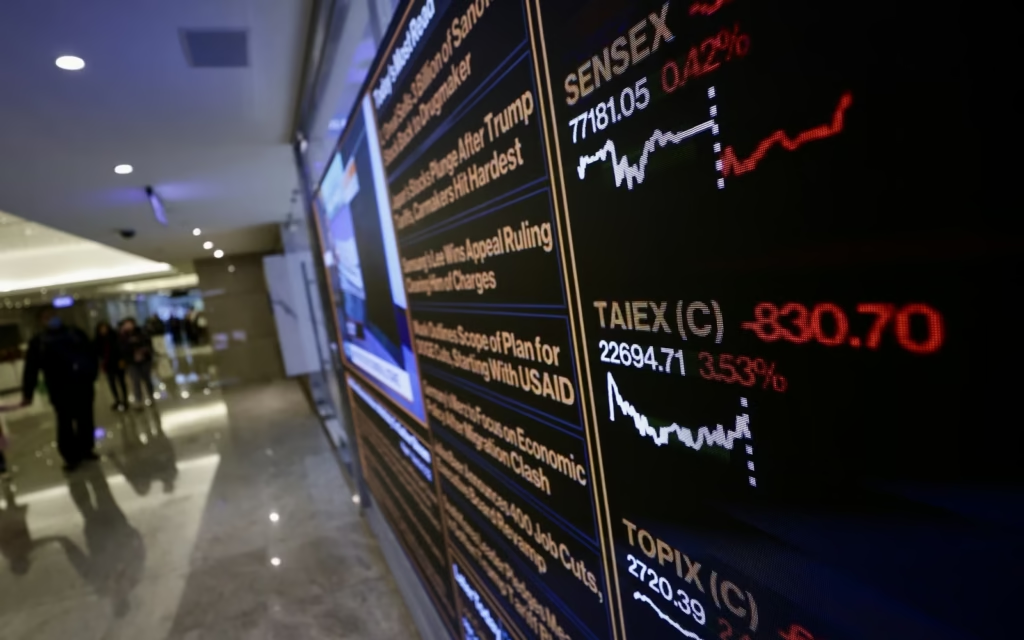
Beyond market swings, economic data added to concerns. Germany, Europe’s largest economy, showed unexpected weakness as industrial production fell in February.
That decline suggests the region may already be heading toward another quarter of contraction, even before fully absorbing the economic shock tied to the Iran conflict.
At the same time, government bond yields across Europe began rising again, increasing borrowing costs after a sharp drop earlier in the week.
Inflation Fears Back In Focus
Perhaps the biggest concern for investors now is inflation. Oil prices remain roughly 40% higher than pre-conflict levels, raising the likelihood of a global price surge.
Upcoming U.S. inflation data is expected to show another strong monthly increase of 0.4% for February. However, that figure does not yet reflect the latest spike in energy prices.
Meanwhile, State Street’s PriceStats data indicates March may have recorded the largest monthly increase in prices since at least 2008.
Adding to the pressure, minutes from the Federal Reserve’s latest meeting revealed growing concern among policymakers. Some officials believe interest rates may need to rise again to control inflation, although others still hope for eventual cuts.
Middle East Conflict Keeps Markets On Edge
Geopolitical developments continue to overshadow everything else. Israel carried out its heaviest strikes on Lebanon since the conflict with Iran-backed Hezbollah escalated last month, with more than 250 people reported killed on Wednesday.
At the same time, energy experts warn the full impact of supply disruptions is still unfolding. The International Energy Agency has indicated that Europe could begin to feel the effects of the shock as early as mid-April.
For now, markets remain highly sensitive. Every new development in the region has the potential to trigger sharp moves across oil, equities, and currencies.