
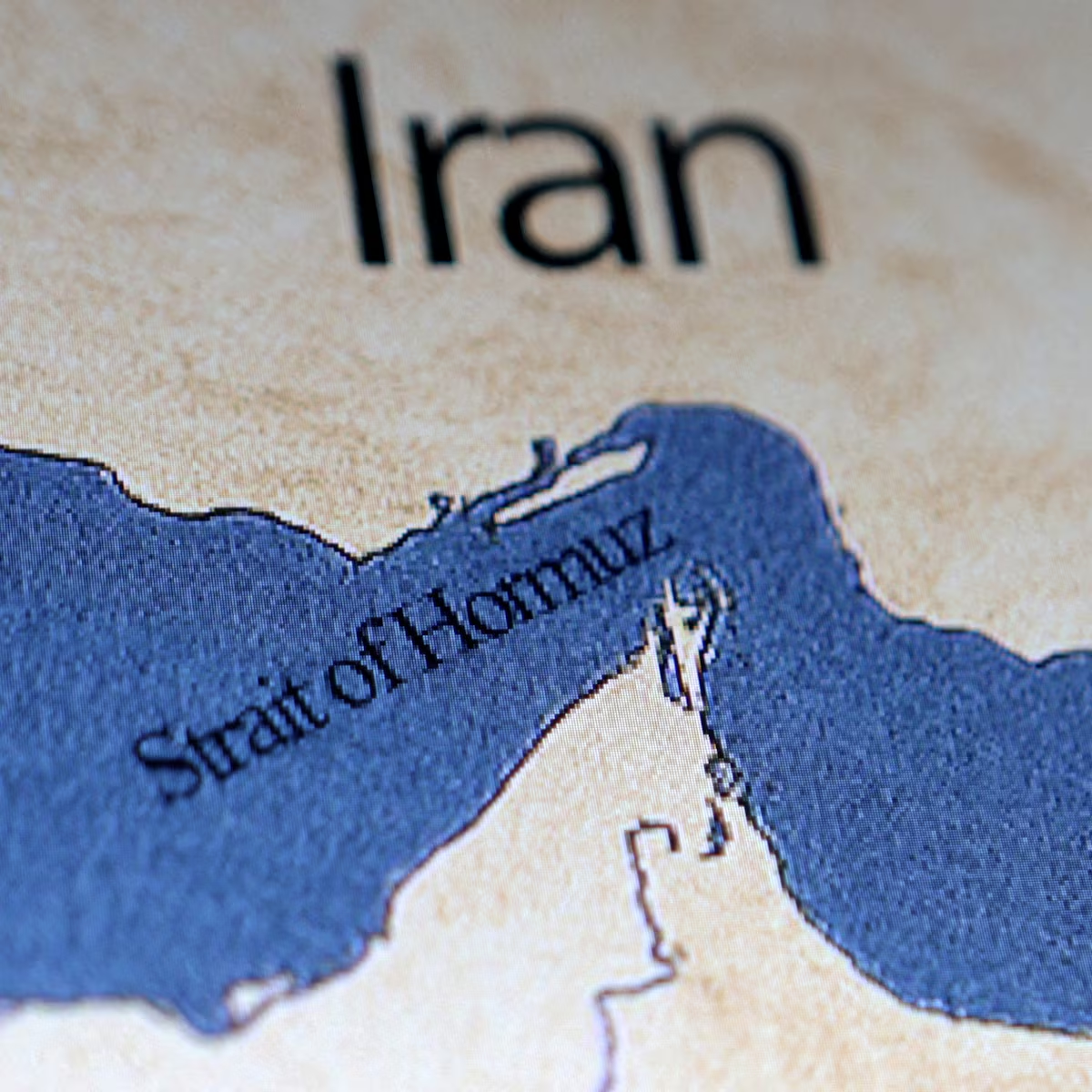
As the war involving Iran, the United States, and Israel grinds on, the Strait of Hormuz has become one of the world’s most closely watched choke points. The narrow waterway carries about one-fifth of global oil shipments, so even limited disruption can jolt markets, rattle governments, and send shipping companies scrambling.
That is exactly what happened after Tehran signaled it would tightly control passage through the strait. Oil prices surged, diplomats picked up the phone, and several countries began quietly seeking exemptions for their vessels. Iran says the passage is effectively closed to the US and its allies, but not to everyone. A small number of ships from selected countries have still been allowed through.
Iran Tightens Control Over A Global Oil Artery
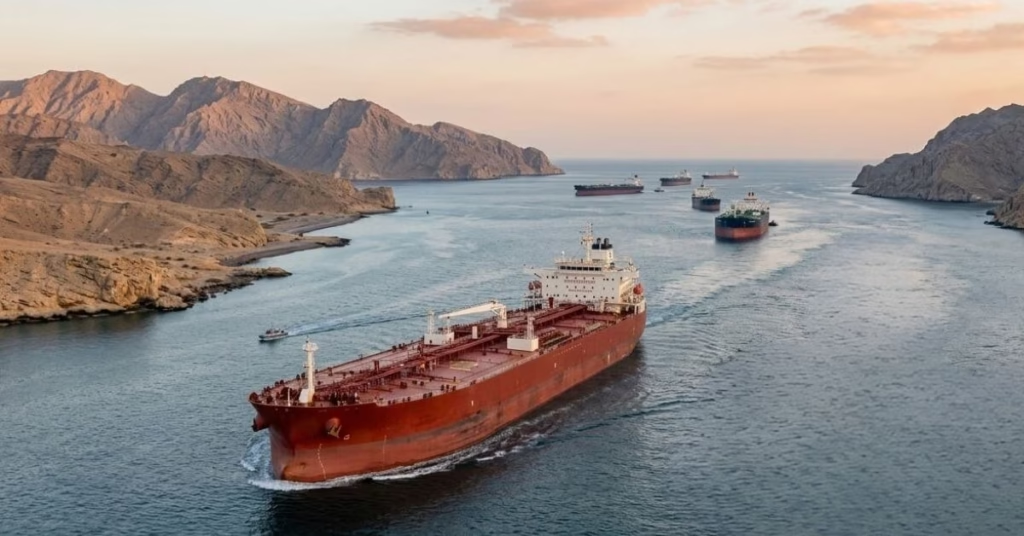
The crisis sharpened on March 2, when Ebrahim Jabari, a senior adviser to the commander-in-chief of Iran’s Islamic Revolutionary Guard Corps, announced that the strait was “closed” and warned that if any vessels attempted to cross, the IRGC and the navy would “set those ships ablaze”.
That threat alone was enough to send shockwaves through energy markets. Before the war, oil traded around $65 a barrel. After the announcement, prices surged past $100. By Monday, Brent crude, the international benchmark, had climbed to $105.70, more than 40 percent above where it stood before the conflict erupted on February 28.
Still, Iran has not imposed a total blanket shutdown. Instead, it appears to be using selective passage as leverage, allowing some ships through while keeping pressure on the broader global shipping system.
Tehran Suggests Some Countries Have Been Granted Exceptions
Iranian Foreign Minister Abbas Araghchi said on Sunday that Tehran had been “approached by a number of countries” seeking safe passage for their vessels, adding that “this is up to our military to decide.”
He also revealed that a number of ships had already crossed.
A group of vessels from “different countries” had been allowed to pass, he said, though he did not identify which nations benefited from those exemptions.
That has left governments, traders, and shipowners piecing together the picture country by country.
Pakistan Appears To Have Secured Passage
Pakistan is among the countries whose vessels appear to have moved through the strait successfully.
A Pakistani-flagged Aframax tanker called Karachi sailed out of the Gulf through the Strait of Hormuz on Sunday, according to a report by Bloomberg News.
That crossing offered one of the clearest early signs that Iran was not fully sealing the route, but instead managing it selectively.
India Wins A Rare Exception
India has also emerged as one of the countries granted access.
On Saturday, Iran’s ambassador to India, Mohammad Fathali, said Tehran had allowed some Indian vessels to pass through the Strait of Hormuz in what was described as a rare exception to the blockade that has severely disrupted global energy supplies.
The exact number of vessels was not disclosed. However, the same day, officials in New Delhi confirmed that two Indian-flagged tankers carrying liquefied petroleum gas had made it through safely.
“They crossed the Strait of Hormuz early morning safely and are en route to India,” Rajesh Kumar Sinha, special secretary of the Ministry of Ports, Shipping and Waterways, said at a news briefing in New Delhi.
That was a major relief for India, which relies heavily on imported energy and has strong incentives to keep shipping lanes open.
Turkiye Says One Ship Was Cleared
Turkiye has also managed to get at least one vessel through.
Transport and Infrastructure Minister Abdulkadir Uraloglu said a Turkish-owned ship waiting near Iran had received clearance after Turkish authorities sought permission from Tehran.
“Fifteen ships [with Turkish owners] were there. We obtained permission from the Iranian authorities for one of them that had used an Iranian port, and it passed,” Uraloglu said.
That comment suggests Turkish shipping may still face heavy restrictions, but it also shows that direct coordination with Iran can, at least in some cases, produce results.
China Is Pushing Hard For Safe Transit
China has not publicly announced that its ships have passed through, but it is widely reported to be in talks with Tehran.
According to Reuters, citing three unnamed diplomatic sources, China is pressing Iran to allow safe passage for crude oil and Qatari liquefied natural gas carriers through the strait. Beijing has significant leverage here, given its relatively friendly ties with Tehran and its deep dependence on Middle Eastern energy.
China receives 45 percent of its oil through the Strait of Hormuz. That is not a small exposure. It is a strategic vulnerability.
So while China may not be making loud public demands, it has every reason to keep the pressure on behind the scenes.
France And Italy Are Seeking Talks
France and Italy are also understood to be exploring diplomatic channels with Tehran.
According to the Financial Times, both countries have sought talks with Iran about allowing their ships to pass through the strait. That does not mean a deal has been reached, but it does show how quickly even European powers are being pulled into practical negotiations over maritime access.
When energy flows are threatened, ideology often takes a back seat to urgent logistics.
Trump Calls For A Naval Coalition, But Allies Hold Back
Against that backdrop, Donald Trump has called for a multinational naval coalition to secure the waterway.
“Hopefully China, France, Japan, South Korea, the UK, and others, that are affected by this artificial constraint will send ships to the area so that the Hormuz Strait will no longer be a threat by a nation that has been totally decapitated,” Trump wrote in a Truth Social post on Sunday.
That is a bold demand. So far, however, the response has been underwhelming.
Several countries have shown little appetite for joining a military operation in such a volatile zone. Germany and Greece both ruled out involvement on Monday.
A German government spokesperson said: “As long as this war continues, there will be no participation, not even in any effort to keep the Strait of Hormuz open by military means.”
Greece took a similar position. Prime Minister Keir Starmer also made his country’s stance clear, saying: “We will not be drawn into the wider war.”
So Trump may want a coalition, but right now, there is no sign of one forming at speed.
Analysts Say A Quick Naval Mission Is Unlikely
Security analysts say the reluctance is not just political. It is practical too.
Rodger Shanahan, a Middle East security analyst, said it is “unlikely” US allies will get involved in securing the Strait of Hormuz as the Trump administration has proposed.
He argued that many allies opposed the war from the beginning, which makes them less likely to support its consequences now.
“Besides, there’s a practical issue. If you want naval support for some kind of coalition protection operation, it takes you a long time to get ships to sail to that area. You can’t do this kind of stuff on the fly.”
That is the heart of the problem. Even if governments wanted to help, moving naval assets into position is not something that happens overnight.
A Choke Point Turned Diplomatic Battleground
The Strait of Hormuz has always been strategically important. Now it is something even more volatile, a diplomatic bargaining chip, an energy market trigger, and a test of who can still move through one of the world’s most sensitive waterways.
Iran has made clear it is willing to weaponize access, but not indiscriminately. Instead, it is making case-by-case decisions, allowing some vessels through while keeping broader pressure firmly in place.
That selective approach may be giving Tehran more leverage, not less. Countries that need oil are negotiating. Markets are reacting. And the world is being reminded, once again, just how much power can sit inside a narrow strip of water.