
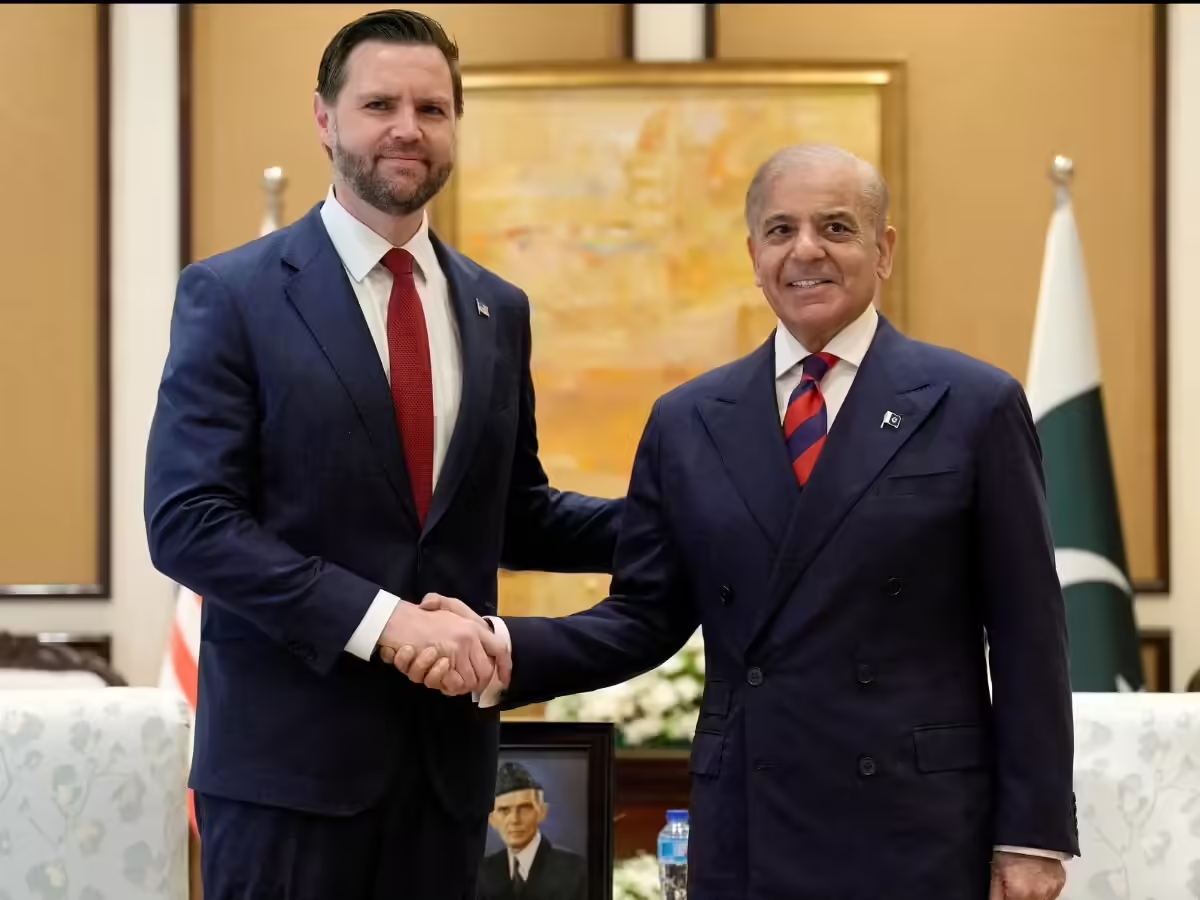
After six weeks of escalating conflict, a dramatic diplomatic shift is underway. The United States and Iran are preparing for their most senior face-to-face meeting since the Islamic Republic was established in 1979, a moment that feels as risky as it is historic.
Led by Vice President JD Vance and Iran’s Parliament Speaker Mohammed Ghalibaf, the talks represent a stunning pivot in a crisis that, until recently, seemed locked in a cycle of military escalation. But beneath the surface, serious questions remain. Is this a genuine step toward peace, or simply political theater with global consequences?
A High-Stakes Meeting With Little Preparation
Unlike past negotiations, this round of talks appears to have come together quickly. There has been little visible diplomatic groundwork, and the agenda remains murky.
That alone raises eyebrows. Previous US-Iran negotiations, particularly during President Barack Obama’s administration, took months of detailed preparation. Back then, Secretary of State John Kerry and Iranian Foreign Minister Javad Zarif met repeatedly, supported by teams of experts working behind the scenes in Switzerland and Vienna.
This time, the process looks very different. And that difference could matter.
Meanwhile, President Donald Trump attempted to frame the talks with a two-week ceasefire. However, the truce has already shown signs of strain. His demand for a “complete, immediate, and safe” reopening of the Strait of Hormuz has not been fulfilled.
Iran, for its part, insists that any ceasefire must extend to Lebanon, where it backs Hezbollah. Vance has dismissed that claim as a misunderstanding.
A Diplomat’s Warning: Expectations Should Stay Low
For seasoned negotiators, the lack of preparation is troubling.
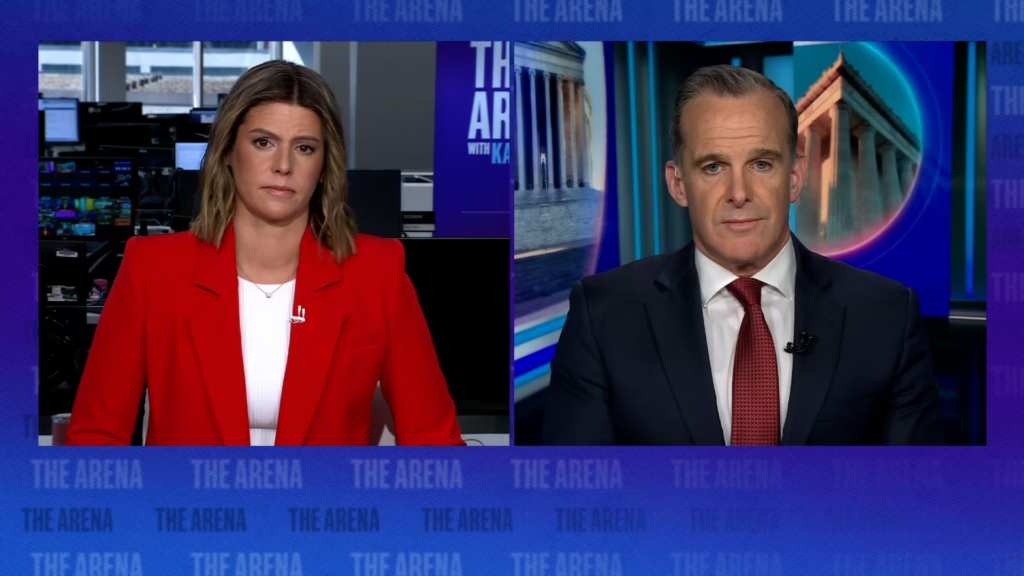
Having spent years navigating similar talks, Brett McGurk makes it clear he is skeptical. He points to the absence of any clear sign that the two sides are narrowing their differences.
That concern is hard to ignore. Talks with Iran are rarely quick or straightforward. Even under the best conditions, progress tends to be slow, complex, and fragile.
So what can realistically come out of Islamabad?
In terms of concrete outcomes, likely very little. Breakthroughs are not expected. Still, symbolism carries weight, and in this case, it could shape the next phase of the conflict.
Downside Risk: Strengthening Iran’s Position
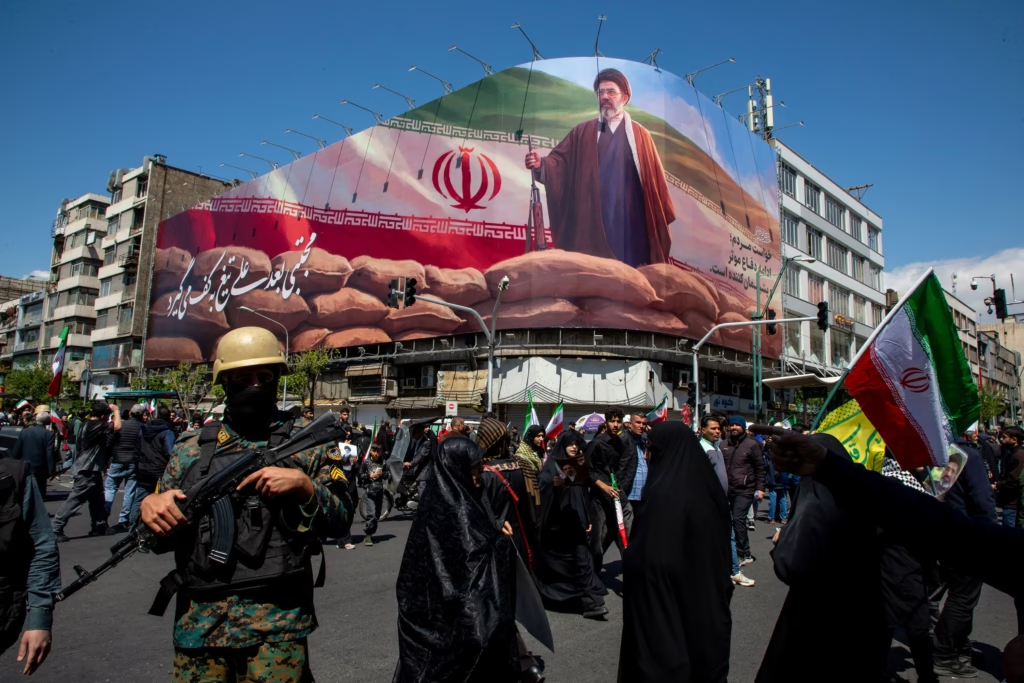
From Washington’s perspective, recent military actions have dealt significant blows to Iran. Its missile and drone capabilities have been weakened, and its nuclear program has suffered setbacks.
At the same time, internal pressures are mounting inside Iran. Economic struggles and leadership losses have created cracks in the system.
However, Tehran sees things differently.
Despite its setbacks, Iran believes it holds a powerful advantage. For the first time, it has demonstrated control over the Strait of Hormuz, a vital global shipping route. That control gives it leverage over international energy markets and, by extension, the global economy.
Here’s the concern. By agreeing to a high-profile meeting while Iran maintains that control, the United States risks validating Tehran’s strategic position.
For Iran, the meeting itself may be the victory.
Upside Potential: Breaking a Longstanding Taboo
Yet there is another side to the story, and it could be just as significant.
For decades, Iran has refused direct high-level engagement with the United States. Its leadership has framed itself as standing apart from what it calls the “Great Satan,” avoiding face-to-face diplomacy while pursuing its regional goals through indirect means.
This meeting could shatter that long-standing posture.
If it does, it may create new internal tensions within Iran’s leadership. Engaging directly with Washington could challenge the ideological foundations that have defined the regime since its early days.
History offers a possible parallel. When Ronald Reagan met Soviet leader Mikhail Gorbachev, it marked a turning point that eventually contributed to the collapse of the USSR.
Could something similar happen here? It is far from certain, but the possibility exists.
The Human Factor: Optics And Internal Pressure
There is also a domestic dimension inside Iran that cannot be ignored.
Thousands of Iranians were killed earlier this year while protesting for political change. For many, seeing their leaders sit down with US officials could be deeply unsettling.
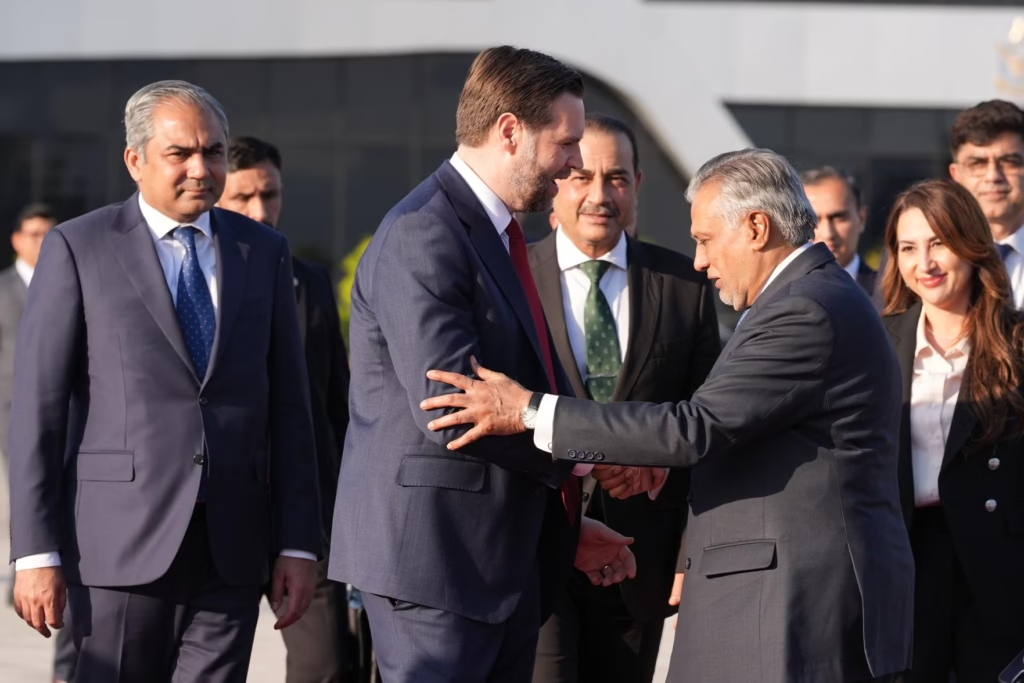
Even observers like McGurk admit discomfort with the optics of Vance meeting Ghalibaf, a figure known for his hardline stance and past role in law enforcement.
Still, that discomfort may also signal opportunity. By breaking its own rules, Iran’s leadership could expose internal divisions that weaken its grip over time.
Trump’s Strategy: Pressure And Opportunity
This meeting does not exist in isolation. It follows another major shift in US policy.
Earlier this year, Trump authorized military strikes inside Iran, breaking a long-standing restraint. For years, Tehran believed Washington would avoid such action due to fears of escalation, particularly around the Strait of Hormuz.
That assumption no longer holds.
Now, the US enters negotiations from a position of demonstrated willingness to act. That changes the dynamics significantly.
What Happens Next?
If the talks proceed as planned, the approach will matter as much as the content.
A strategy similar to Reagan’s Cold War diplomacy could offer a path forward. Extend a willingness to engage, but remain firm on key demands.
Those demands are clear. Reopen the Strait of Hormuz. Address nuclear enrichment. Reduce stockpiles. Fail to meet them, and the pressure will intensify, both economically and militarily.
Iran, meanwhile, will likely lean heavily on its newfound leverage in the Strait. But that strategy carries risks. US forces remain nearby, ready to respond if diplomacy collapses.
Trump underscored that tension when he said Iran’s control of the Strait “is not the agreement we have!”
A Moment Of Uncertain Consequence
This meeting is not just another diplomatic event. It is a test of strategy, perception, and resolve on both sides.
The risks are real. So are the opportunities.
One thing is clear. In this rare moment of direct engagement, the balance of power, and the future of the region, may hinge on what happens next.b