


U.S. crude oil inventories posted another steep decline last week, extending a recent trend of large drawdowns. However, the latest industry estimates also revealed an unexpected increase in gasoline supplies, adding a new twist to the market’s ongoing balancing act.
The latest figures arrive as oil prices continue to face pressure from concerns over weakening demand, particularly from China, while traders assess whether global supply and demand conditions will stabilize in the coming months.
Crude Stockpiles Drop Far More Than Expected
According to estimates released by the American Petroleum Institute, U.S. crude oil inventories fell by 6.75 million barrels during the week ending May 29. The decline followed a 2.8 million-barrel draw recorded the previous week.
Market analysts had been anticipating a smaller reduction of roughly 3.6 million barrels, making the latest drop significantly larger than expected.
Even with several weeks of sizable inventory declines, crude stockpiles remain higher on a year-to-date basis. API data indicates that U.S. crude inventories have increased by approximately 16 million barrels since the beginning of the year.
Strategic Petroleum Reserve Continues To Shrink
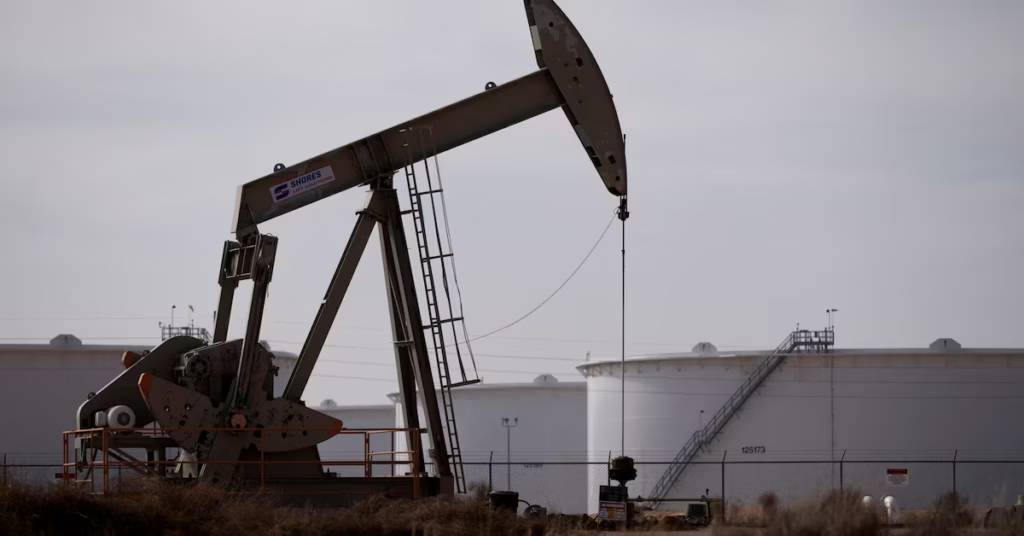 Meanwhile, the Strategic Petroleum Reserve continued its downward trajectory.
For the week ending May 29, another 8 million barrels were removed from the reserve. That reduction lowered total SPR holdings to 357.1 million barrels, marking the lowest level since January 2024.
The current inventory level also remains 368 million barrels below the reserve’s maximum storage capacity, highlighting the extent of the drawdown efforts aimed at easing market pressures.
U.S. Oil Production Edges Higher
Domestic crude production continued to climb, although only modestly.
The latest data from the Energy Information Administration showed U.S. output reaching 13.715 million barrels per day for the week ending May 22. That figure was up from 13.702 million barrels per day in the prior week.
Compared with the same period last year, U.S. production has increased by 314,000 barrels per day, underscoring the resilience of domestic supply despite market volatility.
Oil Prices Drift Lower Amid Demand Concerns
Oil markets were trading lower ahead of the inventory report as investors weighed global demand trends against supply fundamentals.
At 6:49 a.m. ET, Brent crude was trading at $93.88 per barrel, down 1.12% on the day. The benchmark has lost nearly $2 per barrel since the previous Tuesday.
West Texas Intermediate crude also moved lower, falling $1.03, or 1.12%, to $92.13 per barrel. That represented a decline of roughly $1.50 from levels seen a week earlier.
Market sentiment has been influenced by expectations that current supply imbalances could eventually correct themselves. At the same time, softer crude demand from China has continued to weigh on prices.
Gasoline Inventories Post Surprise Build
 While crude inventories fell sharply, gasoline supplies moved in the opposite direction.
Gasoline inventories increased by 3.45 million barrels during the reporting week. The gain reversed the previous week’s decline of 3.199 million barrels.
The build came as a surprise given that gasoline inventories had already been sitting about 6% below the five-year seasonal average, according to the latest government data.
Distillate And Cushing Stocks Continue Lower
Distillate inventories also declined, though at a much slower pace than in previous weeks.
Stocks of diesel and related fuels dropped by 214,000 barrels after falling by 1.1 million barrels in the preceding week. Despite the smaller decline, distillate inventories remain well below historical norms and were already 11% under the five-year average as of the week ending May 22.
At the key storage hub in Cushing, Oklahoma, inventories continued to tighten.
Cushing crude stocks fell by 279,000 barrels during the latest reporting period. The decline followed a much larger drop of 2.875 million barrels recorded a week earlier, extending the drawdown trend at the delivery point for WTI crude futures.
Market Watches Supply-Demand Balance
The latest inventory data paints a mixed picture for energy markets. Crude stockpiles are falling rapidly, domestic production remains strong, and key storage hubs continue to see inventory reductions.
However, the unexpected increase in gasoline supplies and persistent concerns over global demand, especially from China, suggest that traders remain cautious about the direction of oil prices in the weeks ahead.