

Wall Street edged higher Tuesday, offering a cautious sigh of relief after weeks of volatility driven by geopolitical tensions and rising oil prices. Investors, however, are far from relaxed. With the Federal Reserve stepping into a crucial policy meeting, markets are bracing for signals that could shape the months ahead.
Travel Stocks Lead Market Rebound
Airline and travel shares staged a strong comeback, reversing recent declines tied to escalating conflict in the Middle East and surging fuel costs.
Delta Air Lines surged more than 6%, while American Airlines climbed 3.5% after both companies lifted their revenue forecasts for the current quarter. United Airlines also joined the rally, gaining 3.2%.
Meanwhile, the broader travel sector followed suit. Norwegian Cruise Line Holdings rose over 2%, and Expedia Group jumped more than 4%, signaling renewed investor confidence in travel demand despite macroeconomic uncertainty.
Fed Meeting Takes Center Stage
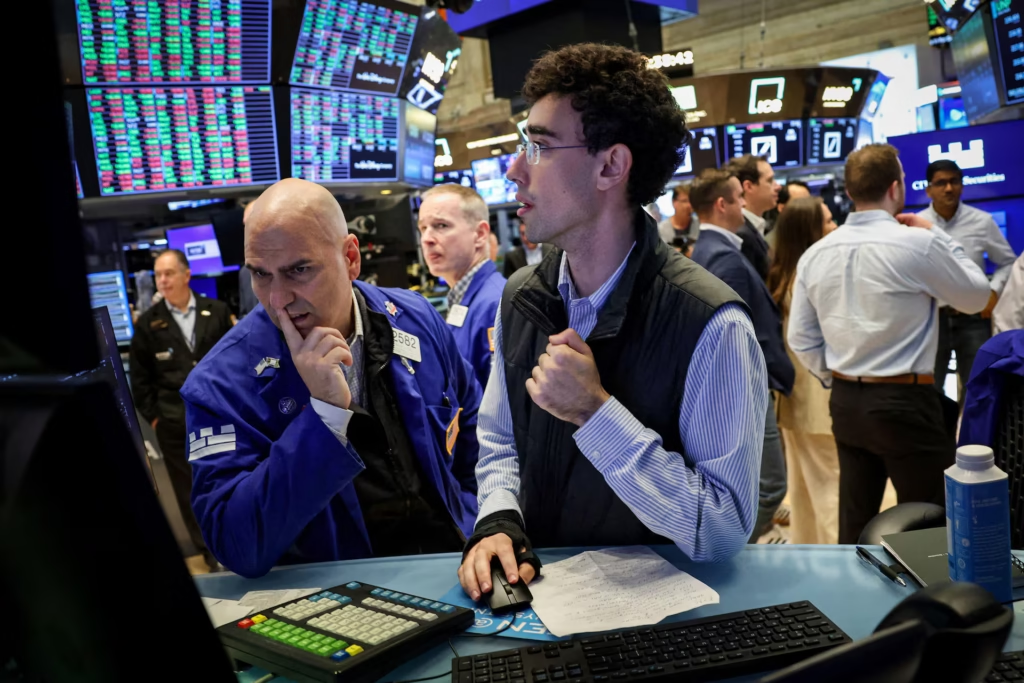
Even as equities moved higher, attention remained firmly fixed on the Federal Reserve. The central bank kicked off its two-day policy meeting, with markets widely expecting interest rates to remain unchanged.
Still, the stakes are high. Persistent inflation risks, fueled in part by elevated oil prices, are colliding with signs of a softening labor market. Traders are now recalibrating expectations, with forecasts pointing to just one 25-basis-point rate cut later this year, a notable shift from earlier projections.
Oil Prices And Geopolitics Stir Concerns
At the heart of investor anxiety lies the potential disruption of global energy supplies. Concerns about the closure of the Strait of Hormuz have pushed crude prices close to $100 per barrel, intensifying inflation fears.
That said, market participants are watching closely to see how policymakers interpret these developments.
“The place where we could get in trouble with this is if the Fed views the oil shock as inflationary and decides to respond with more hawkish monetary policy,” said Ross Mayfield, an investment strategist at Baird Private Wealth Management.
Ross Mayfield added, “The best-case scenario would be some confirmation tomorrow that the Fed is monitoring the situation, but kind of adheres to what they’ve done in the past, which is try to look through big oil shocks.”
Valuations Ease But Remain Elevated
Meanwhile, broader market valuations have begun to cool. The S&P 500 has slipped roughly 4% from its record high in late January, pressured by concerns over expensive AI-related stocks and ongoing geopolitical uncertainty.
Even with that pullback, valuations remain above historical norms. The index is currently trading at around 21 times expected earnings, still higher than its five-year average of 19.
Market Closes With Modest Gains
By the closing bell, major indexes finished slightly higher. The S&P 500 gained 0.25%, the Nasdaq rose 0.47%, and the Dow Jones Industrial Average edged up 0.10%.
Still, beneath the surface, caution lingers. Investors are navigating a complex mix of rising energy costs, geopolitical instability, and uncertain monetary policy. The next move from the Federal Reserve could prove decisive.