
A fierce legal battle over President Donald Trump’s controversial White House ballroom project has now pulled another far more secretive issue into public view, an underground military complex being built beneath the grounds.
While courtroom arguments have focused on preservation concerns and executive authority, attention has shifted below the surface. There, the administration says a major national security upgrade is underway.
The project would reportedly replace the long-rumored Presidential Emergency Operations Center, better known as the PEOC, the hardened bunker beneath the White House that has served presidents during moments of crisis for decades.
Court Fight Puts Underground Project In Spotlight
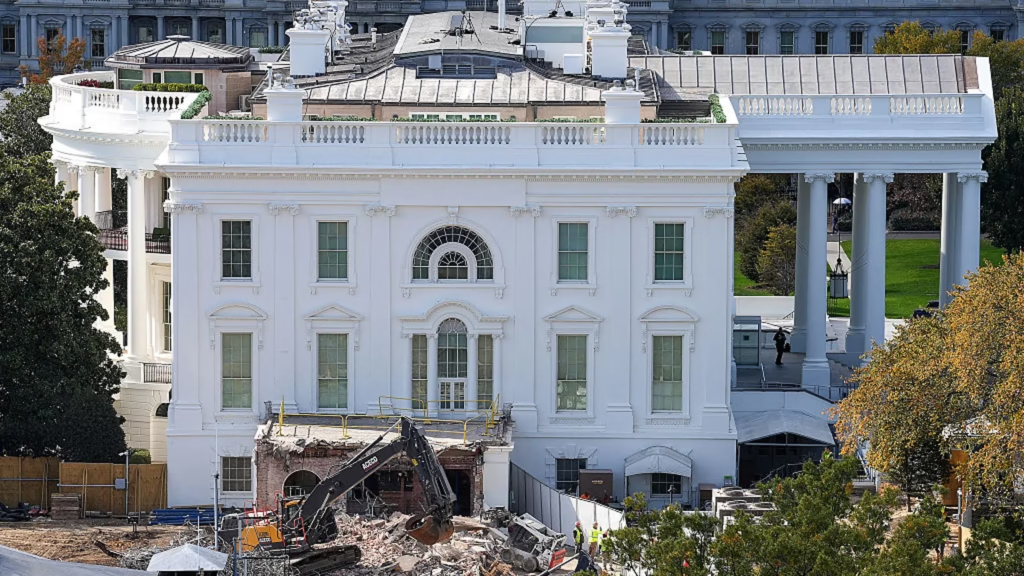
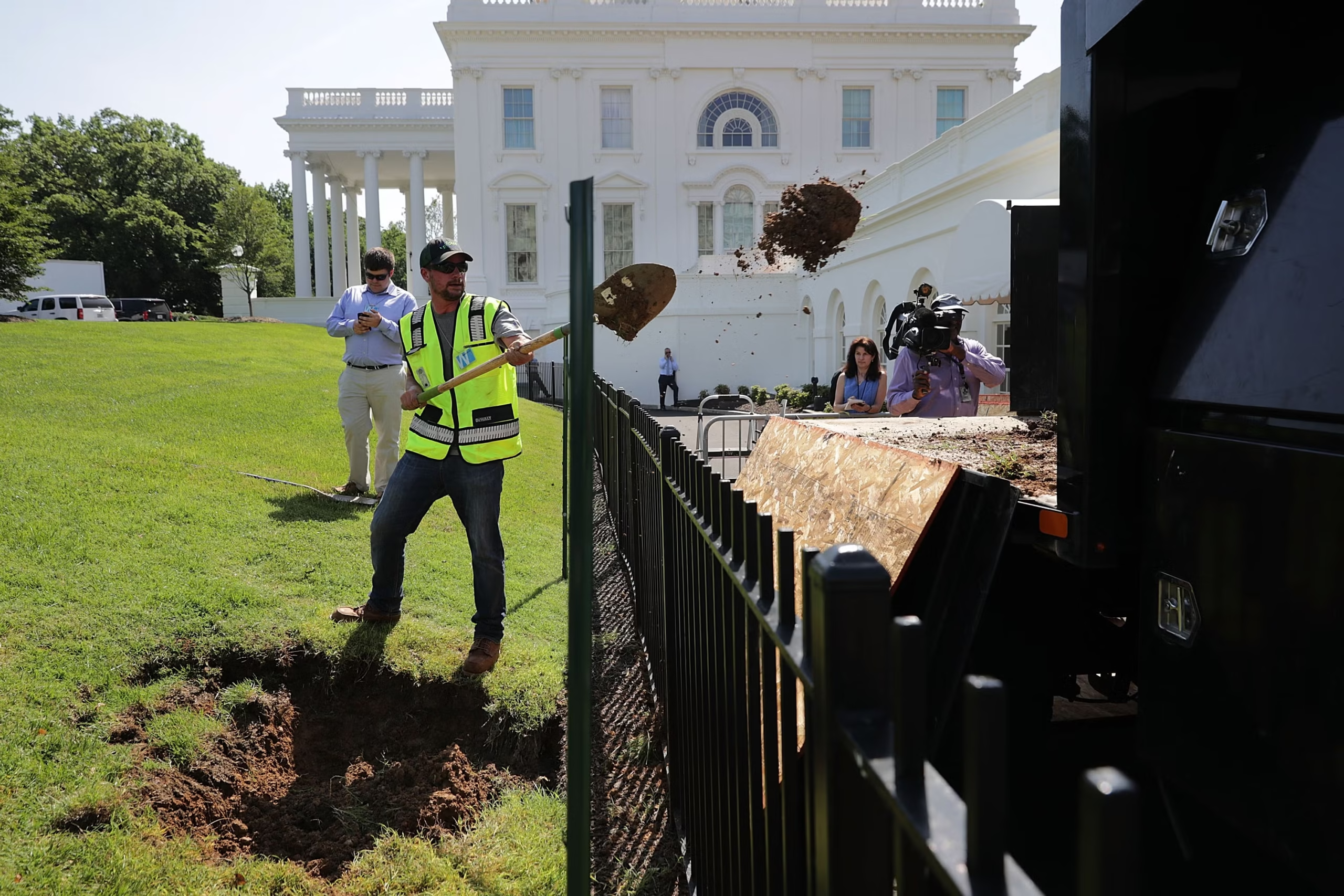
The controversy began after the East Wing was demolished to make room for Trump’s planned $400 million ballroom.
Historic preservation advocates sued, arguing the construction violated federal rules. On March 31, a judge ordered the ballroom project halted unless Congress authorizes it. However, he left room for certain work tied to White House protection and security.
That exception matters.
This week, the judge ruled all aboveground construction must stop without congressional approval. Still, underground work tied to the military complex can continue.
That means the most secretive part of the project may now become the most active.
What Is The PEOC?
The Presidential Emergency Operations Center dates back to World War II. Built as a secure bomb shelter under the East Wing, it was designed to protect senior officials during an attack.
According to a 2024 social media post by the White House Historical Association, “this secret space featured thick concrete walls and steel-sheathed ceilings with a small presidential bedroom and bath inside. Nearby rooms provided ventilation masks, food storage, and communications equipment.”
“The space is far more modern today,” the organization added, noting that “it can become a command center for the president as needed.”
Though largely hidden from public view, the bunker has surfaced during some of the nation’s darkest moments.
Inside The White House On 9/11
During the September 11 terrorist attacks, top officials were moved into the PEOC. Then-Vice President Dick Cheney was escorted there, while President George W. Bush later entered the facility that evening.
Former First Lady Laura Bush described the tense experience in her memoir.
“I was hustled inside and downstairs through a pair of big steel doors that closed behind me with a loud hiss, forming an airtight seal,” she wrote.
“I was now in one of the unfinished subterranean hallways underneath the White House, heading for the PEOC,” she continued. “We walked along old tile floors with pipes hanging from the ceiling and all kinds of mechanical equipment. The PEOC is designed to be a command center during emergencies, with televisions, phones, and communications facilities.”
Her account offered one of the rare public glimpses inside the classified shelter.
Trump Also Used Bunker During 2020 Protests
Years later, Trump was briefly taken to the bunker during unrest outside the White House in May 2020 after the killing of George Floyd.
He later said he “went down during the day and I was there for a tiny little short period of time,” but claimed that “it was much more for an inspection.”
Trump’s Vision For A New White House bunker rebuild
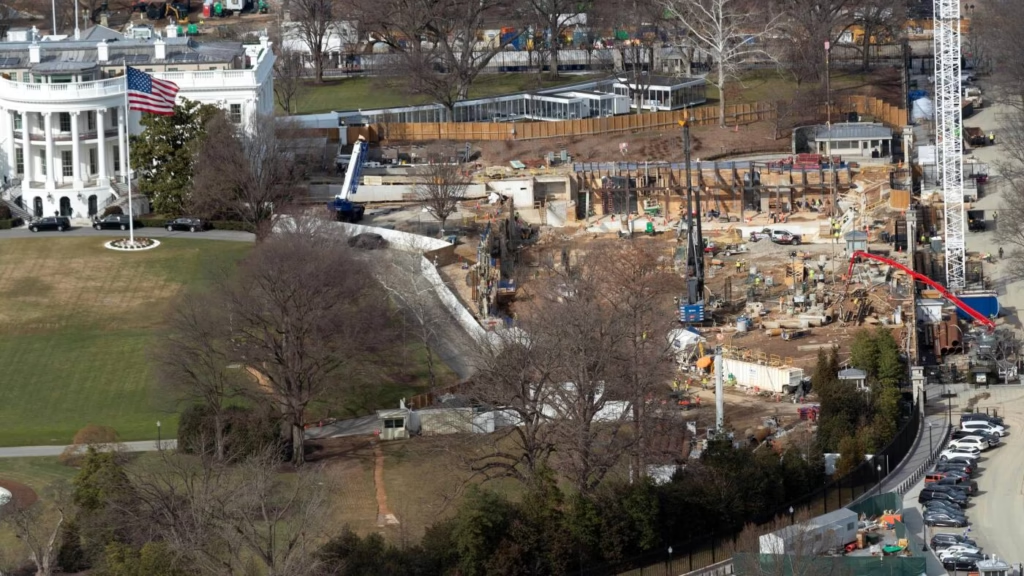
In recent weeks, Trump has openly described an ambitious and heavily fortified replacement facility.
“The military’s building a massive complex under the ballroom, and that’s under construction and we’re doing very well,” he told reporters on Air Force One on March 29. “The ballroom essentially becomes a shed for what’s being built under the military, including from drones and including from any other thing.”
He also said the ballroom would have “high grade bulletproof glass.”
Days later, he defended continuing work after the court ruling.
“We are allowed to continue building as necessary to cover the safety and security of the White House and its grounds,” Trump said. “Well, that’s what we’re doing, because everything’s bulletproof glass, etc. etc., including the ballroom.”
“We have bio defense all over,” he continued. “We have secure telecommunications and communications all over. We have bomb shelters that we’re building. We have a hospital and very major medical facilities that we’re building. We have all of these things, so that’s called: I’m allowed to continue building as necessary.”
Missile Resistance, Medical Facilities And Secrecy
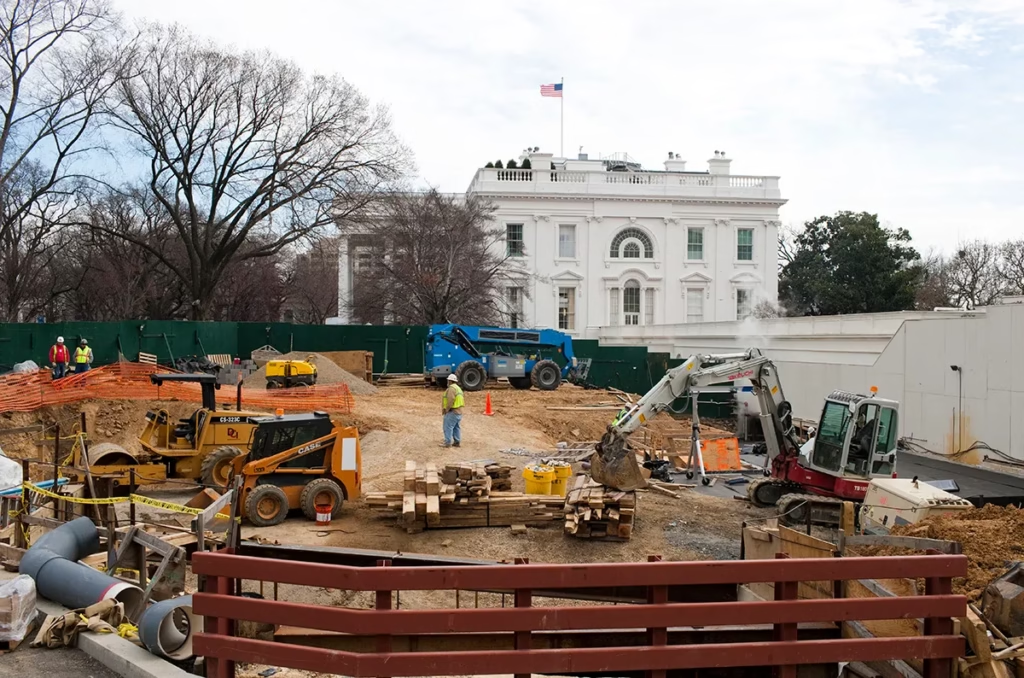
Court filings from administration attorneys offered additional clues about the project.
They cited plans for “protective missile resistant steel columns, beams, drone proof roofing materials, and bullet, ballistic, and blast proof glass,” adding those materials “are largely made, being used, and/or on their way to the project.”
“Likewise, the bomb shelters, hospital and medical area, protective partitioning, and Top Secret Military installations, structures, and equipment, are built and/or ready to be built, installed, and placed,” they continued.
Even so, many specifics remain hidden.
Secret Service Deputy Director Matthew Quinn reportedly told the court that pausing construction would “consequently hamper the Secret Service’s ability to meet its statutory obligations and protective mission.”
He also offered to brief the judge privately on “law enforcement sensitive and/or classified information.”
Meanwhile, White House director of management and administration Joshua Fisher acknowledged the classified nature of the work earlier this year.
“There are some things regarding this project that are, frankly, of top-secret nature that we are currently working on.”
When pressed for more details, Press Secretary Karoline Leavitt shut the door quickly.
“I cannot tell you more about that actually.”
“The military is making some upgrades to their facilities here at the White House, and I’m not privy to provide any more details on that,” she said.
What Happens Next?
For now, the ballroom remains stuck in court. But underground, construction tied to White House security appears free to continue.
That leaves Washington with two parallel dramas, one public and political, the other buried in secrecy beneath America’s most famous address.