
Humanity has returned to the Moon’s doorstep, and this time, the view is unlike anything seen before. NASA’s Artemis II astronauts have delivered breathtaking first-look images from deep space, capturing moments that redefine how we see our nearest celestial neighbor.
Released on April 7, 2026, these images were taken just a day earlier during a seven-hour journey across the Moon’s far side. The mission marks a historic step forward, not just in exploration, but in perspective.
Historic Return To Lunar Vicinity
For the first time in decades, astronauts have traveled beyond low Earth orbit and circled the Moon. Artemis II is not a landing mission, but what it captured may be just as important.
During the flyby, the Orion spacecraft passed over regions of the Moon that no human eye had ever directly witnessed. While robotic missions have mapped these areas before, seeing them through astronaut-captured imagery brings a new level of depth and connection.
Meanwhile, the images highlight the Moon’s rugged terrain in remarkable clarity. Craters with terraced walls, central peaks, and shadowed basins stretch across the surface, offering a raw and untouched look at lunar geology.
Earthset View Leaves Lasting Impact
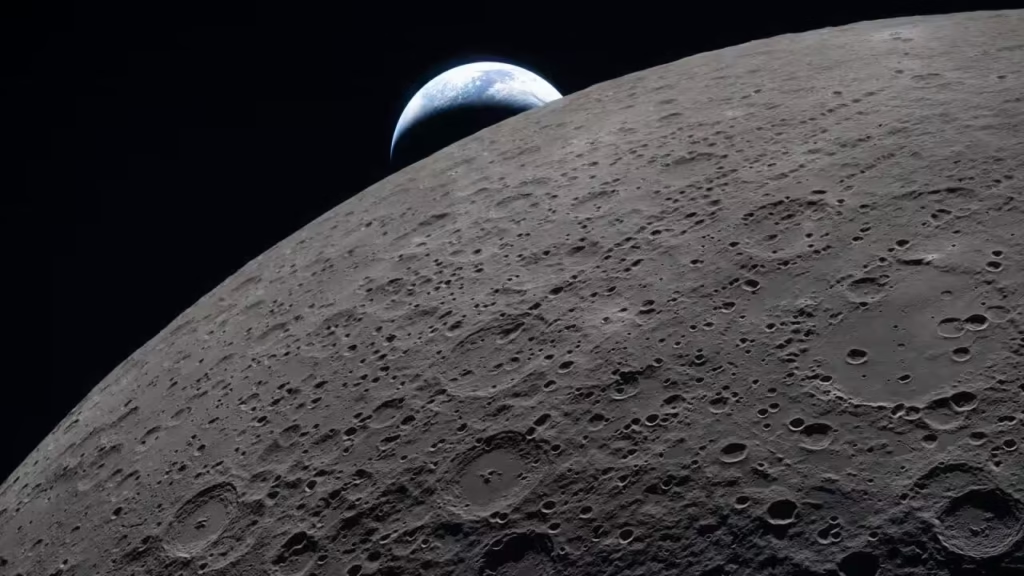
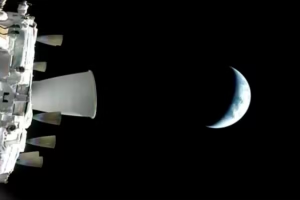
One of the most powerful moments captured during the mission is what scientists are calling an “Earthset.”
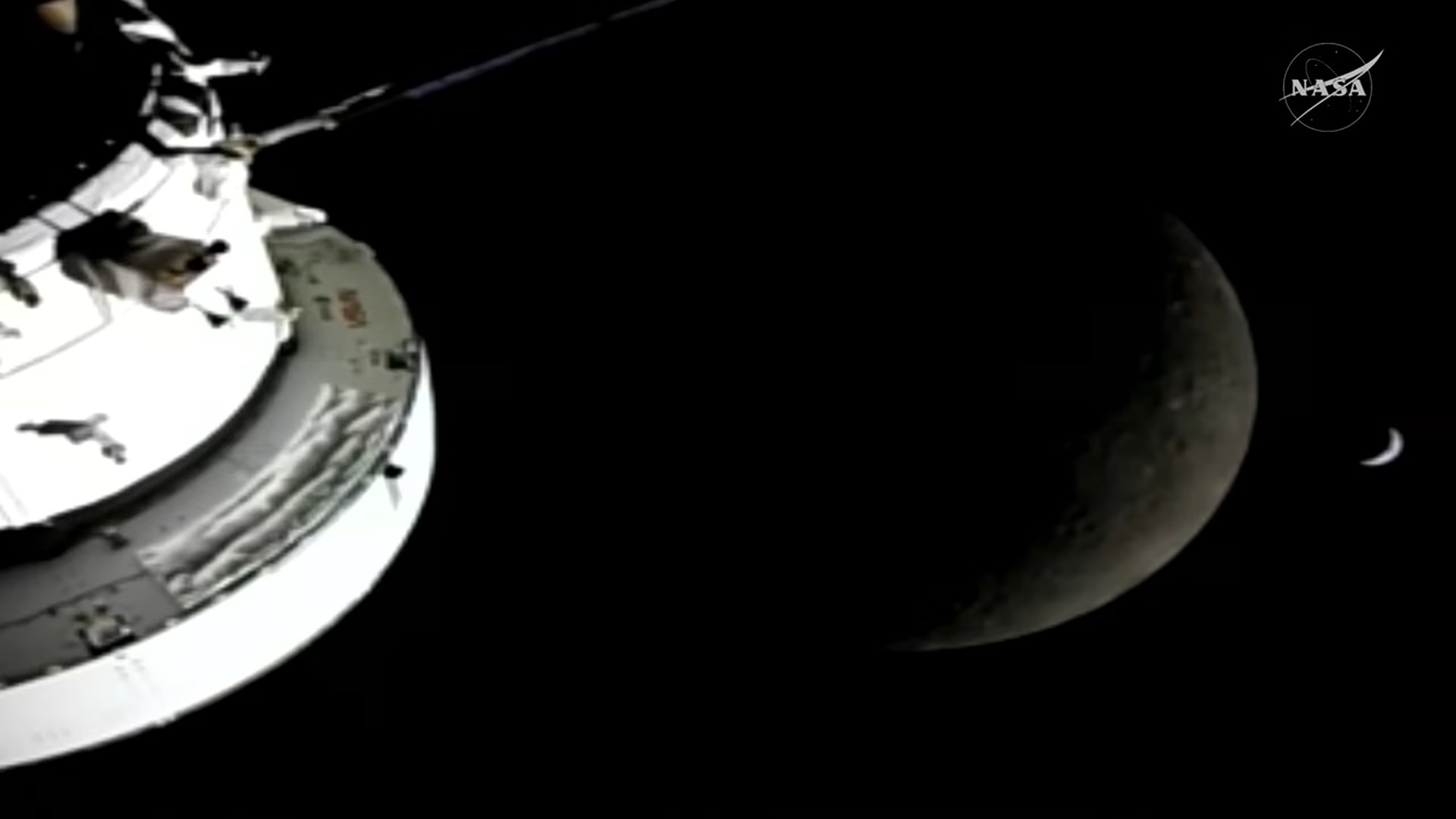
From the Orion spacecraft window, Earth appears as a soft blue sphere fading behind the Moon’s horizon. Bright white cloud formations swirl across the visible hemisphere, while the darker side of the planet signals nighttime.
In contrast to the familiar Earthrise images from past missions, this reverse perspective creates a quiet, almost emotional scene. It reminds viewers just how small and distant Earth looks from deep space.
Rare Deep-Space Solar Eclipse Observed
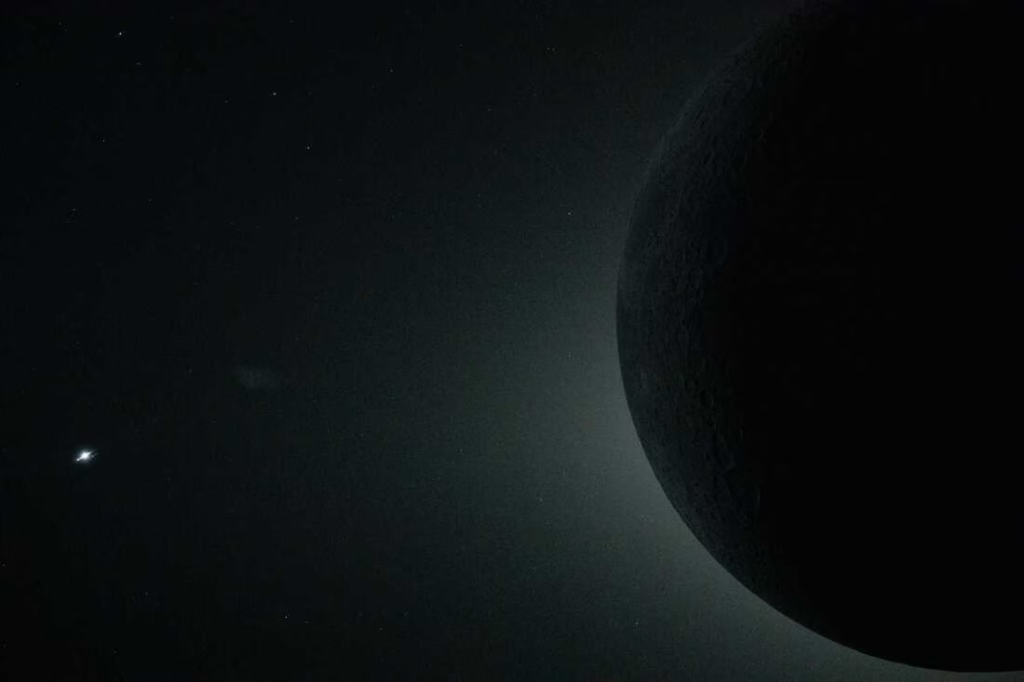
Perhaps the most extraordinary highlight is the rare solar eclipse witnessed from space.
The Moon, backlit by the Sun, forms a dark silhouette surrounded by a glowing halo. Scientists are now studying this effect to determine whether it comes from the solar corona, zodiacal light, or a combination of both.
From this vantage point, the eclipse lasted nearly 54 minutes. That duration far exceeds typical solar eclipses seen from Earth, offering researchers a rare opportunity to study light behavior and atmospheric effects in deep space.
Additionally, faint lunar features became visible due to sunlight reflecting off Earth, a phenomenon known as Earthshine.
Planetary Neighbors Join The Frame
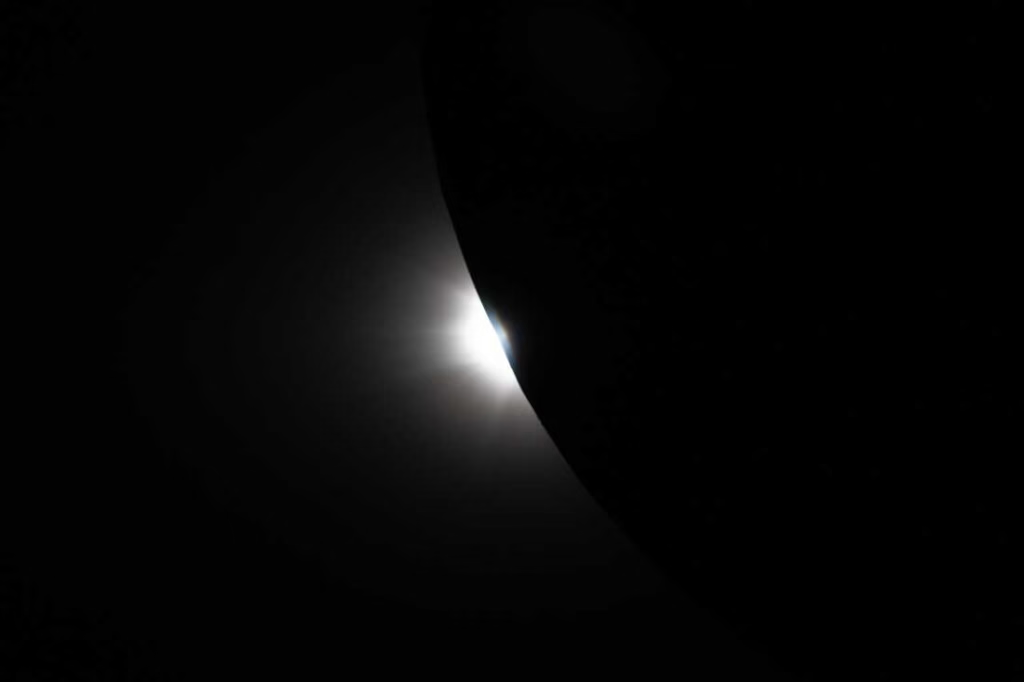
In final moments of the eclipse observed by the crew, the reemerging light creates a sharp contrast against the Moon’s silhouette and reveals lunar topography not usually visible along the lunar limb.
This fleeting phase captures the dynamic alignment of the Sun, Moon, and spacecraft as Orion continues its journey back from the far side of the Moon.
The images did not stop at the Moon. Several celestial bodies made appearances, turning these photos into a cosmic showcase.
Venus appears as a bright glint along the edge of the frame, while Saturn and Mars are also visible as small but distinct نقاط of light. This alignment adds scale and context, placing the Moon within the broader solar system in a single shot.
Mission Control Watches History Unfold
Back on Earth, teams inside Mission Control closely monitored every moment of the flyby.
Large display screens showed live visuals from the Orion capsule, with astronauts smiling and waving as they orbited the Moon. Engineers and flight directors remained focused, tracking data while occasionally pausing to take in the historic significance of the mission.
As the flyby concluded, applause and smiles filled the room. It was not just another mission update, it was a milestone.
A Step Toward Future Lunar Missions
While Artemis II is a test flight, its impact goes far beyond validation.
These images serve as both scientific data and inspiration. They help refine navigation, communication, and observation systems, all critical for future missions that aim to land humans back on the Moon.
That said, they also remind the world why space exploration matters. The combination of science, beauty, and perspective creates a powerful narrative, one that continues to push humanity forward.